






The main purpose of developing a business pitch is to clearly communicate your business idea in a way that persuades your audience to take action, whether that means investing, partnering, or joining your journey.
A strong pitch goes beyond explanation; it builds trust, highlights potential, and opens doors to growth opportunities. Through my own pitching experiences, I’ve come to see it as one of the most powerful tools an entrepreneur can master.
Here’s what a strong business pitch helps you achieve:
- Communicate your idea with clarity and purpose
- Attract investors, partners, and customers
- Showcase market opportunity and fit
- Demonstrate traction and growth potential
- Establish credibility and professionalism
- Align your team and strategy with your vision
What Is a Business Pitch, Really?

A business pitch is essentially a concise presentation that communicates the value and vision of your business idea. It’s your chance to explain what you do, why it matters, and how it can succeed.
Whether it’s delivered in a boardroom, over coffee, or at a networking event, the pitch is your gateway to potential opportunities.
Business pitches vary in format depending on the purpose and audience. You may find yourself giving:
- An elevator pitch, which is a 30-60 second verbal summary
- A startup pitch, which typically introduces a business to accelerators or early-stage investors
- A sales pitch is used to persuade customers or clients
- An investor pitch is a formal presentation that includes financials, forecasts, and funding requirements
A well-developed pitch aligns the problem, solution, market, and vision into a compelling story that makes people want to learn more. It doesn’t just communicate facts; it establishes direction and confidence.
10 Core Purposes of Developing a Business Pitch
1. To Clearly Communicate Your Business Idea

The first and most fundamental purpose of developing a business pitch is clarity. A business idea may feel obvious and well-formed in your mind, but unless it can be clearly communicated to others, it remains incomplete.
A pitch forces you to translate your idea into simple, understandable language that resonates with people who may have no background in your industry.
When developing a pitch, you are required to answer essential questions such as what problem you are solving, who you are solving it for, and why your solution matters right now. This process naturally removes unnecessary complexity and highlights the core value of the business.
I realized this early on when I tried explaining my first startup idea to different audiences. What worked with a technical peer failed completely with a non-technical listener.
That experience taught me that clarity isn’t about sounding smart, it’s about being understood. As I refined the pitch, the business itself became clearer.
A clear pitch helps eliminate confusion in several areas:
- It defines the business model in practical terms
- It aligns messaging across teams and stakeholders
- It ensures everyone understands the same version of the idea
The difference between a vague idea and a clear one is often the difference between interest and indifference.
| Aspect of Communication | Without a Clear Pitch | With a Clear Pitch |
| Explanation | Overloaded with jargon and assumptions | Simple and direct language |
| Audience Understanding | The listener feels confused or overwhelmed | Listener quickly grasps the idea |
| Business Direction | Unclear focus | Defined problem and solution |
| Engagement Level | Low interest | Curiosity and follow-up questions |
A business pitch is often the first real test of whether an idea is strong enough to stand on its own.
2. To Attract Investors or Funding

One of the most well-known purposes of developing a business pitch is attracting funding. Investors rarely invest based on written documents alone. They invest after hearing a compelling story, understanding the opportunity, and trusting the person delivering it.
A pitch allows founders to present not only the business concept but also their confidence, preparation, and understanding of risk. Investors are looking for signals that the founder knows the market, understands the numbers, and can execute under pressure.
During one pitch preparation session, a startup advisor told me:
“Investors are not just listening to what you say, they’re watching how you think.”
That statement changed how I approached pitching. I stopped trying to impress and focused instead on demonstrating logic, awareness, and adaptability.
Investors typically evaluate multiple dimensions during a pitch:
| Investor Focus Area | Why It Matters to Them |
| Market Opportunity | Indicates potential for scale and returns |
| Revenue Model | Shows how the business will make money |
| Competitive Advantage | Demonstrates defensibility in the market |
| Founder Capability | Reduces execution risk |
| Traction or Validation | Proves real-world demand |
A well-developed pitch doesn’t guarantee funding, but a poorly developed pitch almost guarantees rejection. The pitch is often the gateway to deeper conversations, such as due diligence and term negotiations.
3. To Establish Credibility and Professionalism

A business pitch is a reflection of how seriously you take your business. The way it is structured, delivered, and supported by data immediately shapes how credible you appear.
Even before numbers are discussed, professionalism is judged through preparation and clarity.
Credibility is built when the pitch flows logically, avoids exaggerated claims, and acknowledges challenges instead of ignoring them.
A pitch that openly addresses risks while explaining mitigation strategies is often more convincing than one that presents an overly optimistic picture.
I once sat in on a pitch where the founder confidently admitted what wasn’t working yet and explained how they planned to fix it.
Afterward, an investor said, “That honesty made the business feel real.” That moment reinforced the idea that professionalism isn’t about perfection, it’s about transparency.
Professional credibility in a pitch comes from:
- Logical structure and pacing
- Realistic assumptions and projections
- Well-researched market insights
- Calm and confident delivery
| Pitch Quality Indicator | Perceived Level of Credibility |
| Disorganized flow | Low trust |
| Unsupported claims | High skepticism |
| Clear data references | Increased confidence |
| Balanced optimism | Professional and realistic impression |
A strong pitch helps establish you as a serious founder long before contracts or commitments are discussed.
4. To Inspire Confidence in Stakeholders

Beyond investors, a business pitch plays a crucial role in building confidence among stakeholders such as co-founders, employees, advisors, and partners.
These individuals are committing their time, expertise, or reputation, and they need reassurance that the business has direction and leadership.
A pitch creates alignment by presenting a shared vision. It explains not just what the business is today, but where it’s going and how it plans to get there. This sense of direction is what transforms interest into commitment.
While working with an early-stage team, I noticed morale improved immediately after we finalized our pitch.
One team member said:
“Now I finally see where this is heading.” That clarity boosted motivation and focus across the board.
A pitch inspires stakeholder confidence by:
- Communicating long-term vision
- Clarifying short-term priorities
- Reinforcing leadership credibility
- Demonstrating thoughtful planning
| Stakeholder Type | What They Seek From the Pitch |
| Co-founders | Alignment and shared direction |
| Employees | Stability and growth potential |
| Advisors | Strategic clarity |
| Partners | Mutual benefit and reliability |
When stakeholders believe in the pitch, they are more likely to support the business during uncertain or challenging periods.
5. To Showcase Market Potential

Another major purpose of developing a business pitch is to demonstrate that the idea exists within a real and viable market. A great product alone is not enough. The pitch must show that there is demand, growth opportunity, and room for the business to succeed competitively.
Market potential answers the question of scale. Investors and partners want to know whether the opportunity is large enough to justify time, money, and effort. This is where data, trends, and customer insights play a critical role.
While refining one of my pitches, I realized I had focused too much on product features and not enough on market size. After reworking the pitch to include industry growth trends and customer demand signals, engagement increased significantly.
Market potential is usually presented through:
- Industry size and growth rates
- Target customer segments
- Market gaps or inefficiencies
- Timing and external trends
| Market Element | What It Demonstrates |
| Market Size | Revenue and growth potential |
| Customer Demand | Real-world relevance |
| Competitive Landscape | Awareness of alternatives |
| Timing | Why the opportunity exists now |
A business pitch that clearly presents market potential transforms an idea into an opportunity others want to be part of.
6. To Highlight Your Unique Selling Proposition (USP)

Your Unique Selling Proposition (USP) is what separates your business from the sea of alternatives already available in the market. It’s the edge, the distinctive factor, the differentiator.
The process of building a pitch forces you to clarify this proposition in a concise and compelling way.
Too often, businesses focus on listing features. But what audiences want to know is: why should they care? What is it about your offering that’s different and valuable enough to stand out?
I remember practicing a pitch with a founder friend who was launching a new CRM tool. Initially, the pitch focused on features like automation, reporting, and integration.
After some feedback, we shifted the messaging to focus on one simple line:
“We built a CRM that your sales team will actually want to use.”
That subtle shift, highlighting usability and adoption, became the hook that drew people in. That’s the power of a clear USP. It can take an ordinary offer and position it as extraordinary by solving the pain in a unique way.
Here’s how to differentiate a USP from other pitch content:
| Pitch Element | Focus Area | USP Relevance |
| Product Features | What your product does | Highlights functionality |
| Unique Selling Proposition | Why your product matters | Highlights differentiation |
| Competitive Comparison | How you better | Adds context to the USP |
| Brand Positioning | Emotional or strategic angle | Builds identity around the USP |
Clarifying your USP helps audiences remember your pitch long after it ends.
7. To Clarify Goals and Vision

Pitching your business forces you to think long-term. You’re not just talking about what your company does now, but where it’s heading.
The act of developing a pitch helps you organize and articulate your goals and, perhaps more importantly, align them with your vision.
The first time I wrote out a full investor pitch, I noticed several inconsistencies between what I claimed we were building and where our product roadmap was headed.
It was a valuable wake-up call. Writing the pitch didn’t just prepare me for presentations; it improved our internal focus.
Your vision is the broader narrative. It’s the story of what change your company wants to make in the world, and how you plan to achieve it. Goals are the measurable, time-bound checkpoints on that journey. A great pitch communicates both.
Vision helps establish:
- A sense of direction for your team
- Emotional appeal for investors or partners
- A compelling reason for your business to exist
Meanwhile, goal clarity shows that you’re not just dreaming, you’re planning. You’ve mapped out how you’ll get from now to next.
Here’s a table that helps distinguish between a well-defined vision and vague aspirations:
| Type of Statement | Weak Example | Strong Example |
| Vision | “We want to grow fast.” | “We aim to become the #1 logistics app for SMEs in North America within 5 years.” |
| Goal | “We want more users.” | “We aim to onboard 10,000 users by Q4 2026.” |
| Purpose-Driven Direction | “We believe in innovation.” | “We aim to eliminate 30% of manual invoice work for SMEs through automation.” |
The pitch development process helps ensure that your goals don’t just sound good; they make strategic sense and align with your bigger mission.
8. To Drive Action

A pitch that ends with “Thank you for listening” and no further direction is a missed opportunity. Every pitch should have a purpose beyond just being heard; it should lead to an outcome. That outcome could be a meeting, a partnership, a follow-up call, or even a signed deal.
One of the most valuable lessons I learned early on was to always be clear about the next step.
“A mentor once told me, ‘If you don’t guide them toward the next action, you’ve done half the job.'”
Since then, I’ve made it a point to define a clear call-to-action (CTA) at the end of every pitch, whether informal or formal.
Your CTA will vary depending on who you’re speaking to and what stage your business is at. But regardless of the situation, your audience should walk away knowing exactly what you want from them.
Here’s how different types of pitches may end with appropriate calls to action:
| Pitch Type | Ideal Call to Action |
| Investor Pitch | “Let’s schedule a deeper dive into our financials.” |
| Partnership Pitch | “Can we explore a joint marketing pilot this quarter?” |
| Client Pitch | “Would you be open to a free demo this week?” |
| Internal Pitch | “I’d like your support on this rollout plan.” |
Driving action is about momentum. It turns attention into engagement, and interest into movement.
9. To Practice Persuasive Communication

At its core, a pitch is persuasive storytelling. You’re not just transferring information, you’re influencing decisions, shaping perception, and motivating others. That’s a skill set every founder or business leader needs to master.
Crafting and delivering a pitch teaches you to be concise, engaging, and emotionally intelligent. You learn how to build tension, how to resolve it, and how to structure your narrative so it leads naturally toward your goal.
Pitching helped me improve not only how I talked about my business, but how I handled tough conversations, negotiations, and client objections. The more I pitched, the more comfortable I became thinking on my feet.
Here are key persuasive skills that pitch practice enhances:
| Persuasive Element | How It Shows Up in a Pitch |
| Storytelling | Framing the problem and journey emotionally |
| Clarity and Brevity | Avoiding confusion, keeping attention high |
| Confidence | Projecting belief in the idea and team |
| Objection Handling | Addressing risks or weaknesses upfront |
| Nonverbal Cues | Eye contact, tone, body language |
You don’t have to be a charismatic speaker to be persuasive. But you do have to be prepared, genuine, and focused on the listener’s needs. That’s what pitching teaches.
10. To Guide Strategic Planning
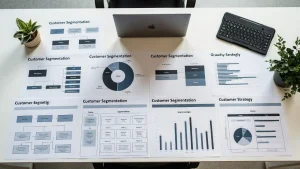
Surprisingly, one of the most overlooked benefits of creating a pitch is how much it improves your own business planning. The process of refining your messaging, gathering data, and mapping out projections is a strategic exercise in itself.
Every time I revise a pitch deck, I uncover new insights. Sometimes it’s a blind spot in our market research, other times it’s an inconsistency in our pricing logic.
In one instance, reviewing our customer segments during a pitch update led us to create two entirely different onboarding flows, one for startups and one for enterprises. That insight came not from operations, but from pitching.
Strategic planning is about making informed decisions based on clear inputs.
A pitch consolidates those inputs:
| Strategic Area | How Pitching Helps |
| Business Model | Forces you to define how you’ll generate revenue |
| Market Focus | Clarifies your core customer and their pain points |
| Team & Resources | Aligns team skills with business goals |
| Milestones | Maps short- and long-term checkpoints |
| Risk Management | Identifies threats and prepares mitigations |
A pitch becomes a touchstone for strategy. It evolves alongside the business, offering a high-level yet actionable view of where you are and where you’re going. It’s not just a communication tool; it’s a planning compass.
What Are the Key Elements Every Strong Business Pitch Needs?

A compelling business pitch relies on several foundational elements that work together to build credibility and drive interest.
These elements not only guide the structure of your presentation but also reflect the overall readiness of your business.
It begins with the problem. Your audience must immediately understand what issue exists and why it’s worth solving. If the problem isn’t relatable or urgent, your pitch will fall flat.
The solution should feel like a direct and thoughtful answer to that problem. Avoid diving too deep into features. Instead, speak to how your product or service makes a real difference.
A solid pitch also shows market fit, proving that real people or businesses actually want your solution. This includes mentioning customer feedback, pre-sales, or market validation.
Then comes the business model, where you explain how the company makes money. A simple, well-defined revenue structure builds investor confidence.
Traction is where you show progress. Even early signs of success, like pilot customers or pre-orders, help build momentum.
The team section should emphasize why your people are the right ones to execute this idea. Talk about experience, roles, and commitment.
Lastly, include a clear call to action. Don’t leave your audience guessing. Tell them exactly what you want, be it funding, feedback, or a follow-up meeting.
Core Elements Summary Table
| Pitch Element | Poor Example | Strong Example |
| Problem | “Some people may need this.” | “40% of freelancers lack access to affordable software.” |
| Solution | “We offer tons of features.” | “Our platform automates time-tracking in one click.” |
| Market Fit | “We think people will use it.” | “Surveyed 500 users; 80% expressed clear interest” |
| Business Model | “We’ll figure out monetization later.” | “Freemium + $15/month premium plan” |
| Traction | “Just launched” | “1000 sign-ups in 3 weeks; $5K monthly revenue” |
| Team | “We’re passionate.” | “10 years of industry experience; ex-Google engineer” |
| Call to Action | “Let us know what you think.” | “We’re raising $150K to expand to 2 new cities.” |
Key Takeaways:
- Keep each element clear, relevant, and audience-focused
- Show evidence, not assumptions
- Make the ask direct and actionable
Common Mistakes to Avoid When Pitching

Even with a well-structured pitch, certain mistakes can undercut your message and leave a negative impression. Understanding what to avoid can often be as valuable as knowing what to include.
The most common pitfall is overloading with information. In an effort to prove knowledge or preparedness, many founders include too much detail too early. This leads to a cluttered narrative that’s hard to follow. The goal is not to say everything but to say the most important things clearly.
Another mistake is focusing too much on the product, especially its features, without fully establishing the problem it solves. If the audience doesn’t understand the pain point, the solution loses relevance. I remember being told after a pitch,
“Your tech sounds interesting, but I don’t know who actually needs it.” That feedback stayed with me.
Lastly, ignoring the audience’s specific needs creates a disconnect. A pitch that works in a demo day won’t necessarily work in a boardroom. Investors care about financial return, while partners want strategic value.
Mistake Comparison Table
| Mistake | Description | Impact |
| Overloading with information | Sharing too much data, jargon, or background info | Audience becomes confused or disengaged |
| Product over problem | Jumping into features without framing the pain point | Solution feels ungrounded or unnecessary |
| Ignoring audience perspective | Same pitch used for all contexts and people | The message feels generic and fails to resonate |
How to Avoid These Mistakes:
- Prioritize clarity over completeness
- Start with the “why” before the “how.”
- Customize your pitch for the listener’s perspective
Learning to avoid these mistakes will make your pitch sharper, more focused, and more likely to achieve the result you’re aiming for.
Conclusion
At its core, a business pitch is more than a presentation; it’s the way you translate vision into action. It helps you sharpen your thinking, connect with others, and open doors.
Whether you’re pitching to raise funds, onboarding a partner, or simply clarifying your strategy, your pitch is a vital part of your entrepreneurial toolkit.
If you’re serious about your business, don’t treat the pitch as an afterthought. Make it sharp, intentional, and authentic.
I’ve found that some of the most important conversations in my career started with a single, well-delivered pitch.
Frequently Asked Questions
What’s the difference between a business pitch and a pitch deck?
A business pitch is the spoken or presented version of your business idea, while a pitch deck is the visual slide presentation that supports it.
How long should a business pitch be?
It depends on the setting. An elevator pitch should be under 1 minute, while a formal investor pitch typically lasts 10–15 minutes.
Can a great pitch secure funding without a solid business model?
Unlikely. A strong pitch can spark interest, but investors ultimately fund businesses with clear models and real potential.
How do I tailor a pitch for different audiences?
Understand what each audience values. For investors, focus on returns and growth. For partners, focus on collaboration benefits. Adjust your language and emphasis accordingly.
What are the top qualities investors look for in a pitch?
Clarity, market opportunity, founder passion, traction, and a scalable business model.
Do I need a pitch if I’m not looking for funding?
Absolutely. Pitches help with partnerships, team building, sales, and overall strategy. It’s a communication tool, not just a fundraising tool.
How can I make my pitch more memorable?
Tell a story, keep it simple, and focus on how your solution changes lives or industries. Practice makes all the difference.