



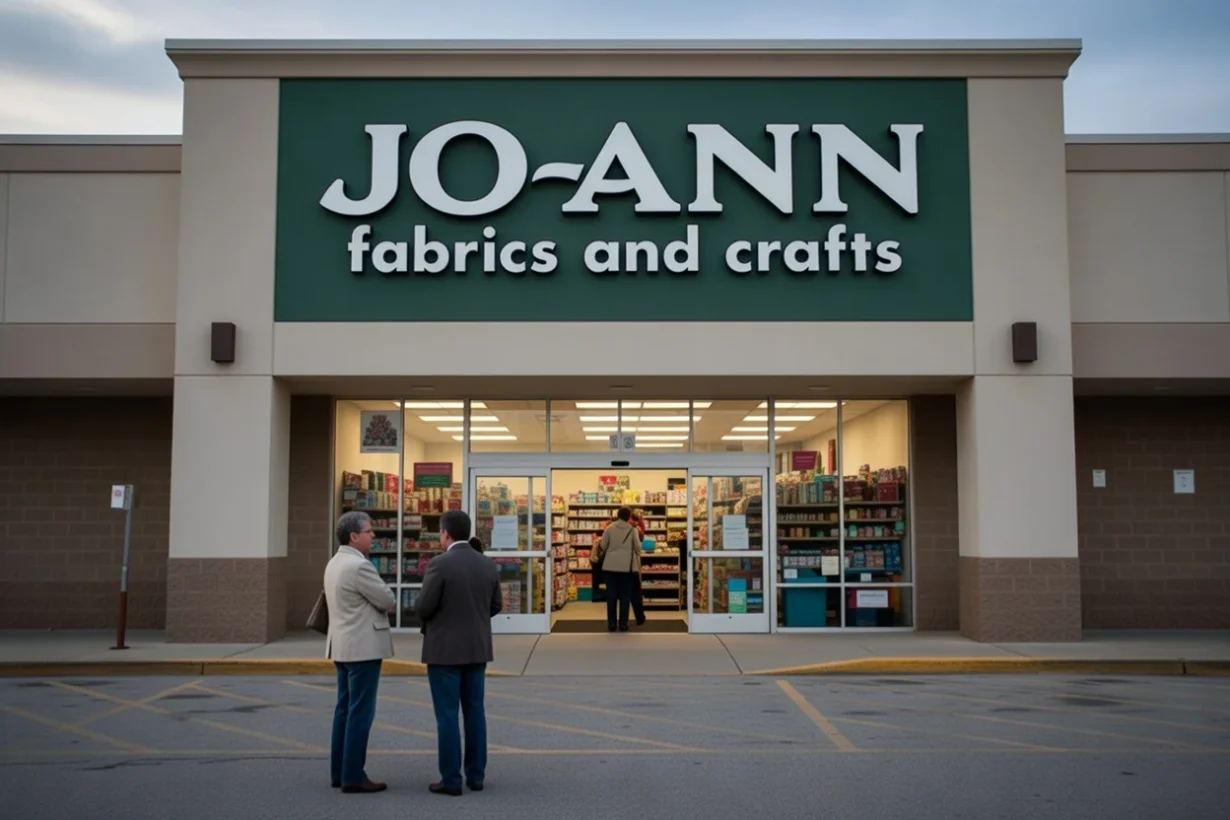

Yes, Joann Fabrics officially went out of business in May 2025, closing all remaining store locations after two bankruptcy filings within a year.
The once-iconic craft and fabric retailer couldn’t recover from mounting debt, digital competition, and shifting consumer habits. While its physical stores have vanished, parts of the Joann brand still live on through Michaels.
Here are the key points covered in this blog:
- Joann filed for bankruptcy twice in 2024 and 2025
- All 790 stores were liquidated by May 30, 2025
- Michaels acquired Joann’s brand and private labels, not its stores
- Customers lost access to gift cards and loyalty rewards
- The retail craft industry is now dominated by Michaels and niche sellers
- Joann’s closure offers lessons in adaptability and retail timing
What Really Happened To Joann Fabrics?
Joann Fabrics had a long history rooted in American retail, but its collapse was the result of accumulated structural issues rather than a single failure.
The company expanded aggressively over decades, operating hundreds of large-format stores that depended heavily on in-person foot traffic. While this model worked for many years, it became increasingly fragile as consumer behavior shifted.
Joann’s reliance on physical stores meant high fixed costs. Rent, staffing, inventory storage, and logistics expenses remained constant even when sales slowed.
As online competitors gained ground, Joann’s margins tightened. The company struggled to rebalance this cost structure fast enough.
The Timeline From Growth To Bankruptcy
The rise and fall of Joann can be understood clearly by examining its key business milestones. The company experienced moments of success, particularly during the pandemic, but these gains were temporary.
Timeline Of Key Events
| Date | Event |
| 2018 | Peak store count at 855 locations |
| March 2024 | First Chapter 11 bankruptcy filing |
| January 2025 | Second Chapter 11 bankruptcy filing |
| February 2025 | Closure of approximately 500 stores |
| May 2025 | Final store closures completed |
| June 2025 | Michaels acquired intellectual property and private labels |
During 2020 and 2021, Joann benefited from increased interest in home sewing, mask-making, and do-it-yourself projects. Revenue rose sharply, but leadership treated this surge as a recovery rather than a temporary anomaly. When demand normalized, the business lacked a sustainable plan.
Why The 2025 Shutdown Was Inevitable?
Once Joann entered its second bankruptcy in January 2025, the outcome was largely predetermined. The company attempted to find a buyer willing to maintain store operations, but none emerged. Potential buyers viewed the retail footprint as a liability rather than an asset.
A retail restructuring professional I spoke with explained the situation clearly:
“At that point, the stores themselves were the problem. No buyer wanted the leases, the overhead, or the outdated operating model.”
Liquidation became the only realistic path forward, leading to a complete shutdown by May 30, 2025.
Why Did Joann Fabrics File For Bankruptcy – Twice?
Joann’s dual bankruptcy filings reflect deeper financial and strategic missteps. The first filing aimed to restructure debt, while the second acknowledged that restructuring alone was not enough.
Debt, Inflation, And Declining Sales
Joann carried substantial debt after being taken private by Leonard Green & Partners. This leverage limited flexibility and increased pressure to generate consistent cash flow.
When inflation raised operating costs and discretionary spending declined, Joann’s financial position deteriorated rapidly.
Revenue And Profit Snapshot
| Fiscal Year | Revenue (USD Billion) | Net Income (USD Million) |
| 2019 | 2.1 | -546.6 |
| 2020 | 2.5 | 210.9 |
| 2021 | 2.7 | 212.0 |
The data shows that while revenue recovered during the pandemic, profitability was fragile. Losses prior to 2020 were severe, and the improved performance did not translate into long-term stability.
E-Commerce Disruption And Failed Recovery Efforts
Joann’s slow digital transformation placed it at a disadvantage. While competitors invested heavily in logistics, personalization, and online communities, Joann struggled with inconsistent inventory visibility and delayed fulfillment.
From my own experience ordering online in 2023, shipments often arrived late or were canceled altogether. That inconsistency eroded trust, even among loyal customers.
A former retail advisor shared this perspective with me:
“Customers will forgive high prices or limited selection, but they won’t forgive uncertainty. Joann’s online experience felt unreliable when reliability mattered most.”
Were All Joann Fabrics Stores Closed Permanently?
Yes, every Joann store will be closed permanently by the end of May 2025. The closures were implemented in waves, beginning with underperforming locations and eventually encompassing all remaining stores.
Store Count Over Time
| Year | Number Of Locations |
| 2018 | 855 |
| 2021 | 790 |
| 2024 | Approximately 800 |
| May 2025 | 0 |
The closures had a particularly strong impact in states where Joann served as the primary fabric retailer. Many communities lost their only local source for sewing supplies.
States With The Highest Number Of Closures
| State | Stores Closed |
| California | 61 |
| Florida | 38 |
| Michigan | 35 |
| Ohio | 33 |
| Pennsylvania | 31 |
For small towns, these closures meant longer travel times for supplies or a forced transition to online shopping.
Did Anyone Buy Joann Fabrics After Its Liquidation?
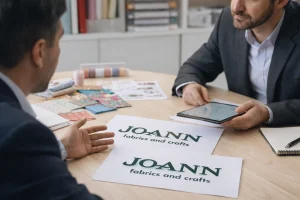
After the company officially entered liquidation in early 2025, Joann’s fate seemed sealed. Yet, while its physical locations were permanently shut and its stock delisted, the brand itself didn’t completely vanish.
In June 2025, Michaels, one of Joann’s most direct competitors in the crafts and hobby space, announced it had acquired Joann’s intellectual property, including brand trademarks, product formulations, and private-label lines.
However, it’s critical to understand what that acquisition actually means for customers and the industry.
Michaels specifically chose not to acquire any of Joann’s store locations or real estate leases. This was a deliberate move that underlined the deal’s strategic focus on assets that could be integrated quickly and profitably into Michaels’ existing infrastructure.
Rather than rebuild or rebrand Joann’s storefronts, Michaels viewed this acquisition as a way to absorb Joann’s best-selling private lines and drive new sales through its own digital and in-store ecosystem.
A marketing release from Michaels highlighted that the decision was influenced by an observable increase in online searches for fabric and Joann-brand patterns.
Internal research at Michaels also revealed that customers were asking for specific products historically exclusive to Joann. These findings accelerated their decision to pursue the intellectual property deal.
When I visited two Michaels locations in late 2025, I noticed substantial changes. Fabric aisles were deeper and featured brands and textures that were unmistakably from Joann’s private-label offerings. Product guides and signage had also been updated to reflect crafting themes reminiscent of Joann’s promotional style.
Still, while the products were familiar, the in-store atmosphere had shifted. Joann had built a reputation for helpful, hands-on staff, personalized guidance for quilting and pattern work, and an immersive environment that encouraged browsing and discovery.
Michaels, by contrast, felt more standardized and efficient. The result was a product match, but not an experience match. I spoke with a former Joann category manager who now consults for major retail brands.
Her view was straightforward:
“This isn’t about copying SKUs. It’s about capturing what Joann stood for: creativity, warmth,and reliability. Michaels has the tools, but to carry the torch, they’ll need to build an emotional connection that customers used to feel the moment they walked through Joann’s doors.”
existed, but the shopping experience did not fully replicate what Joann once offered.
What Does This Mean For Joann Fabrics Customers Now?
For longtime Joann customers, the transition following the liquidation has been disruptive, confusing, and in many cases, disappointing.
Many were unaware that their gift cards, coupons, and loyalty points would become void upon the announcement of liquidation.
Dozens of customers shared their experiences online, reporting that their emails to customer service bounced back or went unanswered.
The reality was clear: Joann was no longer legally obligated to honour any customer-facing commitments after the liquidation process began. For customers, that translated into a sense of loss that extended beyond monetary inconvenience.
Beyond the sudden invalidation of benefits, customers are also navigating more subtle losses:
- The absence of in-store consultations, where staff once guided shoppers through complicated patterns or offered advice on fabric compatibility, has left a knowledge gap.
- Access to specialty fabrics, especially in rural areas or smaller markets, has diminished significantly. Some customers now have to drive hours to find similar options.
- Many have shifted to online-only retailers, which offer convenience but lack the tactile experience of choosing materials by touch.
I recently visited a local independent fabric store in northern Ohio to understand how this shift is playing out in real-time.
The owner, who once considered Joann a healthy competitor, explained how her customer base has changed:
“We’ve seen more customers than ever, but many are frustrated. They miss the familiarity and predictability Joann provided. Some are grateful to find a local option, but others are still adjusting to higher prices and smaller inventory.”
For these customers, Joann wasn’t just a store; it was a trusted partner in their creative routines.
How Did Joann’s Collapse Impact The Craft Retail Industry?
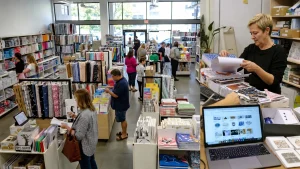
Joann’s departure had ripple effects across the craft and textile sectors. The sudden exit of one of the industry’s biggest players created both opportunity and disruption, reshaping the competitive landscape in visible ways.
Firstly, the balance of power shifted. Large chains like Michaels and Hobby Lobby quickly absorbed much of Joann’s customer base.
With fewer mid-sized players remaining, the craft retail industry became increasingly consolidated. This means fewer options for consumers, especially those looking for in-person services in suburban or rural areas.
Simultaneously, the vacuum left by Joann also opened the door for niche and independent businesses to step in. Online stores specializing in quilting kits, designer fabrics, or custom sewing accessories have reported increased sales and site traffic since the closures began.
Here are some clear industry-wide shifts we’ve seen:
- Increased consolidation among national craft retailers, leading to less variety in chain-store offerings but larger economies of scale
- Growth of niche online sellers that target specific crafts like knitting, embroidery, and quilting with curated selections and subscription boxes
- Renewed focus on community-based retail, with local fabric stores launching classes, sewing circles, and more personalised services to capture Joann’s displaced customers
What Joann’s exit ultimately demonstrated is how vulnerable specialty retailers are when they fail to adapt to digital transformation and evolving customer needs. Without strong omnichannel infrastructure and proactive brand evolution, even the most well-loved names can disappear.
Can Michaels Successfully Carry Joann’s Legacy Forward?
Michaels now carries the legal and commercial right to Joann’s name and products, but that does not mean it automatically inherits its legacy. Carrying a brand forward means honouring the essence that made it valuable, not just its merchandise.
Michaels has made tangible progress on the product front. Former Joann-exclusive brands are now available in select Michaels locations and on its website. The company also recently launched a customer education series modeled after Joann’s former in-store workshops.
Still, the emotional legacy of Joann runs deeper than product lines. For decades, Joann served as a creative hub, a familiar place where generations of customers learned to sew, plan crafts with family, and engage in tactile, hands-on inspiration.
I had a conversation in late 2025 with a former executive who once oversaw Joann’s merchandising division.
We spoke about whether Michaels could recreate that cultural value:
“Joann felt like a place where creativity started, not just where supplies were sold. That’s a difficult culture to recreate. You need passionate staff, a warm atmosphere, and a deep understanding of why your customers are there. It wasn’t transactional, it was personal.”
My own visits to Michaels have been encouraging in terms of selection, but still feel transactional in nature. While they’ve matched the inventory, they’re still working on matching the intangible experience that Joann once provided.
Only time will tell whether Michaels can fully inherit the mantle or if Joann’s memory will remain a nostalgic relic of a retail era that has passed.
What Can Other Businesses Learn From Joann’s Downfall?

Joann’s story isn’t just a cautionary tale for craft retailers, it’s a broader warning for all legacy businesses. No brand, no matter how beloved, is immune to failure if it fails to evolve alongside its customers.
Key takeaways from Joann’s downfall include:
- Adaptation must be continuous – Joann delayed critical investments in e-commerce, digital marketing, and data-driven inventory management. When they finally made changes, it was too late to offset the damage.
- Short-term wins don’t guarantee long-term stability – Joann’s post-2020 rebound was real, but leadership misread it as a return to normal instead of a temporary lift from pandemic trends.
- Customer trust is fragile – Once loyalty is broken, whether due to bad service, inconsistent experiences, or invalidated rewards, it’s nearly impossible to rebuild.
In my view, Joann’s collapse was not inevitable, but it was avoidable. The company had a loyal customer base, a strong brand identity, and a rich heritage. What it lacked was urgency, the will to make uncomfortable changes before the situation demanded it.
For other businesses, especially those navigating post-pandemic market realities, Joann’s story should serve as a clear reminder. Legacy cannot be a shield. It must be a foundation you build on or risk watching it crumble beneath your feet.
Conclusion
Joann Fabrics’ closure marks the end of a long-standing retail institution that shaped how generations approached crafting and sewing. While the brand name and select products continue under Michaels, the physical experience that defined Joann is gone.
Its downfall highlights how even well-known, trusted retailers can struggle without timely adaptation. For customers and businesses alike, Joann’s story serves as a reminder that legacy alone is not enough to survive in an evolving retail landscape.
FAQs About Joann Fabrics Closure
Is Joann.com still online after the closures?
No. As of early 2025, the Joann website has been archived and is no longer active for shopping.
Will Michaels rebrand stores as Joann?
No. Michaels only acquired Joann’s intellectual property. They will not operate stores under the Joann name.
Can I return Joann products now?
Returns and warranties are no longer processed, as the business has been liquidated and no successor retail entity exists.
Will Joann stores reopen in the future?
There are no announced plans to reopen Joann stores. The brand now exists only as an intellectual property under Michaels.
Where can I buy Joann’s private-label products now?
Michaels plans to roll out Joann’s private labels in their own stores and website in mid to late 2026.
What happened to Joann’s employees?
Most were let go during the phased closures, with limited severance. Some may have been absorbed into other retailers.
How did the closures affect small-town shoppers?
In many regions, Joann was the only craft supply option. Its closure has created a gap, especially for quilters and home sewers.