





No, it isn’t but it’s undergoing a serious financial restructuring. After filing for Chapter 11 bankruptcy twice in 2025, Spirit Airlines is still operating flights in 2026 while implementing major cost-cutting and downsizing strategies. The airline has secured funding to stay afloat, but its future remains uncertain.
Key points covered in this blog:
- Spirit filed for Chapter 11 bankruptcy in March and again in August 2025
- Flights are still operating in 2026 with a reduced network
- The airline secured $475 million in restructuring financing
- Over 500 pilots were furloughed and aircraft returned to lessors
- Passenger confidence is low, but tickets and loyalty points remain valid
What Happened to Spirit Airlines in 2025?
The year 2025 was a critical turning point for Spirit Airlines. The carrier began showing signs of serious financial instability early in the year. Factors like inflation-driven operating costs, intense competition from other budget airlines, and declining passenger demand triggered a cascade of operational challenges.
Initially, Spirit filed for Chapter 11 bankruptcy protection in March 2025, hoping to restructure debts while continuing operations. However, the plan didn’t go far enough.
By August, mounting losses and the collapse of the JetBlue merger left the airline with no choice but to refile for bankruptcy.
The August filing reflected a more aggressive restructuring strategy. It was clear that Spirit was no longer attempting to maintain its previous size or market share. Instead, it began returning aircraft to lessors, trimming its route network, and laying off staff.
Timeline of Events in 2025
| Month | Key Event |
| March | First Chapter 11 bankruptcy filing |
| April | Announced route cuts and operational downsizing |
| June | JetBlue merger officially blocked |
| August | Filed for bankruptcy a second time |
| October | Court approved $450M DIP financing plan |
| December | Secured additional $100M in short-term funding |
These events set the stage for a new direction focused on survival rather than expansion.
Is Spirit Airlines Still Flying in 2026?
Despite public fears and widespread speculation, Spirit Airlines is still flying in 2026. The airline continues to operate flights, sell tickets, and honor bookings, although at a smaller scale than in previous years.
In December 2025, rumors circulated that the airline might cease operations over a weekend. Spirit quickly denied those claims and backed up its statement by securing an emergency $100 million in short-term funding from investors. Half of that money was immediately accessible to support daily operations.
The airline’s most profitable bases such as Fort Lauderdale, Orlando, and Las Vegas remain operational, while smaller and less efficient locations have been downsized or exited.
Current Route Strategy (as of Q1 2026)
| Focus Cities | Status | Adjustments Made |
| Fort Lauderdale | Operational | Reduced frequency on Caribbean routes |
| Orlando | Operational | Route cuts to less profitable states |
| Las Vegas | Operational | Consolidated overlapping services |
| Dallas-Fort Worth | Scaled Down | Limited regional flights only |
| Chicago O’Hare | Scaled Down | Focused on high-yield routes |
What Passengers Should Expect:
- Reduced flight frequency on secondary routes
- No significant change to baggage or seating policies
- Honored tickets and loyalty points
- Communications regarding any changes sent directly to travelers
Operations continue, but the airline now prioritizes profitability and sustainability over aggressive expansion.
Why Did Spirit Airlines File for Bankruptcy Again?
The second bankruptcy filing was triggered by a range of ongoing issues that remained unresolved after the March 2025 filing. Despite early efforts to cut costs, the airline’s revenue base continued to shrink.
The most significant setback was the failed merger with JetBlue, which was blocked in court due to antitrust concerns. This left Spirit to face the competitive landscape alone without the strategic support, fleet efficiency, or market leverage it expected to gain through the deal.
Without that merger, Spirit had to confront the reality of its high debt load and increasingly inefficient business model.
Core Reasons for the August 2025 Filing:
- Lack of recovery from the March bankruptcy filing
- Failure of the JetBlue merger
- High operational and fuel costs
- A competitive market pushing fares lower
- Diminished investor confidence
Contributing Factors and Their Operational Impact
| Factor | Operational Impact |
| Rising fuel and labor costs | Increased pressure on margins |
| Stagnant demand | Unfilled flights, especially on longer routes |
| Failed merger | Loss of expected resources and integration |
| Customer dissatisfaction | Decline in bookings, rise in refund requests |
| Regulatory roadblocks | Complicated cost-saving measures |
The combination of these issues left the company with few options outside of a complete overhaul.
What Does the $475 Million Financing Mean for Spirit Airlines?
In October 2025, a federal bankruptcy court approved Spirit’s plan to access $475 million in debtor-in-possession (DIP) financing. This funding allowed the company to keep flying, pay suppliers, maintain aircraft, and negotiate better lease and labor terms.
The most notable component of the package was an agreement with AerCap, an aircraft leasing company that forgave lease obligations on 27 Airbus A320s and agreed to contribute financially to the airline’s restructuring.
Financing Breakdown
| Component | Amount | Purpose |
| Immediate Capital | $50 million | Stabilize daily operations |
| Contingent Funding | $50 million | Based on reorganization milestones |
| Lease Termination Credits | $150 million | Reduce fleet size and lease costs |
| General DIP Loans | $225 million | Cover restructuring and working capital |
What the Financing Enables Spirit to Do:
- Maintain current operations while restructuring
- Cover staff salaries and airport operations
- Invest in updated scheduling and efficiency systems
- Rebuild relationships with vendors and lessors
The funding does not guarantee long-term success, but it gives the airline the time and space needed to make meaningful changes.
How Is Spirit Airlines Restructuring to Survive?
Spirit is now focused on transforming its business model. It is moving away from a volume-driven approach and prioritizing routes that offer better margins and long-term value.
This shift involves scaling back operations, cutting costs, and improving efficiencies across every department. A major part of this strategy is reducing the size of its fleet and workforce, which has already led to over 500 pilot furloughs.
Strategic Restructuring Focus Areas:
- Route Optimization: Cutting low-yield and seasonal markets
- Cost Efficiency: Renegotiating vendor and leasing contracts
- Staffing Alignment: Matching labor to operational needs
- Fleet Simplification: Reducing aircraft types and age diversity
Operational Changes Comparison
| Category | Pre-Restructuring (2025) | Current (Q1 2026) |
| Active Fleet | 197 aircraft | 162 aircraft |
| Weekly Flights | 4,600+ | 3,200+ |
| Destinations Served | 87 | 62 |
| Pilots Employed | 3,500 | 2,980 |
I had a conversation with a restructuring consultant involved in the aviation industry. Their view was frank but hopeful:
“Spirit is doing what legacy carriers have done in the past shrinking to survive. The goal isn’t to be everywhere anymore. The goal is to be consistently profitable where it counts.”
This shift in mindset reflects a broader change in how budget airlines must think in the current market. For Spirit, survival now depends on doing fewer things better.
Is There a Risk Spirit Airlines Could Shut Down Suddenly?
The risk of an abrupt shutdown still exists, though it’s less likely in the short term due to the emergency financing received in late 2025. The now-infamous December 15 rumor highlighted just how volatile the situation was. Some media outlets suggested the airline would be grounded by Monday morning.
Spirit quickly responded:
“There is no truth to any rumors that we are preparing to cease operations.”
In the days following that statement, the airline announced that it had secured $100 million in short-term financing, with $50 million immediately available. This reassured employees, travelers, and suppliers that Spirit would continue operations.
Still, the possibility of collapse isn’t entirely off the table. The airline is walking a financial tightrope, and unexpected disruptions could accelerate its decline.
Current Risks to Spirit’s Stability
| Risk Area | Exposure Level | Comment |
| Operational Disruption | Medium | Dependent on fleet and staffing cuts |
| Investor Confidence | Medium-High | Recovery depends on restructuring success |
| Rising Fuel Prices | High | Ongoing volatility in jet fuel costs |
| Passenger Trust | Low | Reputation needs significant repair |
Travelers Should Keep in Mind:
- Spirit flights are still running, but schedules can change
- Refund policies follow DOT regulations, but delays may occur
- Monitoring company updates can help passengers stay informed
What Are Passengers Saying About Spirit Airlines in 2026?

Customer feedback has played a critical role in Spirit’s ongoing reputation and survival efforts. Over the past decade, the airline developed a reputation for rock-bottom fares coupled with limited service, frequent delays, and strict baggage fees. As Spirit attempts to recover in 2026, restoring passenger trust remains one of its biggest challenges.
Feedback from current passengers is mixed. While many still choose Spirit for its affordability, others have expressed frustration with reduced route options, limited flexibility, and inconsistent communication.
From my own review of recent forums, customer surveys, and travel blogs, here are some recurring passenger sentiments in 2026:
Common Passenger Reactions:
- “Still the cheapest option on some routes, but don’t expect anything more than basic transport.”
- “My flight was on time and smooth, but I had to rebook twice due to cancellations the week before.”
- “They’re flying fewer routes, so it’s harder to find convenient options unless you’re near one of their main hubs.”
These comments highlight the airline’s narrow path to recovery. Spirit must strike a balance between maintaining its low-cost appeal and addressing decades-old service issues that still influence buyer decisions today.
Passenger Satisfaction Trends
| Customer Category | 2025 Satisfaction Level | 2026 Satisfaction Level | Observed Change |
| Budget-Conscious Flyers | Moderate | Slightly Improved | Better communication |
| Business Travelers | Low | Low | No significant shift |
| Leisure Travelers | Moderate | Moderate | Fewer route options |
| Frequent Flyers | Low | Low | Loyalty program concerns |
As the airline trims its services to become leaner, passengers have fewer reasons to complain about over-promising but also fewer incentives to choose Spirit beyond price alone.
Spirit’s 2026 Focus for Customer Retention:
- Improve scheduling reliability
- Increase transparency on fees and delays
- Reinvest in mobile and digital communication tools
- Maintain strong presence in price comparison engines
Customer expectations have evolved. Spirit will need to evolve too, if it wants to retain long-term relevance in a crowded market.
How Does Spirit Airlines Compare to Other Budget Airlines in 2026?
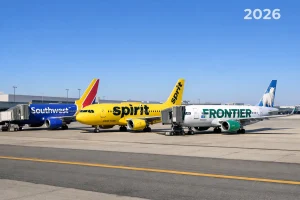
To fully understand Spirit’s standing, it’s important to view it alongside its closest competitors. The ultra-low-cost carrier (ULCC) market has always been aggressive, with rivals like Frontier Airlines, Allegiant Air, and newer regional players pushing similar fare-first business models.
In 2026, some of these airlines have adapted more quickly to post-pandemic changes in travel patterns. While Spirit has been busy restructuring, others have focused on improving customer experience, launching new destinations, or diversifying revenue.
That said, Spirit’s scale and national brand awareness still give it an edge in certain cities, particularly in Florida and the Southwest. The question is whether it can keep that edge without being the cheapest or the most reliable.
Comparison Table: Spirit vs. Other Budget Airlines (2026)
| Metric | Spirit Airlines | Frontier Airlines | Allegiant Air |
| Active Fleet Size | 162 | 135 | 126 |
| Destinations Served | 62 | 70 | 85 |
| Average Customer Rating (★) | 2.7/5 | 2.9/5 | 3.3/5 |
| On-Time Performance (YTD) | 68% | 71% | 76% |
| Loyalty Program Value | Moderate | Low | Low |
| Overall Market Share (ULCC) | 26% | 24% | 18% |
While Spirit leads in market share, its on-time performance and customer ratings are still trailing behind its competitors. Allegiant, in particular, has seen rising passenger satisfaction by focusing on point-to-point leisure travel from underserved airports.
Key Areas Where Spirit Must Improve to Stay Competitive:
- Consistency in operations (fewer last-minute cancellations)
- Better mobile and web-based customer experience
- Increased aircraft utilization efficiency
- Clear communication during disruptions
From my perspective, Spirit still has the name recognition and national coverage to compete. But if it doesn’t fix the gaps in reliability and customer support, other ULCCs will continue to chip away at its market share.
Conclusion
Spirit Airlines is not shutting down in 2026, but the risk isn’t off the table. The airline is operating under Chapter 11 protection, trimming down its operations, and relying on investor-backed funding to stay afloat.
Whether it survives long-term depends on how well it adapts to the new aviation landscape. Spirit is no longer just fighting to lower costs—it’s fighting to redefine its role in a post-pandemic travel economy.
For now, flights continue, tickets are valid, and the airline is still serving millions of passengers. But its future will depend on how this transformation unfolds in the months to come.
FAQs About Spirit Airlines in 2026
Is Spirit Airlines cancelling flights due to bankruptcy?
Yes, some routes have been cut as part of the restructuring plan, but not all flights are affected. Spirit still operates a significant network.
Are Spirit Airlines tickets still valid in 2026?
Yes, all existing bookings and loyalty points are valid. The airline continues to sell tickets and operate scheduled flights.
Has Spirit stopped hiring or laid off staff?
Spirit has furloughed over 500 pilots and reduced operations but has not announced a permanent hiring freeze.
What happens to my refund if Spirit cancels my flight?
You’re entitled to a refund or rebooking as per DOT regulations. Spirit continues to process cancellations under its usual policy.
Will the $475 million funding save Spirit Airlines?
It provides breathing room but does not guarantee survival. Long-term viability depends on successful restructuring and market adaptation.
Is the Free Spirit loyalty program still active?
Yes, and all earned points remain valid. No major changes to the program have been announced as of early 2026.
Should I book a Spirit Airlines flight in 2026?
If you find a good fare and understand the risks, booking is safe. Spirit is operating normally, but keep an eye on updates.