

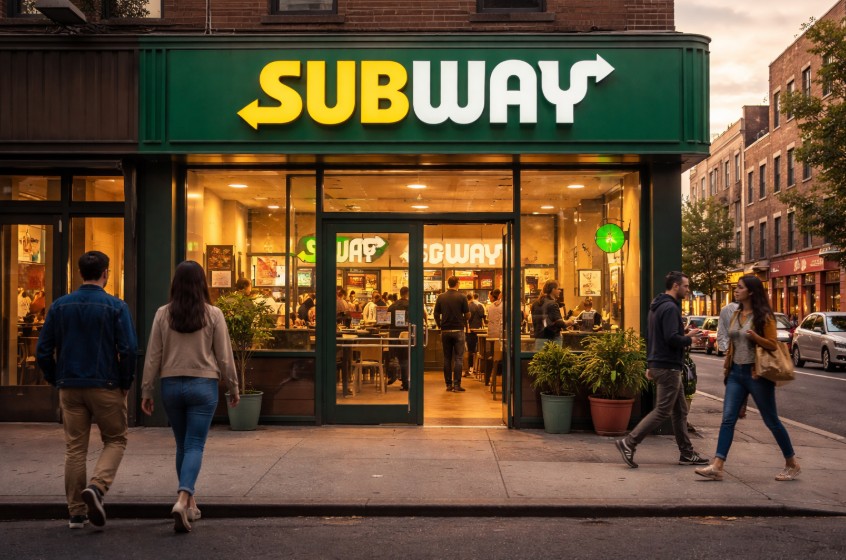

Despite speculation and alarming headlines, Subway is not shutting down, but it is undergoing one of the most significant transformations in its history.
Over the past few years, the brand has strategically closed hundreds of underperforming U.S. locations while intensifying its focus on international expansion, store modernization, and operational efficiency under new ownership.
Here’s what’s actually happening:
- U.S. store count has dropped below 20,000 through deliberate closures
- Global footprint remains strong, with around 37,000 locations worldwide
- Roark Capital, which acquired Subway in 2024, is prioritising sustainable profitability
- Financial struggles among some franchisees have contributed to bankruptcy headlines
This article breaks down what’s really happening, why it’s happening, and what Subway’s future looks like as you move through 2026.
Is Subway Going Out of Business in 2026 or Just Downsizing?
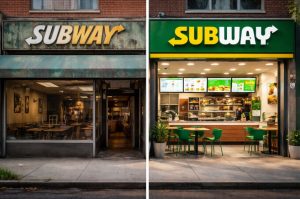
Subway is not going out of business in 2026. What you are witnessing instead is a deliberate downsizing and restructuring strategy that has been unfolding for nearly a decade. At its peak in 2015, Subway operated more than 27,000 locations across the United States.
That rapid expansion, while impressive on paper, created long-term problems, oversaturation, franchise cannibalisation, and inconsistent store quality.
By 2024, Subway’s U.S. store count fell below 20,000 for the first time in decades. This milestone sparked widespread speculation that the brand was in serious trouble.
However, industry analysts and company statements consistently frame these closures as strategic rather than existential. Subway remains the largest restaurant chain in the U.S. by unit count, even after years of decline.
One restaurant consultant summed it up plainly:
“This isn’t a brand collapse—it’s a course correction that probably should have happened years ago.”
The company is intentionally shrinking its domestic footprint to improve average store performance, reduce internal competition, and reposition itself for modern consumer expectations.
Why Has Subway Closed Hundreds of U.S. Locations in Recent Years?
The scale of Subway’s U.S. closures can feel alarming, but the reasons behind them are structural rather than existential.
The Long Decline from Overexpansion
Subway’s aggressive franchising model allowed it to open stores rapidly with relatively low startup costs. While that helped the brand dominate street corners and strip malls in the 2000s, it also created intense internal competition between nearby franchisees.
Many locations cannibalized each other’s sales, leaving margins thin even before inflation and rising labor costs entered the picture.
Changing Consumer Behavior
American dining habits have shifted significantly. Customers now prioritize:
- Digital ordering and delivery integration
- Higher-quality ingredients
- Modern store designs
- Strong value propositions in an inflationary economy
Many older Subway locations simply could not meet these expectations without costly remodels.
Competitive Pressure
Subway faces intense competition from fast-casual brands and legacy chains alike. As McDonald’s, Starbucks, and regional sandwich concepts invest heavily in technology and menu innovation, Subway has had to decide which locations are worth upgrading, and which are not.
The result has been consistent closures year after year, culminating in more than 600 U.S. store closures in 2024 alone, according to franchise disclosure documents.
How Many Subway Locations Are Still Operating in the U.S. and Worldwide?

Understanding Subway’s current footprint is key to separating fact from speculation. Despite the buzz around closures in the United States, Subway remains a global giant in the quick-service restaurant (QSR) space.
In 2026, the brand operates under 20,000 locations in the U.S., a significant decline from its 2015 peak of over 27,000. However, this doesn’t represent a dying brand, it reflects a purposeful pivot.
Globally, Subway continues to thrive, with approximately 37,000 international stores, bringing the total to around 57,000 locations worldwide. This international strength reinforces the company’s resilience and adaptive strategy in an evolving market.
Subway’s Estimated Global Store Counts (2026)
| Region | Estimated Locations (2026) |
| United States | Under 20,000 |
| International | ~37,000 |
| Global Total | ~57,000 |
While the U.S. footprint has shrunk, Subway continues to grow internationally at a steady pace. The company has signed more than 20 master franchise agreements since 2024, resulting in over 10,000 future restaurant commitments across multiple continents.
This global-first strategy explains why Subway remains one of the most recognizable food brands in the world, even as its domestic presence becomes more selective.
Which States Have Been Hit Hardest by Subway Store Closures?
Subway’s closures have not been evenly distributed. Some states have seen significantly more shutdowns than others, often reflecting market saturation, high operating costs, or declining foot traffic.
States with the Highest Net Subway Closures (2022–2024)
| State | Net Closures |
| California | 226 |
| Florida | 125 |
| Texas | 98 |
| Pennsylvania | 94 |
| Illinois | 91 |
| New York | 89 |
| Ohio | 78 |
| North Carolina | 67 |
| Washington | 62 |
| Georgia | 49 |
California and Florida top the list, not necessarily because Subway is losing popularity, but due to historical over-saturation. In many of these states, there were simply too many Subways too close together. When stores start competing with each other, profitability drops, even if foot traffic remains decent.
Florida’s story is especially telling. Between 2022 and 2024, the state lost 125 Subway locations, trailing only California. Yet the company has reiterated that it isn’t withdrawing from the market, it’s repositioning itself for long-term efficiency.
“We’re not leaving markets—we’re refining them,” said a Subway spokesperson in a 2025 interview, highlighting the company’s focus on remodeling and relocating instead of defaulting to closures.
In most cases, closures are not permanent goodbyes, they’re strategic exits from underperforming leases or poorly located storefronts, often followed by better-positioned openings nearby.
What Does Subway’s Strategy Shift Mean for Its Future?
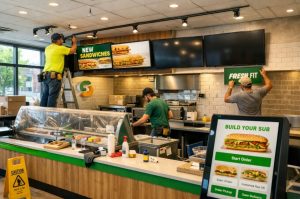
Subway’s current business model is no longer about maximizing the number of stores. The brand has recognized that long-term health depends on quality over quantity, and it’s making that shift in three core areas.
A Focus on “Smarter” Locations
Rather than maximizing store count, Subway is prioritizing:
- High-traffic, high-visibility areas
- Locations that support delivery and digital orders
- Franchisees with strong operational performance
Menu and Brand Modernization
Consumer expectations have evolved. Subway is adapting with:
- Revamped protein selections, including premium meats and vegetarian options
- Freshly baked bread enhancements, a long-time brand hallmark
- Limited-time value offerings, such as the $6.99 Footlong deal available through the Subway app
These efforts aim to counter criticisms of menu fatigue and low quality that plagued the brand in the last decade. Additionally, Subway’s loyalty program and mobile app now play a larger role in customer retention and targeted promotions.
Store Remodels Over Store Openings
Subway is investing heavily in updating existing stores rather than opening new ones indiscriminately. These remodels feature:
- Modern designs, sleeker interiors, and better lighting
- Self-order kiosks and digital menu boards
- Streamlined kitchen setups to improve prep times and order accuracy
Older locations that can’t support these updates are often the ones being closed.
Overall, these changes reflect a business planning for relevance and growth, not decline. Subway is shedding old habits, sharpening its focus, and aligning itself with where fast food is headed in the coming decade.
Who Owns Subway in 2026 and How Has That Changed the Business?
Subway’s trajectory changed significantly in August 2024, when the company was acquired by private equity firm Roark Capital for approximately $9.6 billion.
Roark Capital is no stranger to the restaurant industry. Its portfolio includes brands such as Arby’s, Dunkin’, and Sonic. The firm’s approach typically emphasizes operational efficiency, profitability, and long-term brand value.
Under Roark’s ownership, Subway has:
- Accelerated its store optimization strategy
- Focused on franchisee quality over quantity
- Expanded aggressively through master franchise agreements abroad
Private equity ownership does not mean cost-cutting at all costs, but it does mean hard decisions.
As one franchise consultant put it:
“Roark didn’t buy Subway to shrink it into irrelevance—they bought it to fix what wasn’t working.”
The early indicators suggest they’re doing exactly that.
Why Are Some Subway Franchisees Filing for Bankruptcy?
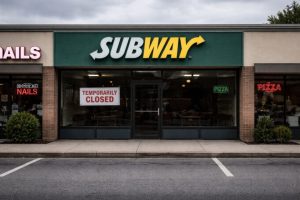
Although Subway corporate remains healthy and growing, some of its individual franchisees are facing real financial distress. This is due to a confluence of pressures:
- Rising ingredient and labor costs, eating into already slim margins
- Mandatory remodel requirements, which can cost hundreds of thousands per location
- Aggressive discounting and promotions, which reduce average ticket values
- Franchisee overlap, where nearby Subways cut into each other’s sales
Because all Subway stores are franchised, the brand’s financial performance doesn’t necessarily protect each operator. If a franchisee’s revenue falls below break-even, especially in high-cost markets, they may find themselves unable to cover rent, payroll, or loan payments.
Recent years have seen multiple multi-location operators either scale back or seek bankruptcy protection, raising questions about the sustainability of the franchise model under certain economic conditions.
What Does the MTF Enterprises Bankruptcy Reveal About Franchise Risks?
One of the most telling examples came in early 2026, when MTF Enterprises, a 43-location Subway franchisee, filed for Chapter 11 bankruptcy.
What Happened to MTF Enterprises?
MTF operated Subway locations across Pennsylvania, Maine, New Hampshire, and Virginia. According to court documents:
- Assets ranged from $500,000 to $1 million
- Liabilities ranged from $1 million to $10 million
- Outstanding debts included SBA loans, equipment leases, and over $1.4 million in merchant cash advance (MCA) loans
One MCA carried an interest rate of 59.39%, the other 94.54%. These loans allowed lenders to place liens on daily sales revenue collected through payment processors.
MTF’s CEO summed it up bluntly in court filings:
“The continued cash drain caused by the weekly and daily draws has been the primary cause of our financial problems.”
Implications for the Subway Brand
This bankruptcy doesn’t signal a collapse of the Subway corporation, it highlights the financial fragility of certain franchisees, especially when they rely on expensive, short-term capital. Similar stories have played out with other QSR brands.
The key takeaway: franchise ownership is a business venture with risks. Operators who overextend or rely on predatory financing can find themselves in dire straits, even if the brand they operate under remains strong.
Is Subway Still Expanding Outside the United States?
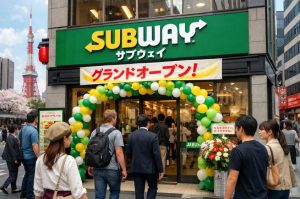
Yes, Subway is still expanding outside the United States, and this international growth is one of the clearest signs that the brand is not going out of business. In fact, Subway has recorded positive net growth internationally for consecutive years.
Since 2024, the company has entered new markets such as Paraguay and Mongolia, while also strengthening its footprint in established regions including France, Belgium, Brazil, and Switzerland.
International markets are especially important because they are far less saturated than the U.S. and benefit from a growing middle class with increasing demand for affordable, quick-service dining. Subway’s customizable menu and global brand appeal make it highly competitive abroad. In many countries, its recognition rivals major chains like McDonald’s, reinforcing its attractiveness as a franchise opportunity worldwide.
What Should Customers and Investors Expect from Subway Going Forward?
The Subway of 2026 is markedly different from the Subway of the past, and that’s not a bad thing.
For customers, expect:
- Modernized stores that feel cleaner, faster, and more digital-friendly
- Menu innovation with healthier and fresher options
- Continued app-based deals, exclusive footlong offers, and loyalty perks
For investors and potential franchisees, it’s more complex. The bar is higher than ever:
- Capital investment is required for remodels
- Franchisees must meet performance standards
- Markets are carefully analyzed before approvals
Still, the brand’s international momentum and domestic restructuring suggest a company that’s future-proofing, not faltering.
Conclusion
In conclusion, Subway is not going out of business in 2026, but it is undergoing a significant transformation. With a leaner U.S. footprint and a clear focus on international growth, the brand is shifting from mass expansion to strategic refinement.
While franchisee challenges and closures have sparked concerns, Subway’s core business remains strong, especially under the guidance of Roark Capital.
Customers can expect better-quality stores and modernized menus, while investors will find a more disciplined, performance-driven franchise model.
The path forward isn’t without challenges, but Subway’s global presence and adaptive strategy position it to remain a major player in the fast-food landscape for years to come.
FAQs About Is Subway Going Out of Business
Does a Subway store closure mean the brand is failing?
No. Most closures reflect strategic decisions to exit underperforming locations rather than a collapse of the brand.
Are Subway franchisees required to take high-interest loans?
No. Financing choices are made by franchisees, though some turn to high-cost options when cash flow tightens.
Why do some Subway locations reopen after sudden closures?
Temporary closures can occur due to licensing or administrative issues, which may be resolved quickly.
Will Subway open new locations in the U.S. again?
Yes, but selectively. Future openings will focus on high-performing areas rather than mass expansion.
How does Subway decide which stores to remodel?
Decisions are based on sales data, location quality, and long-term growth potential.
Is Subway still competitive with newer fast-food brands?
Subway faces intense competition but remains competitive through pricing, convenience, and brand recognition.
Should customers worry about losing Subway locations in their area?
Closures are localized. Many communities will continue to have access to Subway through consolidated or relocated stores.