


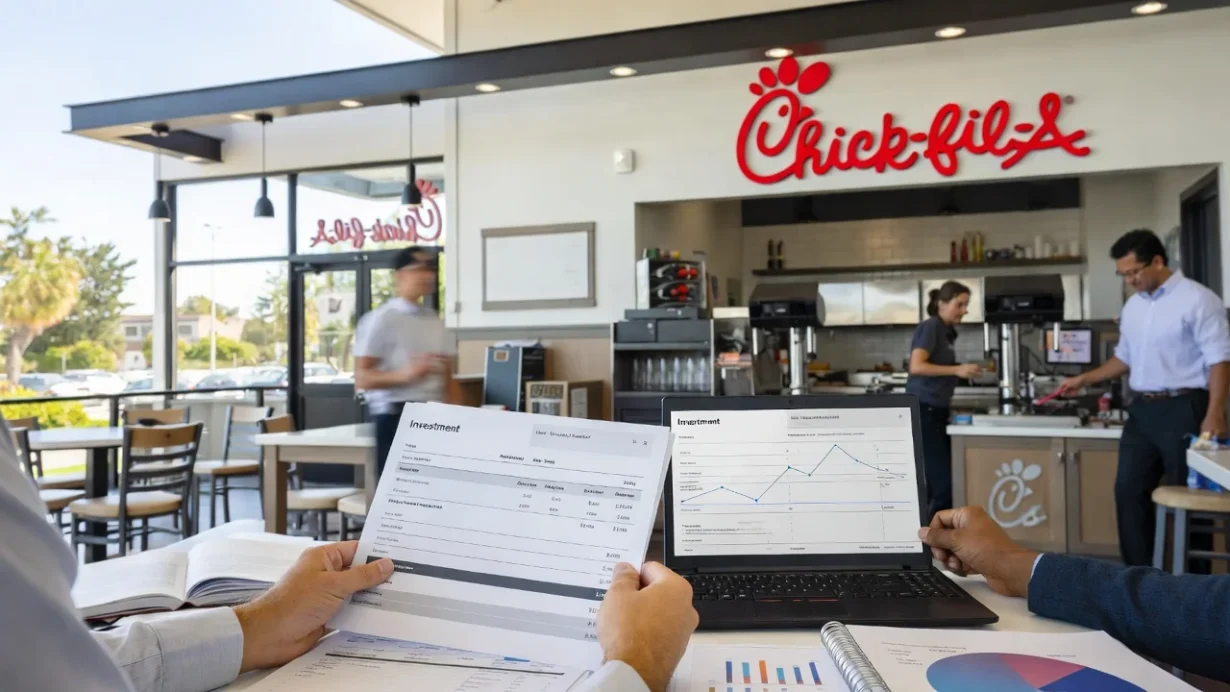

The Chick-fil-A franchise cost in 2026 is $10,000 upfront, but that’s only the beginning of the financial story.
While the initial franchise fee is one of the lowest in fast food, operators pay 15% of gross sales plus 50% of remaining profits, and they do not own the building, equipment, or equity in the business.
Here’s the quick breakdown:
- Initial franchise fee: $10,000 (non-borrowed funds required)
- Corporate-funded buildout: Chick-fil-A covers development and equipment
- Ongoing fees: 15% of gross sales + 50% of net profit
- Ownership model: Operator structure, not traditional franchise ownership
- Acceptance rate: Less than 1% annually
If you’re evaluating the real cost of opening a Chick-fil-A franchise in 2026, you need to understand how this unique operator model works, and whether it aligns with your goals.
What Is a Chick-fil-A Franchise and How Does Its Operator Model Work?
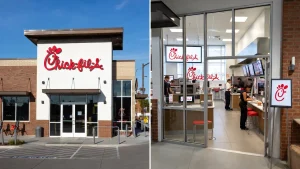
Before analyzing the numbers, it’s important to understand that a Chick-fil-A franchise does not operate like a traditional fast-food franchise.
In most franchise systems, you invest hundreds of thousands, or even millions, of dollars upfront. In exchange, you own the business assets, build equity, and potentially resell the location later. Chick-fil-A follows a different structure.
Instead of traditional franchisees, the company selects “Operators.” Chick-fil-A retains ownership of:
- The real estate
- The building
- The equipment
- Major operational decisions
You, as the operator, manage day-to-day operations, lead the team, and share in the profits. This structure significantly reduces the upfront financial barrier but also limits ownership rights.
As one Chick-fil-A Operator, Ummara Sajid of Houston, TX, explains:
“Becoming an Operator is not about making a financial investment or having a retirement option. It is about investing your time to build a culture of care around your restaurant.”
This philosophy defines the opportunity. You are not buying a passive income stream – you are committing to full-time leadership in a corporate-owned system.
Why Is the Chick Fil A Franchise Cost So Low Compared to Other Fast-Food Brands?
When you compare the chick fil a franchise cost to other major brands in the quick-service restaurant (QSR) industry, the difference is striking.
Most quick-service restaurant (QSR) brands require:
- A franchise fee of $25,000–$50,000
- A minimum net worth of $500,000–$1 million
- Total investments often exceeding $1.5 million
Chick-fil-A, however, requires only a $10,000 initial franchise fee, and no published minimum net worth requirement.
So Why is It So Inexpensive?
The answer lies in corporate control. Chick-fil-A funds the majority of the restaurant development costs itself. That includes:
- Site selection
- Property acquisition
- Construction
- Equipment installation
Because the company takes on the financial risk of development, it retains ownership and compensates itself through higher ongoing fees.
The result is a tradeoff: low upfront investment, high long-term revenue share.
How Much Is the Chick-fil-A Franchise Fee in 2026?
The official initial franchise fee for a Chick-fil-A restaurant in 2026 remains $10,000 for a single location in the United States. In Canada, it is typically $5,000 CAD.
However, the $10,000 must meet specific requirements.
Breakdown of the $10,000 Initial Franchise Fee
The initial franchise fee must meet specific criteria before approval:
- Must be non-gifted funds
- Must be non-borrowed funds
- Paid only upon official selection and approval
- Applies to a single restaurant opportunity
If you are later offered an additional location after demonstrating strong performance, a reduced franchise fee (often cited at $5,000) may apply. However, first-time applicants are typically approved for just one location.
Below is a clear summary of the franchise fee structure:
| Category | Amount | Notes |
| Initial Franchise Fee (U.S.) | $10,000 | Non-borrowed, non-gifted funds required |
| Initial Franchise Fee (Canada) | $5,000 CAD | Single-unit opportunity |
| Additional Location Fee (if approved later) | ~$5,000 | Offered selectively to high-performing operators |
| Multi-Unit Ownership at Start | Not permitted | Single-unit focus for new operators |
This fee provides access to the Chick-fil-A system but does not grant ownership of physical assets.
What the $10,000 Fee Actually Covers?
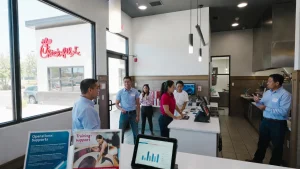
The franchise fee grants you the right to operate one Chick-fil-A restaurant under the company’s established system. Rather than purchasing property or equipment, you are entering a structured operating partnership.
The $10,000 fee includes:
- Access to Chick-fil-A’s nationally recognized brand
- Comprehensive corporate training (multi-week program)
- Ongoing operational support
- Established supply chain and vendor systems
- Marketing infrastructure and national brand recognition
- Field support and performance coaching
What the Fee Does Not Include?
Despite the low entry cost, the $10,000 franchise fee does not provide traditional ownership benefits. It does not purchase:
- Ownership of real estate
- Ownership of equipment
- Equity in the business
- The right to sell, transfer, or franchise the location
- Control over site selection
The low entry cost reflects limited asset ownership. You gain operational control and income participation, not traditional franchise equity or resale value.
What Is the Total Initial Investment Required to Open a Chick-fil-A?
Although operators only pay $10,000 upfront, total restaurant development costs typically range between approximately $300,000 to over $2 million, depending on format and location.
Chick-fil-A corporate covers these development costs, but the financial structure is important to understand.
Real Estate and Construction Structure
Chick-fil-A selects and purchases the property. It then builds and equips the restaurant. Unlike traditional franchise models, you are not responsible for securing loans or funding construction.
This significantly lowers entry risk, but removes property ownership benefits.
Equipment, Inventory, and Opening Costs
Corporate installs major equipment and infrastructure. Operators may handle opening inventory, staffing costs, and insurance arrangements.
Working Capital Expectations
Even though Chick-fil-A funds development, you should still prepare for personal living expenses during the first several months. As with most restaurants, profitability may take time to stabilize.
Here is a clearer breakdown of who covers which startup components:
| Cost Category | Estimated Range | Responsible Party |
| Franchise Fee | $10,000 | Operator |
| Real Estate Acquisition | $300,000–$1.5M+ | Chick-fil-A Corporate |
| Construction & Buildout | $200,000–$1M+ | Chick-fil-A Corporate |
| Major Equipment | Included in buildout | Chick-fil-A Corporate |
| Opening Inventory | $15,000–$65,000 (varies) | Operator |
| Insurance & Initial Operating Costs | Variable | Operator |
To better understand the financial contrast between operator-paid and corporate-funded components, consider this structural comparison:
| Investment Component | Traditional Franchise Model | Chick-fil-A Model |
| Real Estate Purchase | Franchisee | Corporate |
| Construction Costs | Franchisee | Corporate |
| Equipment Purchase | Franchisee | Corporate |
| Franchise Fee | $25K–$50K+ | $10,000 |
| Asset Ownership | Franchisee builds equity | Corporate retains ownership |
This structure explains how Chick-fil-A can promote a low franchise cost while still operating high-volume, premium locations nationwide.
The tradeoff is clear: minimal upfront capital requirement in exchange for shared long-term profitability and limited ownership rights.
What Ongoing Fees Do You Pay After Opening a Chick-fil-A Franchise?
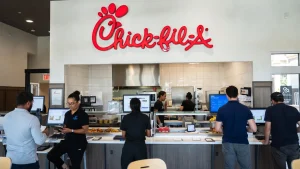
After opening a Chick-fil-A franchise, the main financial commitment comes from ongoing fees rather than the initial investment.
A key cost is the 15% service fee on gross sales, which is higher than traditional franchise royalties that usually range between 4% and 8%.
In addition, operators follow a 50% profit-sharing structure, meaning half of the remaining net profit is shared with the company.
Other operational and support expenses may include:
- Rent or occupancy payments
- Equipment lease fees
- Insurance costs
- Advertising contributions
- Technology and support services
- Payment processing charges
Simplified Overview:
| Ongoing Fee | Percentage/Estimate |
| Service Fee | 15% of gross sales |
| Profit Share | 50% of net profit |
| Advertising | 0–3% approx. |
| Rent & Equipment | Variable |
This structure reflects the company’s investment in development, support, and asset ownership.
Do You Actually Own the Chick-fil-A Restaurant or Build Equity?
In the Chick-fil-A model, operators do not own the restaurant in the traditional franchise sense.
The company retains ownership of the building, land, equipment, and the franchise agreement itself. While you run daily operations and earn income, you are not building equity in a transferable asset.
At the end of the agreement, the restaurant cannot be sold like a typical franchise business.
As Franchise Business Review founder Eric Stites noted:
“Sure it’s cheap to get in, but it’s also nearly impossible, and you don’t own the business, Chick-fil-A corporate does.”
For entrepreneurs focused on asset appreciation, this may feel restrictive, while leadership-driven operators may still find the opportunity appealing.
What Are the Financial Requirements and Eligibility Criteria to Apply?
While there is no official minimum net worth requirement, Chick-fil-A maintains strict eligibility standards to protect brand consistency and operational quality.
Professional Experience and Leadership Background
Applicants must demonstrate:
- At least 5 years of professional work experience
- Proven leadership experience
- Strong financial stewardship
- The ability to manage and motivate teams
Restaurant experience is not mandatory. Many selected operators come from diverse industries such as education, military service, healthcare, and retail.
Financial History and Upfront Capital Rules
Candidates must:
- Have the legal right to operate in the United States
- Have no bankruptcy history
- Provide $10,000 in non-borrowed funds
Financial discipline and stability are considered important indicators of responsibility.
Full-Time Commitment and Business Restrictions
Operators must:
- Work full-time in the restaurant
- Be actively involved in daily operations
- Divest from non-passive outside businesses
This is not a side investment opportunity. Chick-fil-A expects total focus and leadership presence.
How Competitive Is the Chick-fil-A Selection Process?
The selection process is famously competitive. Estimates suggest more than 40,000 applicants apply annually, with only a few hundred selected.
Acceptance rates have been cited below 1%.
The application process typically includes:
- Online application
- Multiple interviews
- Background checks
- Financial review
- Multi-week training
Some applicants report 8–10 interview rounds.
Trevelle Harvey, an Operator in District Heights, MD, explained:
“When you’re running your restaurant, you have to learn how to be flexible and balance being there for your people and running your business at the same time.”
The company prioritizes leadership character, community involvement, and long-term commitment over pure capital.
How Much Can You Realistically Earn as a Chick-fil-A Operator in 2026?
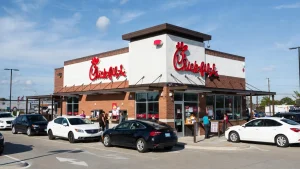
Chick-fil-A restaurants are among the highest-performing quick-service restaurants in the United States in terms of annual revenue per location.
Industry estimates suggest:
- Average annual sales per location: $8–$9 million
- Mall locations: typically lower average volumes
- Freestanding or drive-thru locations: significantly higher revenues
However, gross revenue does not equal operator income.
After deducting:
- Cost of goods
- Labor
- Rent and occupancy
- 15% service fee
- 50% profit share
Operators may earn approximately $150,000 to $250,000 annually, although performance varies by market, cost control, and leadership effectiveness.
Here’s a simplified illustration:
| Metric | Example Estimate |
| Annual Revenue | $8,500,000 |
| Operating Margin | ~15% EBITDA (pre-fees) |
| Estimated Operator Income | $150,000–$250,000 |
Profitability may take time to stabilize, and early years may require strong financial planning
How Does the Chick-fil-A Franchise Cost Compare to McDonald’s, KFC, and Other QSR Brands?
When comparing opportunities, it’s essential to evaluate total structure, not just the initial franchise fee.
| Brand | Franchise Fee | Total Investment | Ownership | Royalty |
| Chick-fil-A | $10,000 | Corporate-funded | No asset ownership | 15% + 50% profit |
| McDonald’s | $45,000 | $1.3M–$2.3M | Yes | ~4–5% |
| Pizza Hut | $25,000 | $780K–$2M | Yes | ~6% |
| Panera | $35,000 | $600K–$4.9M | Yes | Varies |
Chick-fil-A offers lower upfront risk and eliminates heavy borrowing, but it limits equity growth and resale value compared to traditional franchise ownership.
Is the Chick-fil-A Franchise Opportunity Worth It for You in 2026?
Whether the Chick-fil-A franchise cost is worth it in 2026 depends largely on your personal business goals and expectations.
For many entrepreneurs, the opportunity is attractive because it avoids multi-million-dollar debt, offers strong corporate support, encourages hands-on leadership, and provides structured operating systems that simplify day-to-day management.
However, the model may not suit everyone. It may be less ideal if you want to build multi-unit wealth, rely on resale value, prefer a passive investment approach, or seek full business autonomy.
Chick-fil-A describes the role as a “life investment,” meaning it is designed for committed operators focused on long-term involvement rather than investors looking to expand a large franchise portfolio.
Conclusion
The Chick-fil-A franchise cost in 2026 is among the lowest upfront investments in fast food at $10,000. However, it includes ongoing fees, strict operational rules, and limited ownership rights.
The model suits entrepreneurs seeking a hands-on leadership role within a strong brand while sharing profits.
If your goal is building equity, scaling multiple locations, and maintaining resale value, traditional franchises may be better.
Understanding the full financial structure, beyond the initial fee, is crucial before applying.
Frequently Asked Questions
Can you sell a Chick-fil-A franchise to someone else?
No. Operators do not own transferable equity and cannot sell their location.
Are Chick-fil-A operators allowed to own other businesses?
Operators must divest from non-passive business interests and commit full-time.
Does Chick-fil-A provide financing?
Corporate funds development reduces the need for traditional financing.
How long does it take to open after approval?
The timeline varies based on site development and training completion.
Are mall locations less profitable?
Mall locations typically generate lower average sales than freestanding units.
What happens if your restaurant isn’t profitable immediately?
Profitability can take time. Operators must be financially prepared for early fluctuations.
Is prior restaurant experience required?
No. Leadership experience is more important than a restaurant background.