


What happens when a state long considered reliably red suddenly produces a string of unexpected Democratic victories? That is the question dominating political conversations after the March 24, 2026 special elections in Florida.
What was once seen as a predictable GOP stronghold is now showing visible cracks, not through sweeping statewide shifts, but through targeted, high-impact local changes driven by economic pressure and voter frustration.
The results have not flipped the state overnight, but they have fundamentally changed how both parties are approaching Florida.
Campaign strategies are being rewritten in real time, and both sides are recalibrating expectations ahead of the August primaries and November general election.
How Did Emily Gregory Flip a Trump-Backyard District?
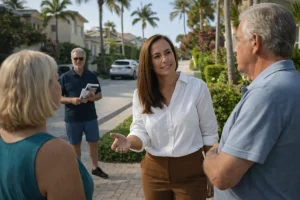
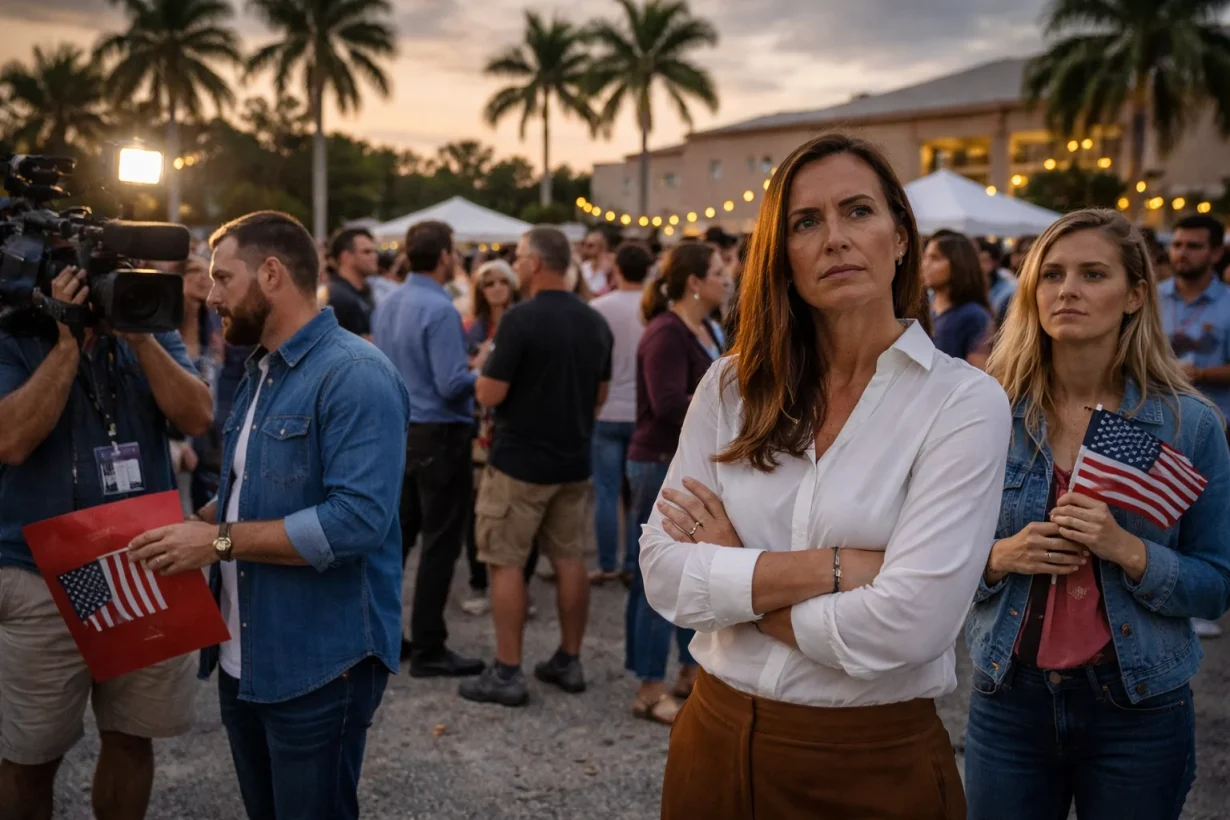
The most symbolic result came from Florida House District 87 in Palm Beach County. Democrat Emily Gregory’s victory over Republican Jon Maples has quickly become the defining moment of this election cycle.
This district is not just another suburban seat. It includes Mar-a-Lago, closely associated with Donald Trump, making the outcome politically and symbolically significant.
Gregory secured 51.2 percent of the vote, completing what analysts describe as a 21-point swing compared to the 2024 results. Just two years ago, Republicans held this district comfortably, and Trump himself carried it by a strong margin.
What changed was not necessarily party loyalty, but voter priorities.
Gregory’s campaign avoided national political messaging and instead focused almost entirely on local economic concerns. Rising property insurance premiums, increasing housing costs, and financial insecurity became the core of her messaging.
A Palm Beach voter described the shift in simple terms:
“We’ve voted Republican for years, but the insurance bills are getting impossible. This time it felt like someone was actually talking about our situation.”
Political observers are now referring to this as the “kitchen table override” effect, where immediate financial concerns outweigh long-standing ideological alignment.
Was This an Isolated Upset or the Start of a Pattern?
If District 87 had been the only surprise, it could have been dismissed as a localized anomaly. However, the result in State Senate District 14 tells a broader story.
Democrat Brian Nathan narrowly defeated Republican Josie Tomkow by just 408 votes in Hillsborough County. While the margin was slim, the implications were significant.
This was a district that Donald Trump carried by 7 points in 2024. For Democrats to flip it in a special election environment signals more than just turnout dynamics.
It suggests a measurable shift in voter behavior, particularly in suburban and mixed-income areas.
Nathan’s background as a Navy veteran and union organizer allowed him to position himself as both disciplined and relatable. His messaging mirrored Gregory’s approach, focusing on affordability, wages, and cost-of-living pressures rather than national partisan conflicts.
A campaign volunteer summarized the mood on the ground:
“People weren’t arguing about politics at the doors. They were talking about rent, insurance, and groceries. That changes everything.”
The pattern emerging is not ideological realignment, but economic prioritization.
Can Ashley Moody Hold the Senate Seat Against a Rising Challenge?
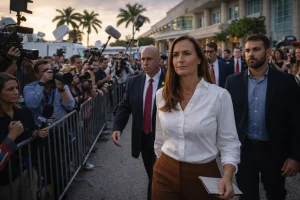
While state-level races have delivered surprises, the biggest political prize remains the U.S. Senate seat previously held by Marco Rubio.
Ashley Moody, appointed in 2025, enters the race with strong institutional backing and financial resources. Her campaign has already raised over five million dollars, giving her a significant advantage in media and outreach.
However, early polling suggests vulnerability.
A February 2026 University of North Florida poll shows Moody leading Alex Vindman 45 percent to 38 percent, with 15 percent of voters still undecided. That undecided block has become the focal point of both campaigns.
The dynamics of this race can be better understood through a comparison:
| Candidate | Background | Key Strength | Main Challenge |
| Ashley Moody | Former Attorney General | Strong GOP backing and funding | Weakening support among female voters |
| Alex Vindman | Former NSC official, Army veteran | High national profile and fundraising momentum | Needs broader appeal beyond core Democrats |
Vindman has built his campaign around themes of accountability and integrity, leveraging his national recognition. Meanwhile, Moody is emphasizing stability, law enforcement credentials, and conservative continuity.
A Democratic strategist noted:
“The Gregory win changed how we look at this race. If suburban voters are moving, even slightly, this becomes competitive much faster than expected.”
At the same time, Moody’s campaign remains confident.
A senior Republican advisor commented:
“Florida is still Florida. Special elections are one thing. A statewide race with full turnout is a different battlefield.”
Why Does the Panhandle Still Tell a Different Story?
Despite Democratic gains elsewhere, Florida’s political landscape remains uneven. Nowhere is this more evident than in the Panhandle.
In U.S. House District 1, formerly represented by Matt Gaetz, Republican Jimmy Patronis secured a clear victory in the 2025 special election with 56.9 percent of the vote.
Although this was lower than Gaetz’s previous margin, it still reflects strong Republican dominance.
The Panhandle continues to operate under a different political dynamic, where cultural alignment and party loyalty remain more influential than economic dissatisfaction.
Patronis has since focused on fiscal conservatism and policy initiatives such as stricter regulations for commercial driver licensing. His early legislative activity is aimed at reinforcing his credentials ahead of the 2026 general election.
A local voter in the region explained the contrast:
“People here still care about the bigger picture issues. The economy matters, but not in the same way as in South Florida.”
This divide highlights an important reality. Florida is not shifting uniformly. Instead, it is fragmenting into politically distinct regions with different priorities and voting behaviors.
What Role Is the “Gregory Effect” Playing Across Florida?

The term “Gregory Effect” is now being used to describe a broader strategic shift in Democratic campaigns across Florida.
Rather than focusing on national narratives, candidates are zeroing in on hyper-local economic issues. Property insurance has become one of the most powerful political drivers in the state, particularly in coastal and suburban districts.
Housing affordability is another key factor, with rising costs reshaping voter expectations and tolerance for traditional party messaging.
The impact of this approach is already being felt beyond the districts that flipped.
A campaign consultant described the shift:
“Every candidate is now asking the same question: what are voters paying every month, and how do we talk about that clearly?”
Even Republican campaigns are beginning to adjust their messaging to address these concerns more directly.
What Are the Key Dates Shaping the 2026 Election Cycle?
With momentum building, the upcoming election calendar will play a critical role in determining whether these shifts are temporary or long-lasting.
| Event | Date |
| Primary Election Day | August 18, 2026 |
| Voter Registration Deadline | October 5, 2026 |
| General Election Day | November 3, 2026 |
The August primaries will be particularly important, as they will test candidate strength, turnout enthusiasm, and message effectiveness ahead of the general election.
What Does This Mean for Florida’s Political Future?
Florida is no longer behaving as a monolithic red state, but it is not turning blue either. Instead, it is entering a phase of competitive unpredictability driven by localized issues and shifting voter priorities.
Economic pressure is emerging as the dominant force shaping voter behavior, cutting across traditional party lines. Suburban districts, once considered safe, are now active battlegrounds, while rural strongholds remain largely stable.
A veteran political analyst summarized the situation:
“Florida hasn’t flipped. It has fractured. And in that fragmentation lies opportunity for both parties.”
The coming months will determine whether March 2026 was an early signal of bigger change or simply a moment of disruption in an otherwise stable political landscape.
FAQs
What caused the shift in Florida’s special election results in March 2026?
Economic issues like rising insurance, housing costs, and financial pressure.
Who is Emily Gregory, and why was her victory significant?
A Democrat who flipped a strong Republican district, signalling change.
Is Florida turning into a Democratic state after these elections?
No, it is becoming more competitive, not fully shifting.
What is the “Gregory Effect” in Florida politics?
A focus on local economic issues over national politics.
Why are suburban districts becoming more competitive in Florida?
Voters are prioritising cost-of-living concerns over party loyalty.
What are the key upcoming election dates in Florida for 2026?
Primaries: Aug 18, Registration: Oct 5, Election: Nov 3