




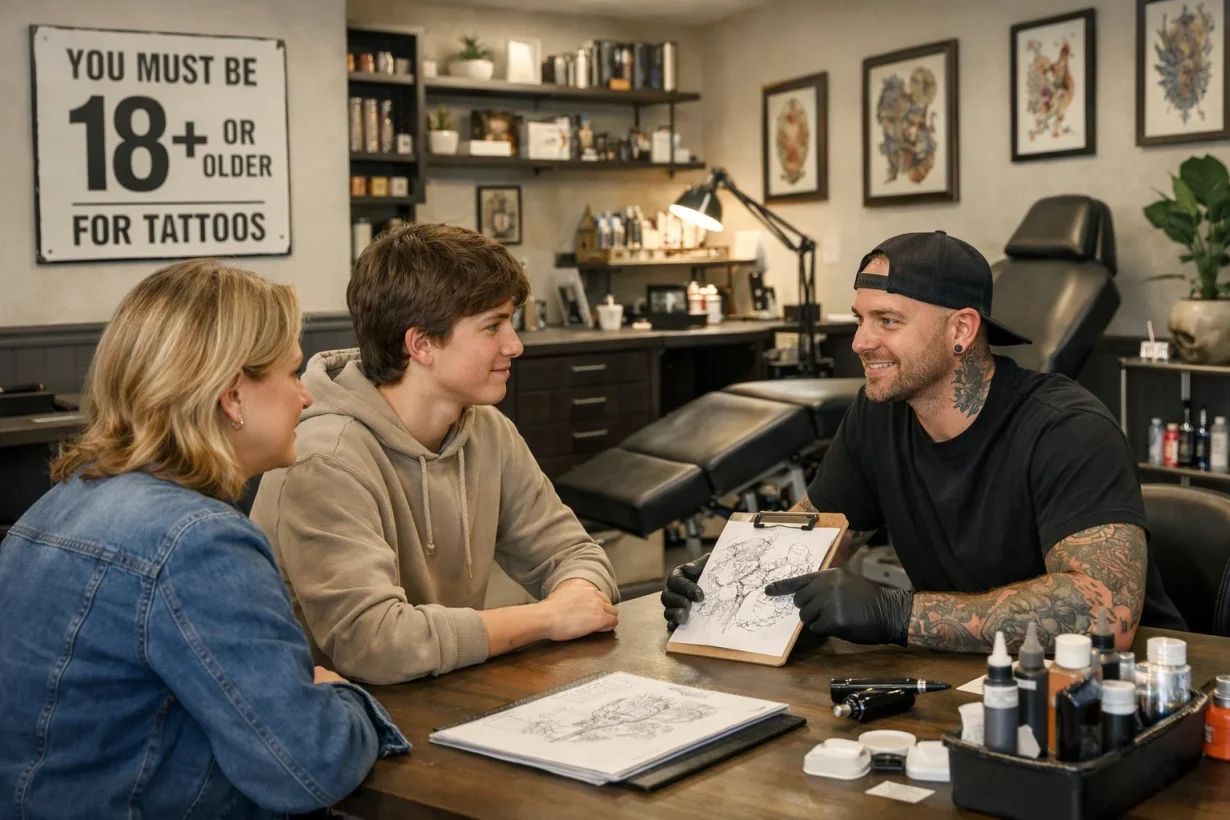

In the United States, you generally have to be 18 years old to get a tattoo without parental consent. This is the legal age of majority in nearly every state.
However, some states allow minors aged 16–17 to get tattooed with written parental consent, while others prohibit it entirely, regardless of permission. The rules vary significantly.
Key Takeaways:
- Most states set 18 as the minimum age for tattoos without consent
- A few allow tattoos for minors with notarized parental approval
- Several states, like New York and California, do not allow any exceptions
- Studio policies can be stricter than state law
- Always check local regulations before booking an appointment
What Is the Legal Age to Get a Tattoo in the United States?
Across the United States, there is no federal law that regulates the minimum age for getting a tattoo.
Instead, each state sets its own tattooing laws, but a common theme exists: you must be at least 18 years old to get a tattoo without needing consent.
This age limit is rooted in the legal understanding that minors cannot provide informed consent for permanent body modifications.
Because tattoos involve piercing the skin and carry health risks, the law treats them seriously, much like medical procedures.
In all 50 states and Washington, D.C., 18 is the baseline legal age.
States that do allow minors to be tattooed usually enforce strict conditions, such as parental presence, notarized documentation, and sometimes, even a waiting period or specific circumstances.
Regardless of state law, many professional tattoo artists choose not to tattoo anyone under 18 for liability and ethical reasons.
Can You Get a Tattoo Under 18 With Parental Consent?
Yes, in some states, minors can get tattooed if their parent or legal guardian provides written and/or notarized consent.
The rules vary greatly between states and even within cities or counties.
These laws are in place to ensure the decision is supervised and not impulsively made by minors.
Key points to know:
- Minimum age with consent is usually 16, but in some areas, it can be lower
- Consent must often be written and notarized
- Many states require the parent or guardian to be physically present
- Tattoo shops may still refuse to tattoo minors, even with consent
States allowing tattoos under 18 with consent include:
- Florida: Legal at 16 with notarized parental consent and presence
- Texas: Allowed only to cover up offensive or gang-related tattoos
- Ohio and Virginia: Permit tattoos at 16–17 with signed consent forms and ID
- West Virginia and Kentucky: Allow tattoos with notarized consent forms
Even where it’s legal, shop policies may still prevent tattooing minors to avoid potential legal or health issues.
Which States Don’t Allow Tattoos for Minors at All?
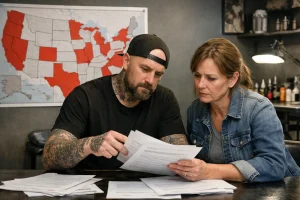
Some states have a zero-tolerance policy when it comes to tattooing minors.
This means that no one under the age of 18 can legally receive a tattoo under any circumstance, even if their parent or guardian consents.
These laws are based on the belief that tattoos are permanent and involve significant health and safety considerations, such as infection, improper aftercare, or emotional regret.
States that enforce these strict laws are often concerned with protecting both minors and the professionals who may be held liable for complications.
States with No Tattooing Under 18
- California: Tattooing a minor is completely prohibited, regardless of consent
- New York: The law prohibits tattoos on anyone under 18, even with a guardian present
- Illinois: Does not allow tattooing minors under any circumstance
- South Carolina: Tattooing minors is a criminal offense, no exceptions
- Washington: Law forbids any tattooing of individuals under 18
- New Hampshire: No tattooing of minors allowed, even with parental consent
- Mississippi: Tattoos and body piercings are restricted to those 18 and older only
Why Consent Isn’t Enough?
- Legal Contracts: Minors cannot legally enter contracts or waive liability
- Informed Decision: Legislators argue that minors may not fully understand the long-term consequences
- Health Risks: Younger individuals may face increased risks from improper aftercare or allergic reactions
Public Health Focus
- Protecting developing bodies from potential complications
- Preventing infections, keloids, or reactions to pigments
- Ensuring decisions are made when the individual is fully mature
In these states, any tattooing of minors can lead to fines, jail time, or business license revocation for the artist.
What Are the State-by-State Tattoo Age Laws in the U.S.?
Tattoo laws across the United States vary significantly from one state to another, and understanding them is essential before booking an appointment, especially for minors and parents.
While federal law does not regulate tattoo age limits, each state has established its own rules regarding the minimum age, parental consent, studio licensing, and more.
This detailed state-by-state breakdown will help you navigate the legal landscape surrounding tattoos for minors and ensure you’re following the correct procedures in your area.
| State | Minimum Age With Parental Consent | Is Tattooing Minors Allowed? | Consent Requirements / Key Notes |
|---|---|---|---|
| Alabama | Not specified | Yes | Written consent, signed in front of the artist |
| Alaska | 18 | Yes | Written consent + parent must be present |
| Arizona | Not specified | Yes | Parent must be physically present |
| Arkansas | Not allowed | No | Tattooing minors prohibited |
| California | Not allowed | No | No exceptions, strictly 18+ |
| Florida | 16 | Yes | Notarized consent + parent present + photo ID |
| Georgia | Not allowed | No | Only doctors can tattoo minors for medical purposes |
| Idaho | 14 | Yes | Written consent signed in front of artist |
| Illinois | Not allowed | No | Tattooing minors strictly prohibited |
| Indiana | Not specified | Yes | Parent must be present + written consent |
| Iowa | Not allowed | No | Tattooing minors prohibited |
| Kansas | 18 | Yes | Notarized written consent + parent present |
| Kentucky | Not specified | Yes | Notarized written consent required |
| Louisiana | 18 | Yes | Parent must be present during procedure |
| Maine | Not allowed | No | Tattooing minors prohibited |
| Maryland | Not specified | Yes | Written consent kept on file for 3 years |
| Massachusetts | 18 | No | No tattoos under 18 |
| Michigan | Not specified | Yes | Written, informed consent required |
| Minnesota | Not allowed | No | All tattooing of minors is banned |
| Mississippi | Not allowed | No | Complete ban |
| Missouri | Not specified | Yes | Parent must give written consent in presence of artist |
| Montana | Not specified | Yes | Parent must give in-person, explicit consent |
| Nevada | Varies by region | Yes (some areas) | Local law; usually allowed at 14+ with consent |
| New Hampshire | Not allowed | No | No tattooing minors |
| New Jersey | 16 | Yes | Written consent + parent present |
| New Mexico | Not specified | Yes | Written consent + parent present |
| New York | Not allowed | No | No tattoos for minors under any circumstance |
| North Carolina | Not allowed | No | Tattooing minors banned |
| North Dakota | Not specified | Yes | Parent must be present + written consent |
| Ohio | 16 | Yes | Written consent + parent must be present |
| Oklahoma | Not allowed | No | No exceptions |
| Oregon | Not allowed (except medical) | No | Medical tattoos only with doctor’s approval |
| Pennsylvania | Not specified | Yes | Parent must be present + written consent |
| Rhode Island | Not allowed | No | Illegal to tattoo minors |
| South Carolina | Not allowed | No | Also bans head, face, and neck tattoos |
| South Dakota | Not specified | Yes | Parent must be present + written consent |
| Tennessee | 16 (cover-up tattoos only) | Yes (limited) | Only to cover existing offensive tattoos |
| Texas | 18 (cover-up tattoos only) | Yes (limited) | Only to cover offensive/gang tattoos with parent affidavit |
| Utah | Not specified | Yes | Parent must be present + written consent + ID |
| Vermont | Not specified | Yes | Written consent signed in front of artist |
| Virginia | Not specified | Yes | Parent must be present |
| Washington | Not allowed | No | No tattooing of minors allowed |
| West Virginia | Not specified | Yes | Parent must provide written consent |
| Wisconsin | Not allowed | No | Only doctors for treatment purposes |
| Wyoming | Not specified | Yes | Verbal consent + parent presence |
Whether you’re a teen considering your first tattoo or a parent looking to support a safe decision, it’s important to review your state’s specific laws and studio policies.
Keep in mind that local city or county laws may be even stricter than state-level rules. Always verify with a licensed studio to stay within the law and avoid unnecessary risks.
Why Are Tattoo Age Restrictions Important?
Tattoo age laws are not arbitrary. They are designed to protect minors, ensure safe practices, and uphold professional standards.
Without such restrictions, younger individuals may face long-term physical or emotional consequences.
Reasons for tattoo age restrictions include:
- Informed Consent: Minors often lack the legal or emotional maturity to make permanent body decisions
- Health Risks: Younger skin is more prone to complications like infections, scarring, or allergic reactions
- Body Development: A growing body may distort tattoos over time
- Professional Integrity: Artists risk fines, license revocation, or lawsuits if they violate age laws
Ultimately, these laws help reduce regret and medical complications for both teens and artists.
Are There Any Exceptions to Tattoo Age Laws?
Yes, a few states allow limited exceptions where tattooing minors is permitted, even without the standard age requirement.
However, these exceptions are rare and usually come with strict oversight.
Common exceptions include:
- Medical Necessity: Tattoos used as markers for radiation therapy or surgical procedures
- Tattoo Cover-Ups: Some states, like Texas and Tennessee, allow tattoos on minors to cover offensive, gang-related, or drug-related tattoos
- Religious or Cultural Traditions: In certain tribal or indigenous practices, tattoos may be allowed under specific ceremonial circumstances
Even with these exceptions, most tattoo artists require documentation, proof, and possibly a physician’s note before proceeding.
Do Tattoo Studios Have Their Own Age Policies?
Yes, most tattoo studios in the U.S. have internal policies that go beyond what state laws require.
Even in states that allow tattoos for minors with parental consent, many reputable studios refuse to tattoo anyone under 18.
These studio-level decisions are often based on:
- Liability concerns: Tattooing minors can increase legal risk if complications arise
- Health and safety protocols: Studios want to ensure a fully developed immune system for proper healing
- Ethical beliefs: Many artists believe tattoos are a lifelong decision best made in adulthood
Before booking, always check with the studio’s age policy, which may be stricter than local law.
What Happens If Someone Gets a Tattoo Illegally Underage?

Tattooing a minor illegally or without proper documentation can have serious consequences for both the artist and the client.
These vary by state but often involve criminal and civil penalties.
Legal Penalties for the Tattoo Artist
- Fines: Ranging from $200 to $5,000, depending on the state
- License revocation: Repeat violations can result in a permanent ban from practice
- Criminal charges: Misdemeanor or felony charges in some states
Consequences for the Minor and Parents
- No criminal charge for the minor in most cases
- Parents may face legal repercussions for facilitating illegal tattooing
- Minors could be denied medical treatment coverage if complications arise
Can the Tattoo Be Legally Removed?
- Some states offer free or subsidized tattoo removal if the tattoo was illegally done on a minor
- Removal is painful, expensive, and may require multiple sessions
- Results may vary depending on ink color, depth, and skin type
When to Contact a Lawyer?
- If a minor was tattooed illegally
- If injuries occurred due to unsanitary equipment or lack of aftercare guidance
- If an artist failed to follow state law or studio policy
Legal professionals can help protect rights and seek compensation for any harm caused.
What Should Teens and Parents Consider Before Getting a Tattoo?
Before any teen gets a tattoo, it’s important to think through all aspects of the decision.
Tattoos are permanent and carry health and legal considerations.
Teens and parents should consider:
- Emotional readiness: Is the teen mature enough to commit to a lifelong decision?
- Design permanence: Tastes and trends change over time
- Healing time and aftercare: Infections or scarring can occur if care isn’t taken seriously
- Studio credibility: Choose only licensed, clean, and experienced studios
- Tattoo removal: Laser removal is costly, painful, and may not be 100% effective
Having open discussions and conducting thorough research ensures the decision is safe, legal, and thoughtful.
Conclusion
The question “How old do you have to be to get a tattoo?” has one general answer in the U.S.: 18 years old.
However, depending on the state, some minors may be allowed tattoos with strict parental consent, while others are completely prohibited.
Understanding these laws is crucial for teens, parents, and tattoo professionals.
To avoid legal trouble and ensure a positive experience, always check your state’s specific laws, consult a licensed studio, and never skip on research or documentation.
A tattoo may be permanent, but with the right knowledge, the decision can be safe and meaningful.
FAQs
Can a 16-year-old legally get a tattoo in the U.S.?
In some states, yes, if they have notarized parental consent and meet other state requirements.
Is it illegal to tattoo someone under 18 at home?
Yes, it is illegal and highly dangerous to tattoo a minor without meeting state regulations and licenses.
What’s the punishment for tattooing a minor without consent?
Tattoo artists may face criminal charges, heavy fines, and loss of their license to operate.
Are there any legal exceptions for underage tattooing?
Yes, in some states for medical necessity or to cover gang-related tattoos with parental consent.
Can a minor get a tattoo removed if it was illegal?
Yes, and in some states, removal may be subsidized or covered under specific programs.
Do tribal tattoos follow the same age rules?
Most states do not exempt tribal tattoos from legal age laws, though cultural practices may be respected with proper documentation.
Can military recruits under 18 get tattoos?
Military branches follow state laws and generally do not allow tattooing of underage recruits without legal consent.