

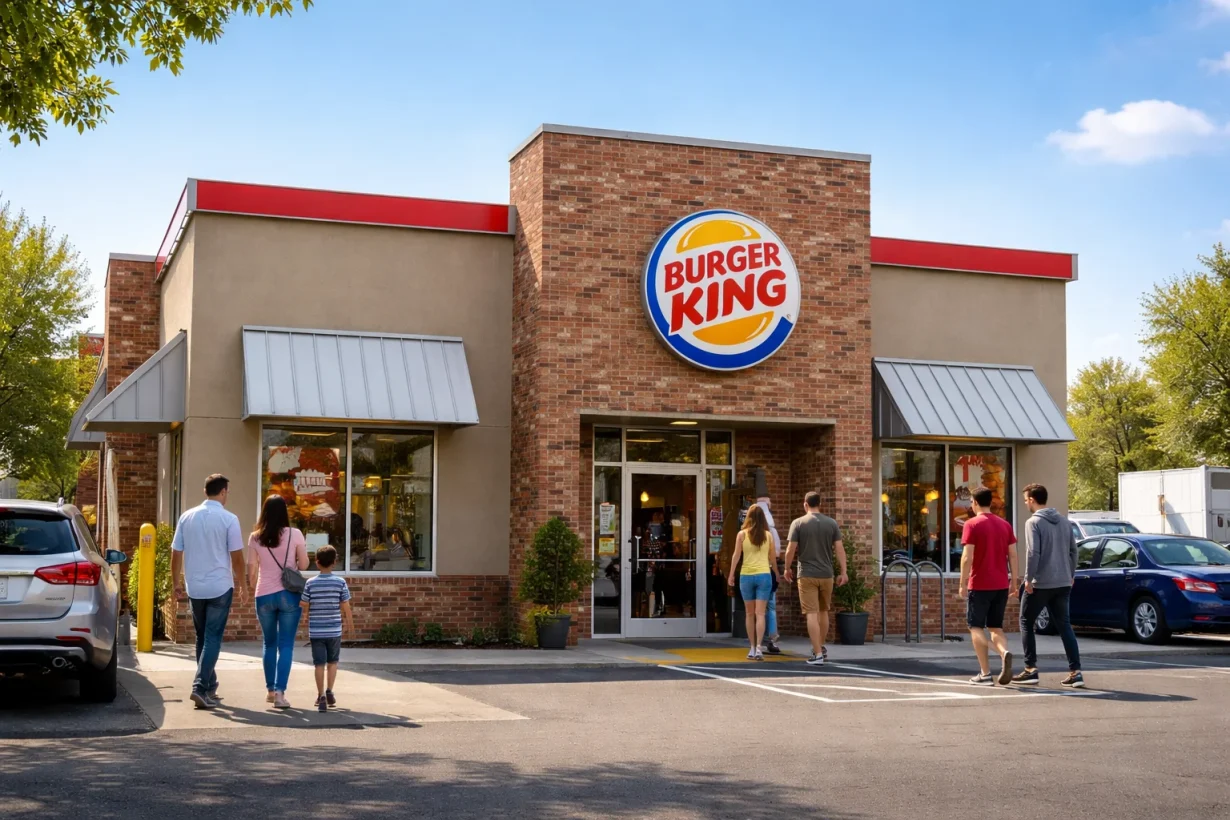

No, Burger King is not going out of business in 2026. The brand is undergoing a large-scale restructuring, closing underperforming restaurants while investing billions into remodeling and modernization under its multi-year “Reclaim the Flame” turnaround plan.
Here’s what you need to know:
- Hundreds of weaker locations have closed, but thousands remain open across the U.S.
- Several franchisees filed for Chapter 11 bankruptcy, not the corporate brand.
- Parent company Restaurant Brands International (RBI) is investing over $2 billion in upgrades.
- Most U.S. restaurants are expected to be remodeled by 2028.
- Recent sales reports show signs of stabilization and growth momentum.
If you’ve seen headlines or viral posts suggesting the chain is shutting down, the reality is more nuanced, and far less dramatic.
Is Burger King Going Out of Business in 2026?
The short answer remains no. There has been no official announcement from Restaurant Brands International that Burger King is shutting down nationwide.
Instead, the company is executing a deliberate turnaround strategy designed to improve profitability, modernize locations, and strengthen long-term competitiveness.
Like many restaurant chains, Burger King faced significant pressure during and after the COVID-19 pandemic.
Reduced foot traffic, rising labor costs, inflation, and supply chain disruptions strained many franchise operators. However, those challenges triggered restructuring efforts, not liquidation.
RBI leadership has consistently positioned the changes as a system reset. As CEO Joshua Kobza explained during an earnings call:
“We are closing a number of older, underperforming restaurants, but at the same time we are investing aggressively in modernizing the system. This is about strengthening Burger King for the long term.”
In other words, closures are part of a performance-based cleanup, not an exit from the market.
Why Are People Saying Burger King Is Shutting Down?
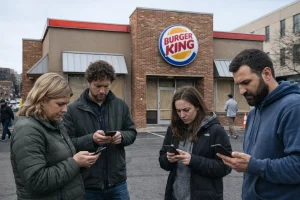
Rumours that Burger King is shutting down mainly come from social media misinformation, visible local closures, and headlines about franchise bankruptcies. Viral posts in 2023 and 2024 claiming that “all Burger King locations are closing” were widely debunked. While some restaurants did close, the idea that the entire chain is collapsing is inaccurate.
Closures feel more significant because they are local and highly visible. When multiple neighbourhood outlets shut, it can create the impression of a nationwide decline even when the brand continues operating.
Key reasons behind the confusion include:
- Viral social media claims are spreading outdated information
- Individual store closures are being mistaken for brand-wide shutdowns
- Franchisees filing for Chapter 11, which differs from brand bankruptcy
- Media coverage amplifying isolated financial struggles
Understanding the difference between brand restructuring and operator challenges is essential.
Are Burger King Stores Really Closing, and How Many?
Yes, Burger King has closed a significant number of locations, but strategically.
In 2023, company leadership indicated that between 300 and 400 underperforming U.S. restaurants would close. Additional trimming continued into 2024 and 2025 as part of a broader system optimization strategy.
By the end of 2024, Burger King operated approximately 6,700 U.S. locations, down modestly year over year. That reduction reflects a deliberate focus on improving average unit performance rather than maintaining sheer store count.
Closures typically involve:
- Older restaurants with outdated layouts
- Units with persistently low sales volumes
- Locations requiring disproportionate capital investment
- Markets with overlapping trade areas
This approach aligns with the common quick-service restaurant strategy: eliminate weak performers and reinvest in high-potential markets.
Strategic Closures vs. Business Shutdown
| Factor | Strategic Closures | Business Shutdown |
| Purpose | Improve profitability | End operations entirely |
| Scope | Selected underperforming stores | Entire company |
| Investment | Continued remodeling & upgrades | No further investment |
| Brand Status | Operating nationwide | Ceases to exist |
| Example | 300–400 stores closed in 2023 | No such announcement |
The data clearly support the first column, not the second.
What Is Burger King’s “Reclaim the Flame” Plan, and Why Does It Matter?
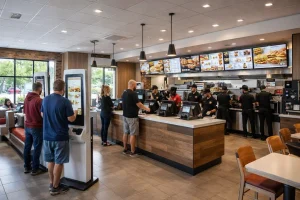
Burger King’s turnaround is centered on its “Reclaim the Flame” initiative, a multi-billion-dollar investment strategy designed to modernize the brand and reignite growth.
What the Reclaim the Flame Strategy Includes?
The initiative focuses on several core pillars:
- Remodeling restaurants with updated “Sizzle” design concepts
- Enhancing digital ordering capabilities
- Improving operational efficiency and speed of service
- Investing heavily in marketing and value messaging
- Strengthening franchisee economics
RBI has committed over $400 million specifically to the Reclaim the Flame campaign, with broader system-wide investments exceeding $2 billion when acquisitions and remodel co-investments are included.
Executive Chairman Patrick Doyle emphasized the company’s commitment, stating:
“We are not shrinking from this brand — we are doubling down. The modernization effort is designed to make Burger King stronger, more competitive, and more profitable for franchisees.”
How the Modernization Plan Affects Customers?
For you as a customer, modernization means noticeable changes:
- Updated dining rooms with contemporary décor
- Self-service kiosks
- Mobile ordering integration
- Enhanced drive-thru efficiency
- Improved lighting and parking infrastructure
By late 2024, approximately 51% of U.S. restaurants had transitioned to a modern image. The company aims for 85–90% modernization by 2028.
Remodeled stores have reportedly seen mid-teens percentage sales lifts in their first year, reinforcing the rationale behind the strategy.
If Burger King Isn’t Closing, Why Are Franchisees Filing for Bankruptcy?
This is where nuance matters. Most Burger King restaurants are not owned directly by the corporation.
Instead, they are operated by independent franchisees who pay royalties and follow brand standards.
When a franchisee files for Chapter 11 bankruptcy, it typically means:
- The operator is restructuring debt
- Restaurants may remain open
- Assets may be sold to another franchisee
- The brand continues operating
Between 2023 and 2025, several large franchisees entered Chapter 11 proceedings, including:
- Meridian Restaurants Unlimited (120 stores)
- TOMS King (90 stores)
- Premier Kings (172 stores)
- Consolidated Burger Holdings (57 stores)
These filings were largely attributed to post-pandemic revenue declines, inflation, labor shortages, and fixed debt obligations.
As Joseph Luzinski, restructuring officer for Consolidated Burger, explained in court filings:
“Although certain restaurants remained profitable, others operated at a loss, and increased food and labor costs exacerbated liquidity challenges.”
This reflects operator-level strain, not brand insolvency.
Which Burger King Franchisees Went Bankrupt, and What Happened to Their Stores?
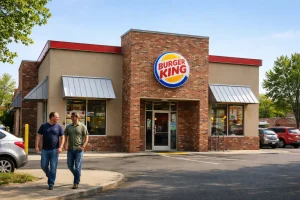
Franchisee bankruptcies have followed a common pattern: file Chapter 11, secure debtor-in-possession financing, and attempt to sell or restructure assets.
In some cases, Burger King corporate purchased units directly. In others, stores were sold to new operators. A minority of locations closed permanently.
Here’s a simplified breakdown:
Major Burger King Franchisee Bankruptcies:
| Franchisee | Units Operated | Year Filed | Primary Causes | Outcome |
| Meridian Restaurants | 120 | 2023 | COVID traffic decline, debt | Assets sold |
| TOMS King | 90 | 2023 | Revenue drop, liabilities | Restructured |
| Premier Kings | 172 | 2023 | Operational instability | Chapter 11 |
| Consolidated Burger | 57 | 2025 | Inflation, losses, debt | Seeking sale |
Importantly, these were independent operators, not Restaurant Brands International itself.
What Happened with Consolidated Burger Holdings (57 Locations)?
Consolidated Burger Holdings became one of the most recent high-profile Burger King franchisees to file for Chapter 11 bankruptcy protection in April 2025.
The Destin, Florida-based operator managed 57 locations across Florida and Southern Georgia, making it one of the larger regional operators within the Burger King system.
Its filing attracted attention because it followed a wave of similar franchisee restructurings that began in 2023.
However, it is important to remember that this was an operator-level bankruptcy, not a corporate Burger King bankruptcy. The parent company, Restaurant Brands International, was not part of the filing.
Why Consolidated Burger Filed for Chapter 11?
The Florida-based operator reported declining revenue, rising operating losses, and mounting debt. Sales dropped from $76.6 million to $67 million year over year, while operating losses widened significantly.
The company cited:
- Reduced post-pandemic foot traffic
- Inflation-driven food and labor costs
- Fixed rent and debt obligations
- Limited liquidity (approximately $179,000 in unrestricted cash)
Despite spending millions on upgrades since acquiring the stores in 2018, financial pressures mounted.
What Happens to the 57 Florida and Georgia Locations?
The filing covered 57 restaurants across Florida and Southern Georgia. Most remained operational during bankruptcy proceedings while the company pursued a court-supervised sale process.
Chapter 11 typically allows businesses to continue operating while restructuring or selling assets. It does not automatically mean immediate closures.
For customers in affected regions, operations may continue under new ownership if sales are approved.
Is Burger King Profitable or Growing Again?
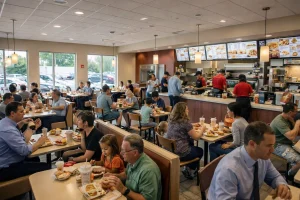
Recent performance indicators suggest cautious stabilization.
In late 2024, Burger King reported a 1.5% rise in same-store sales in the fourth quarter, following previous growth periods. Full-year comparable sales also showed modest improvement.
The company has targeted average store profitability of $230,000 by 2026, with longer-term ambitions of reaching $300,000 per unit.
Remodeled locations have reportedly delivered mid-teens sales increases in their first year, a promising sign for the turnaround.
While not explosive growth, these metrics indicate forward momentum rather than decline.
What Does Refranchising Mean, and Why Is Burger King Doing It?
Refranchising involves selling company-owned restaurants to independent franchise operators.
Burger King has accelerated this strategy, including acquiring and then redistributing large franchise groups like Carrols Restaurant Group.
The goal is to create a network of smaller, more focused operators, ideally with no more than 50 units each. This structure is believed to enhance accountability and operational quality.
Rather than retreating, Burger King appears to be recalibrating its ownership model for stronger execution at the local level.
How Can You Tell If Your Local Burger King Might Close?
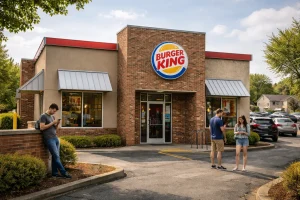
Although Burger King is not going out of business, individual locations can close for operational or franchise-related reasons. Signs that a local restaurant may be at risk often appear gradually rather than suddenly.
You might notice reduced opening hours, repeated “temporarily closed” notices, declining cleanliness or maintenance, or local reports about a franchise operator facing financial difficulties.
These indicators don’t guarantee closure but can signal underlying challenges.
Risk also varies by market. Recently renovated, high-traffic restaurants are generally more stable than older outlets with lower customer demand or pending upgrades.
Common warning signs include:
- Shortened operating hours or staffing shortages
- Ongoing maintenance issues
- Extended temporary closures
- Local franchise bankruptcy news
If you’re concerned, checking the official store locator, company announcements, or local business filings can offer clearer insight into a location’s future.
Rumor vs. Reality: What’s Actually Happening at Burger King?
Public perception often simplifies complex business restructuring into dramatic headlines. In reality, the situation is more measured and strategic:
| Rumor | Reality |
| All Burger King locations are closing | False, only selected underperforming locations are closing |
| The company filed for bankruptcy | No, certain franchisees filed Chapter 11, not the parent company |
| Sales are collapsing nationwide | Same-store sales have shown modest growth in recent quarters |
| Remodeling signals desperation | Remodeling is part of a multi-year investment strategy |
| The brand is shrinking permanently | The company is optimizing and modernizing, not disappearing |
The widespread narrative of collapse overlooks the broader context of industry-wide restructuring following pandemic disruptions and inflationary pressures.
When viewed holistically, Burger King’s actions reflect a brand working to strengthen its foundation, not one preparing to shut its doors.
So, Is Burger King Shutting Down or Restructuring?
Burger King is restructuring, not shutting down.
The closures, franchisee bankruptcies, and headlines reflect a brand recalibrating after industry-wide disruption.
With billions invested in modernization, ongoing remodels, refranchising efforts, and measurable sales stabilization, the strategy appears focused on long-term competitiveness.
For you as a consumer, that likely means upgraded restaurants, improved ordering technology, and a more streamlined footprint, not the disappearance of the Whopper.
FAQs
Can a Burger King near me close even if the company isn’t going out of business?
Yes. Individual locations may close due to lease issues, low sales, or franchisee restructuring, even though the brand continues operating nationwide.
What’s the difference between Burger King corporate and a franchise owner?
Corporate (Restaurant Brands International) owns the brand and sets standards, while franchisees independently operate most locations under licensing agreements.
Does Chapter 11 mean Burger King restaurants immediately shut down?
No. Chapter 11 allows businesses to continue operating while restructuring debt or selling assets.
Why do some remodelled Burger King locations still close?
Remodeling improves sales potential, but persistent market challenges or operator debt can still lead to closure.
Are Burger King closures concentrated in certain states?
Closures often correlate with franchisee financial health rather than state-level trends, though heavily affected operators may cluster regionally.
Will Burger King prices change during the restructuring?
Pricing adjustments typically reflect broader market inflation and competitive strategy rather than restructuring alone.
How long will the reclaim the flame plan continue?
The modernization effort is expected to continue through 2028, with the majority of U.S. restaurants updated by then.