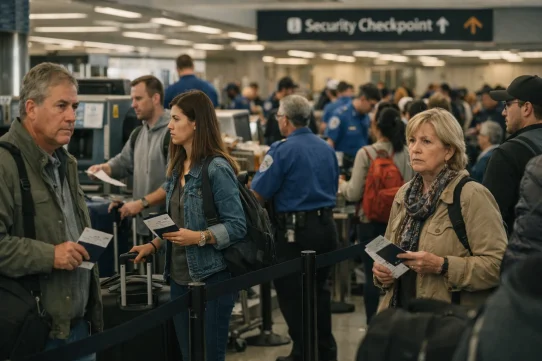




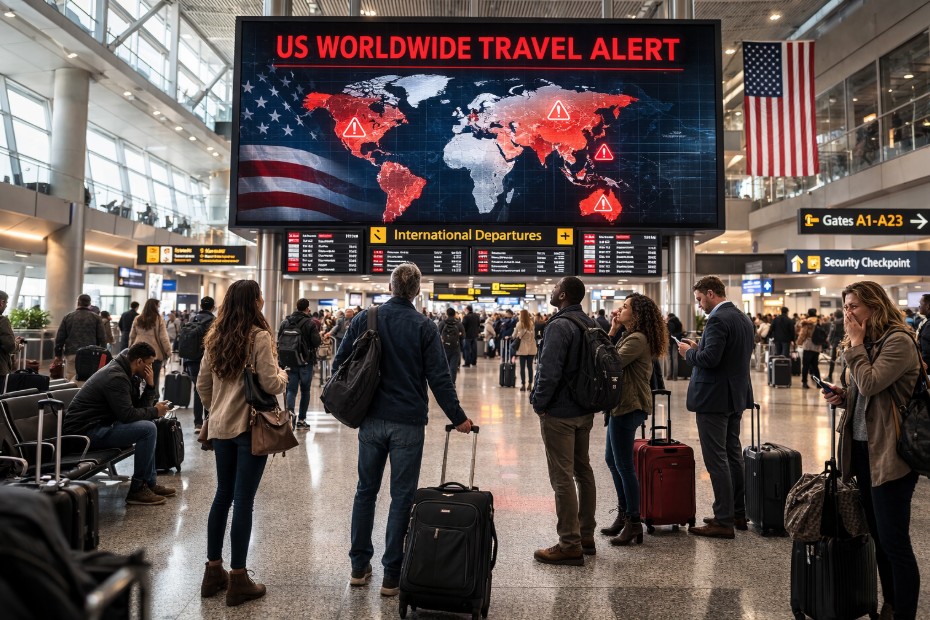

The US Worldwide Travel Alert issued on February 28 urges Americans to “exercise increased caution” worldwide following U.S. combat operations in Iran and escalating regional tensions.
While it is not a blanket travel ban, it signals elevated security risks, potential airspace closures, and widespread flight disruptions, especially across the Middle East.
Key takeaways:
- The alert applies globally, with special emphasis on the Middle East.
- Travelers may face flight cancellations, rerouting, or airport closures.
- Americans abroad should follow U.S. embassy and consulate security alerts.
- It does not automatically require canceling travel, but careful reassessment is essential.
For U.S. citizens planning international trips or currently overseas, understanding what this alert means, and how to respond, has become critical.
What Is the US Worldwide Travel Alert and Why Was It Issued?
On February 28, the U.S. Department of State issued a US Worldwide Travel Alert advising Americans to exercise increased caution globally.
The decision followed U.S. military operations targeting Iran and subsequent retaliatory strikes across parts of the Middle East.
In its official notice, the State Department stated:
“Following the launch of U.S. combat operations in Iran, Americans worldwide and especially in the Middle East should follow the guidance in the latest security alerts issued by the nearest U.S. embassy or consulate.”
The alert reflects concerns that instability may extend beyond immediate conflict zones.
Officials warned that demonstrations, anti-American sentiment, missile or drone activity, and sudden travel disruptions could emerge with little notice.
Unlike routine country-specific advisories, a worldwide caution is relatively rare. It signals that risks may not be isolated to one destination but could affect Americans traveling internationally in multiple regions.
How Is a US Worldwide Travel Alert Different from a Travel Advisory?
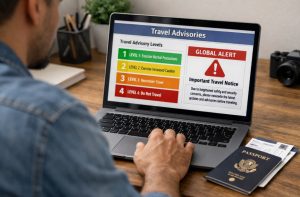
Many travelers confuse a worldwide alert with the State Department’s standard travel advisory system. However, the two serve different purposes.
A US Worldwide Travel Alert is broad and precautionary. It encourages heightened vigilance across all international destinations rather than singling out a specific country.
By contrast, country advisories assign levels ranging from Level 1 to Level 4. These levels provide more detailed guidance about risks within a particular destination.
U.S. Travel Advisory Levels
| Advisory Level | Meaning | Practical Implication |
| Level 1 | Exercise Normal Precautions | Standard travel awareness |
| Level 2 | Exercise Increased Caution | Heightened risks exist |
| Level 3 | Reconsider Travel | Serious risks; evaluate necessity |
| Level 4 | Do Not Travel | Extreme danger; avoid entirely |
The current US Worldwide Travel Alert does not automatically elevate every country to Level 3 or Level 4.
Instead, it urges Americans to review country-specific advisory levels and embassy updates before making travel decisions.
Which Countries and Regions Are Most Affected by the US Worldwide Travel Alert?
While the alert is global, its strongest emphasis falls on the Middle East. Several countries in the region have experienced direct impacts from the conflict and retaliatory strikes.
Middle East Risk Zones
Iran remains under a Level 4 “Do Not Travel” advisory due to armed conflict and limited consular support. Neighboring countries, including Iraq, Lebanon, and parts of Israel and the Palestinian territories, are also considered high risk.
Recent incidents have included missile and drone activity across the Gulf region, as well as damage to infrastructure in Bahrain and the United Arab Emirates. Airspace closures have compounded disruptions.
Countries With Updated Advisory Levels
Several Gulf states have seen advisory adjustments or renewed warnings:
- Qatar: Level 3 – Reconsider Travel
- United Arab Emirates: Level 2 – Exercise Increased Caution
- Jordan: Level 2 – Exercise Increased Caution
- Oman: Level 2 – Exercise Increased Caution
- Bahrain: Elevated warnings due to armed conflict risks
U.S. embassies in certain locations have advised citizens to shelter in place. In Israel, airspace closures led to widespread flight cancellations. In Bahrain, embassy messaging warned of confirmed drone strikes affecting high-rise areas.
These examples demonstrate that the US Worldwide Travel Alert has real-world implications across multiple transit hubs and tourism destinations.
What Travel Disruptions Are Being Reported After the US Worldwide Travel Alert?
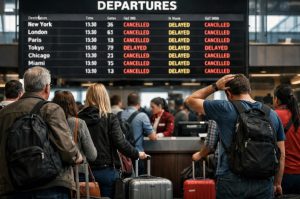
The most immediate impact of the US Worldwide Travel Alert has been on aviation. Airspace closures across Iran, Iraq, Kuwait, Bahrain, Qatar, and Israel triggered cascading disruptions worldwide.
Major Gulf carriers, including Emirates, Qatar Airways, and Etihad, have suspended or rerouted flights. Long-haul routes between Europe and Asia, which often cross Iranian or Iraqi airspace, have been diverted, adding hours to flight times.
Airports in Dubai and Abu Dhabi temporarily closed portions of their airspace following drone-related incidents. Reports confirmed damage to hotels and airport facilities in affected cities.
The ripple effect has included:
- Mass flight cancellations
- Extended delays and missed connections
- Temporary suspension of ticket sales by certain airlines
- Stranded passengers awaiting rebooking
The State Department cautioned:
“They may experience travel disruptions due to periodic airspace closures.”
For travelers, this means flexibility is essential, even if their final destination lies outside the Middle East.
How Does the US Worldwide Travel Alert Impact Americans Already Abroad?
Americans currently overseas face a different set of considerations. Rather than deciding whether to depart, they must adapt to evolving local security environments. The alert urges heightened personal awareness and close monitoring of embassy communications.
Embassy and Consulate Security Guidance
U.S. embassies in affected regions have issued specific instructions, including shelter-in-place advisories and movement restrictions.
One embassy statement emphasized:
“The security environment is complex and can change quickly.”
Embassies may temporarily limit services or reduce staff, which can affect passport renewals, visa assistance, and emergency support.
Personal Safety Expectations
Travelers abroad are advised to:
- Avoid demonstrations and large gatherings
- Maintain awareness of local developments
- Keep communication lines open with family
- Identify nearby shelters where applicable
In higher-risk zones, increased military or police presence around hotels, airports, and diplomatic facilities is common. Situational awareness and adherence to local authority guidance are critical during such periods.
What Should Travelers Do Before Leaving the U.S. During a Worldwide Travel Alert?
Planning international travel under a US Worldwide Travel Alert requires additional preparation. While not every trip must be canceled, careful review is essential.
Travelers should begin by checking the State Department’s country page for their destination. Advisory levels, recent security alerts, and embassy notices offer updated risk assessments.
Enrolling in the Smart Traveler Enrollment Program (STEP) provides real-time updates and allows embassies to contact travelers during emergencies.
Insurance coverage should also be reviewed carefully. Many standard policies exclude war-related disruptions or airspace closures. Flexible tickets and refundable accommodations can provide additional peace of mind.
Should Travelers Cancel, Postpone, or Continue Their Trip?

Deciding whether to proceed with travel depends on several factors, including destination, transit routes, and personal risk tolerance.
Travelers transiting through Middle Eastern hubs may face higher disruption risks than those flying directly to other regions. Business travel with fixed commitments may require contingency planning, while leisure trips may be easier to postpone.
Airline capacity reductions and route diversions could increase fares and reduce seat availability in the short term. Those choosing to travel should build extra time into itineraries and prepare alternative routing options.
The US Worldwide Travel Alert does not mandate cancellations, but it places the responsibility for informed decision-making squarely on travelers.
What Are the Current US State Department Travel Advisory Levels?
The U.S. Department of State uses a four-tier travel advisory system to help Americans assess safety risks before traveling abroad.
Understanding advisory levels helps contextualize the US Worldwide Travel Alert.
| Level | Risk Category | Example Context |
| 1 | Normal Precautions | Stable tourism destinations |
| 2 | Increased Caution | Elevated crime or political tension |
| 3 | Reconsider Travel | Armed conflict or major unrest |
| 4 | Do Not Travel | Active war zones, extreme danger |
The worldwide alert overlays this system, signaling global caution even if individual countries remain at Level 1 or Level 2.
Travelers should combine advisory levels with embassy-specific alerts for the most accurate picture.
How Are Airlines and Airports Responding to the US Worldwide Travel Alert?
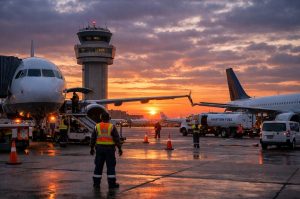
Airlines and airports have adopted a cautious approach in response to evolving security risks. Safety considerations take precedence over schedule stability during periods of geopolitical tension.
Airline Cancellations and Route Diversions
Carriers operating through Middle Eastern airspace have rerouted or suspended services. Some airlines temporarily closed ticket sales to prioritize existing passengers awaiting rebooking.
Airports in affected countries suspended flights due to airspace closures, and several international carriers adjusted schedules across Europe and Asia to avoid conflict zones.
Passenger Rights and Refund Policies
The U.S. Department of Transportation requires refunds when flights are canceled and passengers choose not to travel.
| Scenario | Passenger Entitlement |
| Airline cancels flight | Refund or rebooking option |
| Passenger cancels voluntarily | Depends on ticket type |
| Airspace closure disruption | Airline policies apply |
| Insurance claim | Subject to policy exclusions |
Travel insurance providers have noted that military conflict is frequently excluded from standard coverage. Travelers should review policy terms carefully before filing claims.
How Can Travelers Stay Updated as the Situation Evolves?
Geopolitical events can develop rapidly, and information may change from day to day. Reliable, official sources are essential.
Travelers should:
- Monitor TravelGov social media updates
- Check embassy security alerts daily
- Confirm flight status directly with airlines
- Follow local news in destination countries
The State Department’s consular affairs division has emphasized that traveler safety remains the highest priority. Regular monitoring is the most reliable strategy during a US Worldwide Travel Alert.
What Is the Overall Risk Outlook Following the US Worldwide Travel Alert?
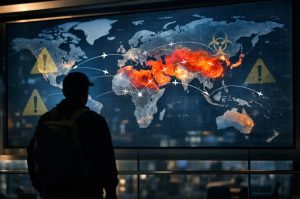
Security analysts indicate that while the US Worldwide Travel Alert reflects a serious geopolitical escalation, it does not signal a shutdown of international travel.
Instead, it represents a period of heightened volatility, particularly in regions directly or indirectly connected to the conflict.
Global aviation systems are designed to adapt, and airlines are already rerouting flights and adjusting schedules to maintain safety.
Air travel may gradually stabilize as airspace restrictions ease, but short-notice disruptions remain possible.
Travelers should anticipate:
- Temporary flight cancellations or rerouting
- Increased airport security measures
- Rapid policy changes from airlines or local authorities
The core message is preparedness, not panic. Staying informed, flexible, and responsive to official guidance remains essential.
Conclusion
The US Worldwide Travel Alert serves as a clear reminder that global events can quickly reshape the travel landscape.
While it does not prohibit international travel, it calls for heightened awareness, careful planning, and ongoing monitoring of official updates.
From advisory levels to flight disruptions, travelers must evaluate risks thoughtfully before departure. By staying informed through embassy alerts, airline communications, and government guidance, Americans can continue to travel responsibly.
In uncertain times, preparation and flexibility are the keys to navigating international travel safely and confidently.
FAQs About US Worldwide Travel Alert
Does the US Worldwide Travel Alert affect domestic flights within the United States?
The alert primarily concerns international travel. Domestic U.S. flights are generally unaffected, although international disruptions can occasionally create indirect scheduling changes.
Can the worldwide travel alert escalate into stricter country-level advisories?
Yes. If conditions deteriorate in specific countries, advisory levels may be raised to Level 3 or Level 4.
How rare is a US Worldwide Travel Alert?
Worldwide alerts are uncommon and typically issued during periods of significant global tension or elevated risk to Americans abroad.
Are cruise travelers impacted by the alert?
Cruise itineraries calling at ports in affected regions may be altered. Cruise lines typically adjust routes to maintain passenger safety.
What role do embassies play during such alerts?
Embassies provide localized security updates, assist citizens in emergencies, and coordinate evacuation guidance if necessary.
Should students studying abroad return home?
Not automatically. Decisions should be based on host country advisory levels, university guidance, and embassy updates.
How long could the current alert remain active?
The duration depends on geopolitical developments. Alerts remain in effect until the State Department determines risks have subsided.