


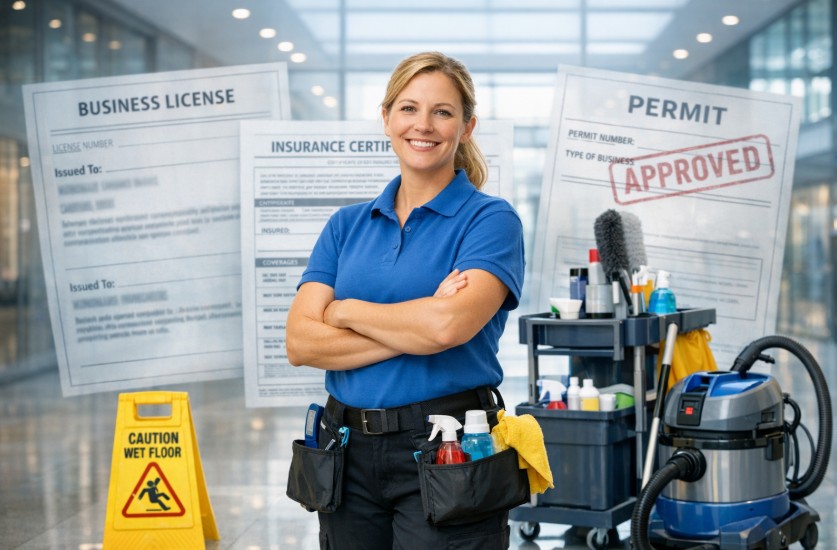

Starting a cleaning business in the United States may seem straightforward, buy supplies, find clients, and begin offering services. However, the legal foundation is far more critical than most new entrepreneurs expect. One of the first and most vital steps is ensuring your business is properly licensed.
So, what licenses are needed to start a cleaning business? At a minimum, you’ll typically need a general business license, a DBA (Doing Business As) registration if using a trade name, an EIN from the IRS, and possibly a sales tax permit.
You might also need a home occupation permit, bonding, insurance, and specialized licenses depending on the type of cleaning services and your state regulations.
Key permits/licenses you may need include:
- General business license (city/county level)
- DBA registration
- Employer Identification Number (EIN)
- Sales tax permit
- Home occupation permit
- Specialty or janitorial license (if applicable)
- General liability insurance and surety bonds
This guide walks you through all of them, helping you stay compliant and client-ready from day one.
What is a Business License and Why is it Mandatory for Cleaning Services?
Launching a cleaning business legally in the United States starts with obtaining a general business license. This license is essentially your official permission from local authorities to operate within their jurisdiction. It applies whether you’re a sole proprietor, LLC, or corporation, and whether you’re working solo or managing a growing team.
Operating without this license is not just a minor oversight. It can lead to fines, cease-and-desist orders, denial of business loans, or even a forced shutdown. In some cities, you could be fined for every day your business operates unlicensed.
This license also ensures your cleaning service is compliant with local zoning, tax, and regulatory frameworks. It’s especially important when opening a business bank account, applying for insurance, or marketing to commercial clients, all of whom may request license documentation.
Where and How to Get a Business License?
Most business licenses are issued at the city or county level, although some states, such as Florida or Nevada, also require state-level licenses. To get a license, visit your local city clerk’s office or business licensing portal.
The application is typically straightforward, requiring:
- Your business name and address
- Legal structure (LLC, sole proprietor, corporation)
- Description of services (e.g., residential cleaning, commercial janitorial, post-construction cleanup)
- An application fee, ranging from $50 to $150 annually
Pro Tip: Apply online where available, as it often speeds up the processing time.
Sample Business License Requirements by State
| State | License Type | Where to Apply | Estimated Cost |
| California | Local & Labor Registration | City Clerk & Labor Commissioner | $50–$100 |
| Texas | Local license only | Local city/county office | $25–$150 |
| Florida | State and city license | Florida Department of State | $70–$150 |
| New York | Local license required | Department of State | $50–$200 |
| Illinois | Local registration | City business portal | $50–$100 |
Always verify requirements on both state and city websites, as municipalities may have different forms and fees.
Do You Need a DBA to Start Your Cleaning Business?
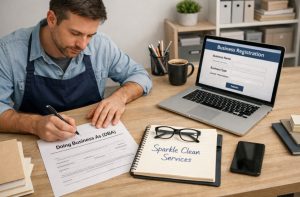
Yes, if you intend to run your cleaning company under a name that differs from your legal name. For example, if you’re named Sarah Lee but want to call your business “Spotless Shine Services,” you’ll need to register a DBA (Doing Business As). A DBA ensures you’re legally allowed to use your chosen brand name.
It also unlocks the ability to:
- Open a business bank account in the DBA name
- Accept checks, card payments, or digital transfers to that name
- Build trust with clients through consistent branding
- Comply with local and state business laws
Most DBAs are registered with your county clerk’s office or state government, depending on where your business is located. Fees range from $10 to $100, and renewals are typically required every 3 to 5 years.
Skipping a DBA registration while operating under a fictitious name can lead to fines and blocked payments, especially when cashing checks or registering with payment processors.
When Is an EIN Required and How Do You Get One for Free?
An Employer Identification Number (EIN) is the federal tax ID for your business. It’s essential for certain business structures and operations, and it’s issued by the Internal Revenue Service (IRS).
You’ll need an EIN if:
- You plan to hire employees
- You operate as an LLC, partnership, or corporation
- You want to open a business checking account
- You’re applying for business credit cards or loans
Even if you’re a sole proprietor, it’s highly recommended to get an EIN to separate your personal and business finances, and avoid using your Social Security Number on client-facing documents.
How to Apply for an EIN (Free and Fast)?
Applying for an EIN is completely free through the IRS.gov website. Many online services charge unnecessary fees for something you can do in minutes.
Steps to apply:
- Visit IRS EIN Application Page
- Click “Apply Online Now”
- Fill in your business structure and ownership details
- Submit and receive your EIN immediately via email
No physical paperwork is required unless your situation is unusual (e.g., international applicants).
Is a Sales Tax Permit Necessary for Your Cleaning Business?
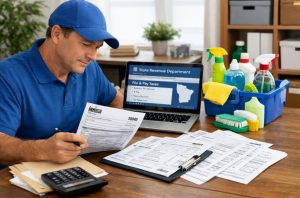
If your cleaning business sells any physical products, even small items like eco-friendly sprays, branded cloths, or supply-inclusive service packages, a sales tax permit may be required. This permit allows you to legally collect and remit sales tax to your state government.
In many states, sales tax rules apply not only to standalone product sales but also to bundled services. If cleaning supplies are included in your service fee (even when not listed separately), tax authorities may still consider part of the charge taxable.
Common situations that require a sales tax permit:
- Selling cleaning products separately
- Bundling services and supplies in one invoice
- Reselling tools or branded merchandise
State Sales Tax Permit Overview:
| State | Permit Name | When Required |
| California | Seller’s Permit | Selling cleaning supplies or equipment |
| Texas | Sales Tax Permit | Bundled cleaning and product services |
| New York | Certificate of Authority | Collecting sales tax from clients |
| Florida | Sales and Use Tax Permit | Charging for supply-inclusive services |
| Ohio | Vendor’s License | Selling taxable goods or bundled services |
Applications are typically completed online through your state’s Department of Revenue. Fees vary, with many states offering free registration.
Will You Need a Home Occupation Permit to Operate from Your House?
Running a cleaning business from home does not automatically exempt you from local zoning and use regulations. In many cities, a home occupation permit is required, particularly if your business activities extend beyond basic administrative work.
You are more likely to need this permit if you store cleaning equipment or chemicals at home, meet clients in person, or have employees or subcontractors reporting to your address. Local authorities use these permits to ensure residential safety, limit traffic, and prevent noise or environmental disruptions.
A home occupation permit may also be necessary if you list your home address on marketing materials, operate a team from your residence, or store large quantities of cleaning products or machinery.
These permits are typically issued by your city’s zoning or planning department, with annual fees ranging from $25 to $100. Additionally, homeowners’ associations or apartment communities may impose stricter rules that override municipal approvals.
Are There Specialized Licenses for Commercial and Hazardous Cleaning?
Yes. If you’re offering services that involve more than basic home or office cleaning, you may need specialized licenses or certifications. These cover higher-risk environments or services that fall under federal or state regulation.
Examples include:
- Biohazard and trauma cleanup
- Mold remediation
- Post-construction or industrial cleaning
- Cleaning in healthcare or food processing facilities
Failing to secure the appropriate permits can lead to fines, liability lawsuits, and the loss of major contracts.
Certifications to Consider
- IICRC Certification: Required for mold, water damage, and trauma cleanup services
- EPA Lead-Safe Certification: Needed when working in homes built before 1978
- OSHA Safety Training: Required for businesses using hazardous chemicals or with employees exposed to risk
- Bloodborne Pathogens Training: Essential for biohazard cleaning teams
Always check with your State Health Department or EPA regional office to confirm your obligations.
What Insurance and Bonds Are Essential to Start a Cleaning Business?
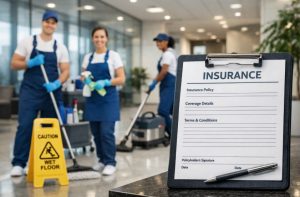
Having licenses is critical, but being insured is non-negotiable if you want to operate securely and attract higher-paying clients. Most commercial contracts, vendor marketplaces, and property managers will ask for proof of insurance and bonding before signing an agreement.
Must-Have Insurance Types
- General Liability Insurance: Covers property damage and bodily injury. Essential for homes and offices.
- Workers’ Compensation: Legally required in most states if you have employees.
- Commercial Auto Insurance: Needed if you use your car or van for transporting supplies or staff.
Recommended Bonds
- Janitorial Bond (Surety Bond) protects your client if your team causes theft or property damage.
- These bonds show professionalism and help secure larger commercial clients.
Cleaning Business Insurance Comparison:
| Coverage Type | Purpose | Required? | Avg. Annual Cost |
| General Liability | Covers accidents and lawsuits | Yes (for credibility) | $400–$700 |
| Workers’ Compensation | Employee injury protection | Yes (if hiring) | $600–$1,000 |
| Janitorial Bond | Theft protection | Often for commercial | $100–$200 |
| Commercial Auto | Business vehicle protection | Yes (if applicable) | $750–$1,200 |
What Are the State-by-State License Requirements for Cleaning Businesses?
Cleaning business license requirements vary widely across the United States. Some states have minimal oversight and only require local registration, while others mandate detailed licensing and bonding based on business structure or service type.
It’s essential to understand that both state and city-level requirements may apply, so always check local ordinances in addition to your Secretary of State.
How to Determine What Your State Requires?
- Visit your Secretary of State’s website
- Use the U.S. Small Business Administration’s License and Permit tool
- Call your local city or county clerk
- Consult a local small business attorney or virtual assistant service for guidance
Most states require registration with:
- State Revenue Department for tax and sales purposes
- Secretary of State for forming an LLC or corporation
- Local City or County Office for business licenses and zoning compliance
Key Insight: Even if your state does not require a general business license, your city or municipality probably does. Local enforcement can impose daily penalties or restrict operations if you’re unlicensed.
How Do You Apply for Cleaning Business Licenses and Permits?

Applying for the right licenses and permits is an essential part of launching a cleaning business legally. Though the specific steps vary slightly from state to state, most entrepreneurs across the U.S. will go through a fairly consistent process. Here’s how to navigate it effectively.
1. Choose Your Legal Structure and Register Your Business Name
Before tackling licensing paperwork, it’s important to determine how your business will be legally structured. Many cleaning business owners start as sole proprietors due to the simplicity, but others opt for an LLC or a corporation for legal protection and tax benefits.
Once you’ve selected your structure, you’ll also need to register your business name. If you’re planning to operate under a name other than your personal legal name, you must file a DBA (Doing Business As).
This registration allows you to operate under a brand, open a business bank account, and receive payments in your business name. Filing typically takes place at your county clerk’s office or state agency, depending on your location.
2. Apply for a General Business License
A general business license is required by most cities and counties. It legitimizes your operations and allows local governments to track and tax your business appropriately.
- Where to apply: Through your city or county clerk’s office, either online or in person
- Typical fee range: $50–$150 annually, depending on location and business type
This license is essential whether you’re working solo, managing a team, or operating out of your home.
3. Obtain Federal and State Tax Credentials
To operate your cleaning business legally and pay taxes correctly, you’ll need:
- EIN (Employer Identification Number): Required for hiring employees, opening a business bank account, or forming an LLC/Corporation. Apply for free at irs.gov.
- Sales Tax Permit (if applicable): If you sell cleaning products or charge bundled rates that include supplies, many states require you to collect and remit sales tax. Apply through your state’s Department of Revenue.
4. Secure a Home Occupation Permit (If Working From Home)
If you operate your cleaning business from your home, even without face-to-face client interactions, you may need a home occupation permit. These permits are intended to ensure that residential areas aren’t disrupted by business activity.
They’re typically issued by the local zoning or planning department and cost between $25 and $100 annually. You might be required to apply if you store chemicals or cleaning supplies at home, if you list your home address on your website or marketing materials, or if clients or employees come to your residence regularly.
Regulations can vary significantly by municipality, so always verify local rules before launching your operations.
5. Purchase Insurance and Apply for Specialty Licenses
Once you’re legally registered, protect your business by acquiring insurance and any necessary specialty certifications.
Essential Insurance Types:
- General Liability Insurance: Covers property damage or injuries
- Workers’ Compensation: Required in most states if you employ staff
- Janitorial Bond: A surety bond that assures clients of employee honesty and accountability
Specialty Licenses (Depending on Services Offered):
- Biohazard Cleanup Permits
- Mold Remediation Certifications
- EPA Lead-Safe Certification
- Bloodborne Pathogens Training
- OSHA Safety Compliance (if hiring staff)
These are often needed if servicing hospitals, labs, industrial buildings, or offering specialized post-construction cleanup.
Tip: Most licensing and insurance applications can be submitted online. Processing takes 1 to 4 weeks, so plan accordingly before launching your services.
What Happens If You Skip Licensing or Insurance Requirements?

Skipping licensing or insurance may feel like a shortcut, but it exposes your cleaning business to serious risks that can quickly stop growth or shut you down entirely.
Legal and Financial Consequences
Hefty fines and penalties:
- Fines typically range from $500 to $5,000 per violation
- Repeat violations can lead to court-ordered business closures
Personal financial risk:
Without liability insurance, you are personally responsible for,
- Property damage
- On-site injuries
- Lawsuits and legal settlements
Business and Growth Limitations
No access to commercial contracts.
Most property managers and corporate clients require:
- A valid business license
- Proof of insurance
- Tax ID or W-9 form
Platform removal: Marketplaces like Angi, Thumbtack, and Yelp may delist businesses that are non-compliant.
Lost opportunities: Without proper documentation, you’ll be limited to low-value, short-term jobs.
In the long run, getting licensed and insured costs far less than operating illegally, and it builds trust with high-value clients.
Conclusion
Starting your cleaning business on the right foot means getting licensed, insured, and compliant from the beginning. Whether you’re a solo cleaner or launching a growing team, these legal steps aren’t optional, they’re essential.
Not only will proper licensing protect you from legal trouble, but it also builds client trust, unlocks higher-value contracts, and ensures you’re operating like a professional.
Take the time to understand your local and state requirements, and use resources like government portals and virtual assistants to stay organized.
FAQs
What’s the difference between a janitorial license and a general business license?
A janitorial license often applies to commercial cleaning with stricter health or safety regulations, while a general business license applies to any business operating legally within a jurisdiction.
Can you run a cleaning business in multiple states with one license?
No. You’ll need to register your business and obtain relevant licenses in each state where you operate, especially if you hire locally or offer commercial services.
Do independent contractors in cleaning need their own licenses?
Yes. Contractors (1099 workers) are considered separate businesses and must obtain their own general business license and possibly insurance, depending on the scope of work.
How do I know if my city requires a local cleaning license?
Check your city’s business licensing division or call the clerk’s office. Even if your state doesn’t require a license, your city or county often will.
What licenses do I need if I only offer eco-friendly cleaning?
The same core licenses apply, but if your cleaning involves chemical-free products, you may avoid certain environmental permits. Still, check with your local regulations.
How often do cleaning business licenses need to be renewed?
Most are renewed annually or every two years, depending on local laws. Set reminders to avoid expiration and penalties.
Is it better to register as an LLC or sole proprietorship for licensing purposes?
Both can get licenses, but an LLC provides liability protection and may simplify tax and insurance setups. Always consult a local business advisor.