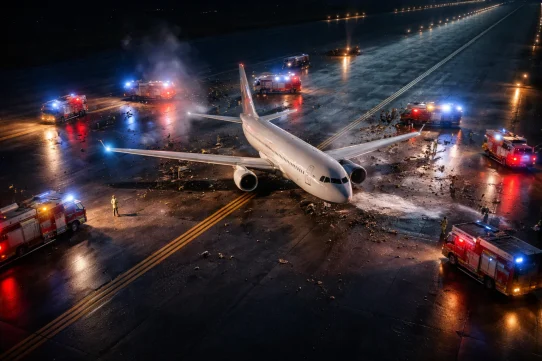



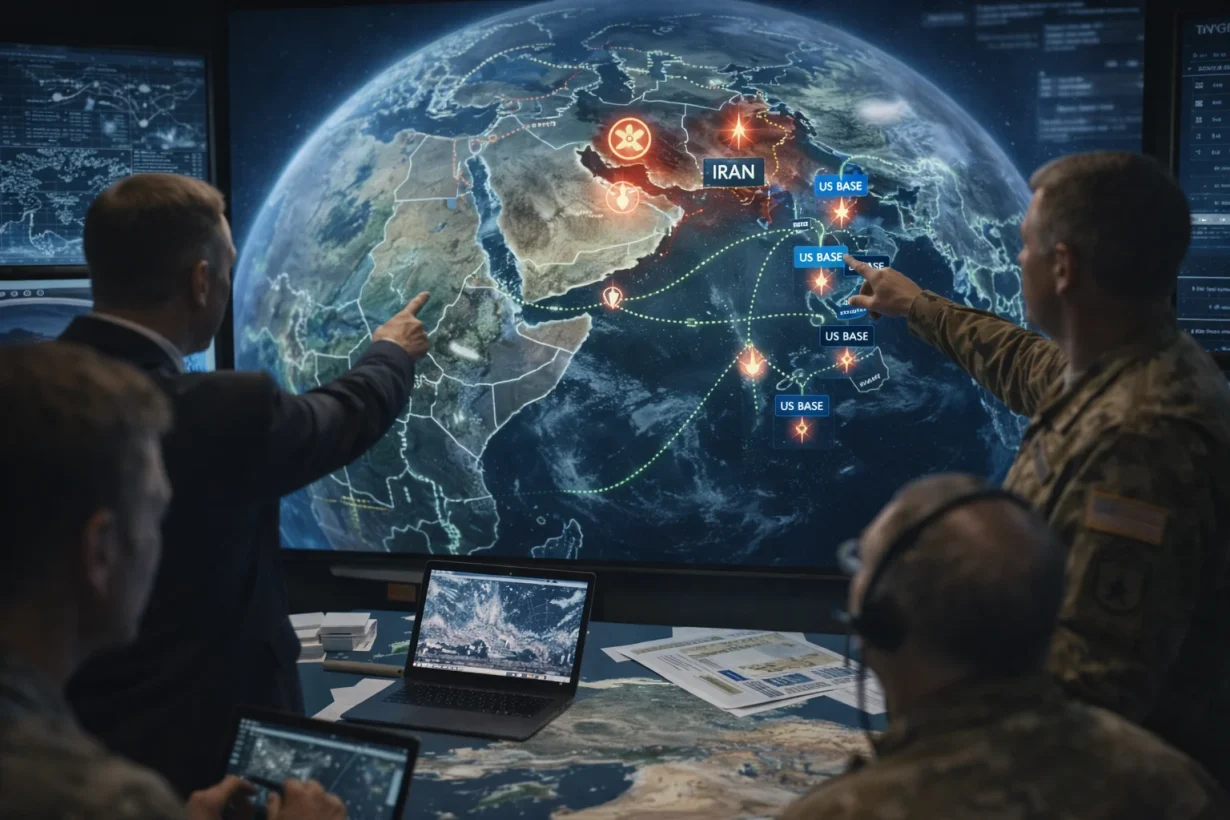

As of March 2026, the United States is engaged in direct military conflict with Iran after launching large-scale strikes on February 28, 2026.
The campaign, described by the US government as a response to imminent threats and regional instability, has quickly escalated into one of the most serious geopolitical crises in the Middle East in years.
While the war began with targeted attacks on Iranian military infrastructure, it has expanded through retaliatory strikes, tanker attacks, and rising tensions across the region.
Key factors behind the US-Iran conflict include:
- Preventing Iran from developing nuclear weapons
- Protecting US allies such as Israel and Gulf partners
- Securing oil shipments through the Strait of Hormuz
- Limiting Iran’s regional influence and proxy networks
Understanding these motivations helps explain why the US is at war with Iran in 2026 and what the conflict could mean globally.
Why is the US at War With Iran in 2026?
The United States launched military operations against Iran in late February 2026 after months of escalating tensions between Washington, Tehran, and regional allies.
The campaign, reportedly coordinated with Israel, targeted Iranian missile bases, naval facilities, and other strategic infrastructure.
US officials described the operation as a necessary step to neutralise what they called an imminent security threat.
The administration argued that Iran’s military capabilities, combined with its support for armed groups across the Middle East, posed growing risks to US forces, allies, and global energy supplies.
President Donald Trump defended the operation by emphasising the need to prevent future attacks.
“The goal of the strikes is to eliminate the Iranian nuclear programme once and for all,” Trump said while addressing reporters after the initial strikes.
Iran responded quickly with missile and drone attacks targeting US bases and allied facilities across the region, dramatically escalating the situation.
As both sides continued military actions, analysts began describing the confrontation as a full-scale regional conflict rather than a limited strike campaign.
What Triggered the US Military Strikes Against Iran in February 2026?
The immediate trigger for the war was a series of coordinated US and Israeli strikes against Iranian targets on February 28, 2026.
The operation reportedly aimed to weaken Iran’s military infrastructure and prevent potential attacks against US forces and allies.
American officials claimed intelligence suggested Iran was preparing actions that could threaten regional security. According to Washington, striking first was a defensive move designed to prevent larger casualties later.
Secretary of State Marco Rubio explained the strategy behind the decision.
“We knew that there was going to be an Israeli action, and if we didn’t move first, we could face much higher casualties among our forces and allies.”
Following the initial attacks, Iran launched retaliatory strikes across several countries hosting US troops, including Gulf states.
These responses included missiles, drones, and attacks on shipping lanes, turning the confrontation into an expanding regional conflict.
Why Does the US See Iran’s Nuclear Programme as a Major Threat?
Concerns about Iran’s nuclear activities have been one of the central drivers of tensions between the United States and Iran.
American officials argue that Iran has the technical capability to eventually develop nuclear weapons, which they believe could destabilise the Middle East and threaten key US allies in the region.
Key concerns surrounding Iran’s nuclear programme include:
- Possible capability to develop nuclear weapons through uranium enrichment.
- Risk of shifting the regional balance of power in the Middle East.
- Ongoing disputes over transparency in nuclear inspections.
- Concerns raised by monitoring from the International Atomic Energy Agency (IAEA).
- US strikes targeting facilities linked to missile and nuclear infrastructure.
- Debate among analysts about whether air strikes can permanently stop such programmes.
These issues have kept tensions high between Tehran and Western governments. For Washington, limiting Iran’s nuclear potential remains a major strategic objective shaping its actions in 2026.
How Does Protecting Israel and US Allies Influence the Conflict?
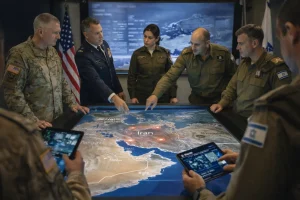
The United States maintains strong strategic partnerships with several countries in the Middle East, especially Israel. These alliances play a major role in shaping Washington’s approach toward Iran and its policies in the region.
American officials have long accused Iran of supporting armed groups that oppose Israel and other US-aligned governments.
Because of this, many policymakers view Iranian influence as a direct threat to regional stability and the security of key allies.
For decades, US foreign policy has prioritised protecting partners in the Middle East.
During the 2026 conflict, cooperation between the US and Israel in targeting Iranian infrastructure highlighted deep military and intelligence ties, while also sparking debate within the United States about the extent of its involvement in regional conflicts.
Why Are Oil Routes and the Strait of Hormuz Central to the War?
Oil transportation routes, especially the Strait of Hormuz, play a crucial role in the current US-Iran conflict because they are vital to the global energy supply.
Any disruption in this region can quickly affect international oil markets, global trade, and economic stability.
Strategic Importance of the Strait of Hormuz
The Strait of Hormuz is one of the world’s most important maritime routes for energy transport. A significant portion of global oil exports passes through this narrow waterway connecting the Persian Gulf to international markets.
Any disruption in this area can immediately affect global energy prices.
Attacks on Tankers and Shipping Routes
During the conflict, several commercial ships and oil tankers operating near the Gulf region were targeted, raising concerns about the safety of global shipping.
- Some vessels were reportedly struck by drones or missiles.
- A number of tankers were forced to halt or reroute operations.
- Shipping companies faced rising insurance costs and security risks.
These incidents intensified fears that the conflict could disrupt international trade
Global Energy Market Disruptions
The attacks quickly pushed oil prices higher and created concerns about supply shortages. Energy analysts noted that prolonged instability in the region could affect everything from transportation costs to airline operations.
| Factor | Impact on Global Markets | Example Outcome |
| Shipping disruptions | Reduced oil supply flow | Higher fuel prices |
| Insurance risks for tankers | Increased shipping costs | Delayed shipments |
| Regional instability | Market volatility | Rising crude oil prices |
As tensions escalated, crude oil prices surged above $100 per barrel, illustrating how closely global markets are tied to events in the Persian Gulf.
How Has Iran Responded to US and Israeli Military Actions?
Iran’s response has been swift and multifaceted. After the initial strikes, Tehran launched retaliatory missile and drone attacks targeting military facilities and infrastructure associated with US forces and regional allies.
These attacks have included strikes against bases hosting American troops as well as attempts to disrupt commercial shipping in the Persian Gulf.
Iranian officials have framed their response as a defensive measure against foreign aggression. The government has also mobilized military assets and increased coordination with allied groups across the region.
In addition to direct military actions, Tehran has attempted to pressure international actors by threatening economic and energy disruptions. Such tactics are intended to increase the political and financial costs of the conflict for Washington and its partners.
Why Does the US View Iran’s Regional Influence as a Strategic Threat?
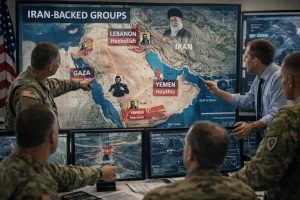
The United States views Iran’s regional influence as a major strategic concern because Tehran has built alliances and networks that extend its power across the Middle East without relying solely on its own military forces.
US policymakers argue that this influence can destabilize the region, threaten American allies, and challenge the balance of power.
Iran-backed Groups in the Middle East
Iran maintains relationships with several armed groups across the region, including organizations operating in Lebanon, Yemen, and Gaza.
These groups have played a role in various regional conflicts and are often accused by Western governments of receiving funding, training, and weapons from Tehran.
Expanding Regional Influence
Through these alliances, Iran has built a network of influence that extends across multiple countries. This strategy allows Tehran to exert power without directly deploying large conventional forces.
From Washington’s perspective, this network threatens the balance of power in the Middle East.
US Strategy to Weaken Proxy Networks
A key objective of the 2026 campaign is believed to be weakening this network of alliances. By targeting Iranian infrastructure and leadership, the US hopes to reduce Tehran’s ability to support these groups.
Many analysts believe this aspect of the conflict could have long-term implications for regional security.
Could Regime Change in Iran Be One of the Goals of the War?
The idea of regime change has emerged as one of the most controversial aspects of the conflict. Some statements from US leadership suggest that weakening Iran’s current political system may be part of the broader strategy.
President Trump publicly encouraged Iranian citizens to challenge their leadership.
“The people of Iran deserve a future free from repression and aggression,” Trump said during a televised address.
While US officials have not formally declared regime change as the official goal, critics argue that the scale of the attacks suggests ambitions beyond simple deterrence.
History shows that attempts to influence political change in other countries often carry significant risks, including prolonged conflict and instability.
How Did Tensions Between the US and Iran Build Up Before 2026?
The conflict did not emerge suddenly. Instead, it developed over decades of political disputes, sanctions, and military confrontations.
Relations between the two countries have been tense since the Iranian Revolution in 1979, when the new government adopted a strongly anti-American stance.
Over time, disagreements over nuclear development, regional influence, and economic sanctions deepened the divide.
Several major events increased tensions in recent years:
- The US withdrawal from the Iran nuclear agreement
- Economic sanctions targeting Iran’s oil sector
- The 2020 assassination of Iranian General Qasem Soleimani
- Rising confrontations between Iran and Israel
These developments created a volatile environment where even a single incident could trigger a larger confrontation.
| Year | Major Event | Impact on US-Iran Relations |
| 1979 | Iranian Revolution | Diplomatic relations collapse |
| 2018 | US leaves nuclear deal | Sanctions intensify |
| 2020 | Killing of Qasem Soleimani | Military tensions surge |
| 2026 | US-Israel strikes on Iran | Open military conflict begins |
This timeline shows how long-standing tensions gradually escalated into the current war.
Is the United States Officially at War With Iran?
Interestingly, the United States has not formally declared war on Iran. Under the US Constitution, only Congress has the authority to declare war.
However, the president serves as commander-in-chief of the armed forces and can authorize military operations under certain circumstances.
In modern history, many conflicts involving US forces have occurred without formal declarations of war. Examples include Vietnam, Iraq, and Afghanistan.
Legal experts often argue that the difference between an “attack” and a “war” depends on the scale and duration of the fighting.
As military operations continue, many observers increasingly describe the situation as a war in practice.
Could the US Deploy Ground Troops in Iran?
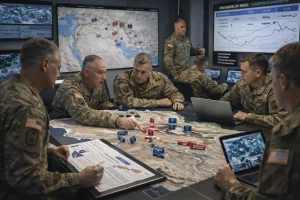
So far, the United States has relied primarily on air strikes, naval operations, and missile attacks rather than sending large numbers of ground troops.
Military experts note that invading Iran would be far more complex than previous US military campaigns in the Middle East. Iran’s geography, population size, and military capabilities present significant challenges.
Some analysts warn that a ground invasion could require hundreds of thousands of troops and potentially lead to a prolonged conflict.
For now, American officials have not confirmed any plans for a full-scale invasion, but they have not ruled out additional military options if the situation escalates further.
What Global Consequences Could the US-Iran War Create?
The conflict has already begun to affect global markets, energy supplies, and international politics.
Because the Middle East plays such a crucial role in energy production, instability in the region quickly spreads economic shockwaves worldwide.
Several consequences are already visible:
- Rising oil and fuel prices
- Increased airline and shipping costs
- Financial market volatility
- Growing political tensions between major powers
Within the United States, some voters have expressed concern about the financial cost of the conflict and its potential impact on domestic economic priorities.
Analysts warn that if the war continues for an extended period, it could reshape alliances and influence global energy markets for years to come.
Conclusion
The US-Iran conflict in 2026 stems from years of rising tensions involving nuclear concerns, regional rivalries, and strategic alliances.
The immediate trigger was US and Israeli strikes targeting Iran’s military capabilities, but deeper geopolitical issues remain at the core.
Beyond military action, the conflict highlights broader struggles over influence in the Middle East and global energy security.
As the situation continues to evolve, its consequences could shape regional stability, international diplomacy, and energy markets for years to come.
Frequently Asked Questions
Why is the US at war with Iran in 2026?
The US launched military strikes in February 2026 targeting Iranian military sites after escalating tensions and threats to regional security.
What triggered the US military strikes against Iran?
A coordinated US and Israeli operation on February 28, 2026, aimed to weaken Iran’s military infrastructure and prevent potential attacks.
Why does the US view Iran’s nuclear programme as a major threat?
The US fears Iran could develop nuclear weapons, destabilizing the Middle East and threatening key allies.
How has Iran responded to US and Israeli military actions?
Iran carried out retaliatory missile and drone attacks against US and allied bases and targeted shipping in the Persian Gulf.
Could the US deploy ground troops in Iran?
So far, the US has used air and naval strikes; a full-scale ground invasion is not confirmed.
What global consequences could the US-Iran war create?
The conflict has raised oil prices, disrupted shipping, and increased market volatility worldwide.