


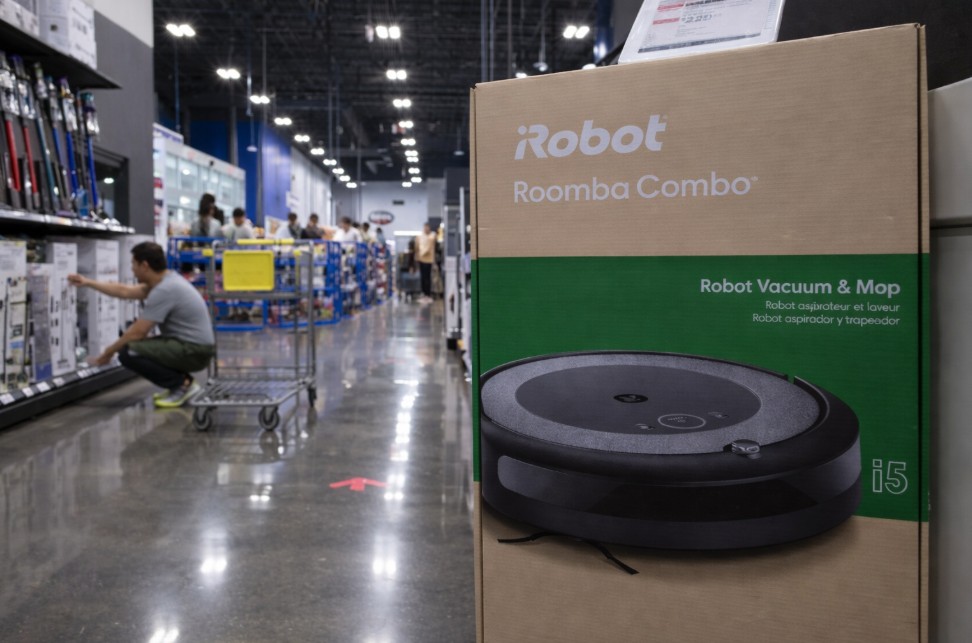

iRobot is not going out of business in 2026; it is restructuring under Chapter 11 while continuing normal operations.
Following its December 2025 bankruptcy filing, the Roomba maker announced it would reorganize financially and transition to private ownership under Picea Robotics.
Despite alarming headlines, the company has confirmed that products, apps, warranties, and customer support remain active. If you’re wondering what this means for your device or a potential purchase, here are the key points:
- Chapter 11 restructuring, not liquidation
- Acquisition by primary manufacturer Picea Robotics
- Roomba devices continue functioning normally
- App services and firmware updates remain active
- Warranties and customer support are being honored
What Is iRobot and Why Is It So Well Known?
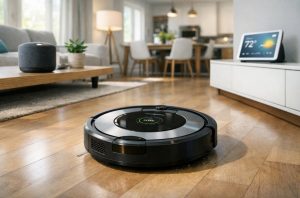
Before addressing whether iRobot is going out of business, it’s important to understand what the company represents in the robotics and smart home industry.
Founded in 1990 by three Massachusetts Institute of Technology (MIT) roboticists, iRobot initially focused on defense and space robotics.
The company gained mainstream recognition in 2002 with the launch of the Roomba robotic vacuum, a product that quickly became synonymous with automated home cleaning.
Over the years, iRobot established itself as:
- A pioneer in consumer robotics
- A dominant brand in the U.S. robot vacuum market
- An innovator in mapping technology, smart home integration, and AI-powered cleaning
At one point, iRobot reportedly held around 42% of the U.S. robotic vacuum market, a commanding share in a rapidly expanding category.
Its product line eventually grew to include vacuum-and-mop combos, self-emptying docks, and premium smart mapping systems.
Because of that strong brand association, when news broke about bankruptcy, many consumers immediately asked: Is iRobot going out of business in 2026?
Is iRobot Going Out of Business in 2026?
No, iRobot is not going out of business in 2026.
However, the company did file for Chapter 11 bankruptcy protection in December 2025. That distinction is critical.
Chapter 11 bankruptcy does not mean a company is closing its doors. Instead, it allows a business to reorganize its debts and operations while continuing to function.
In iRobot’s case, the filing was part of a broader restructuring plan that includes an acquisition by its primary contract manufacturer, Picea Robotics.
In public statements, company leadership emphasized continuity. As iRobot CEO Gary Cohen stated:
“The app is working, the warranties are going to be honored.”
He also added:
“Now that we have a path forward, the app will continue, the products will continue… We’ll have firmware updates on the products.”
These comments reinforce that operations are continuing during the restructuring process.
So while headlines may sound dramatic, the accurate framing is this: iRobot is restructuring, not shutting down.
What Exactly Happened in December 2025?
In mid-December 2025, iRobot officially filed for Chapter 11 bankruptcy protection. The announcement followed several challenging years marked by financial strain, increased competition, and a failed acquisition attempt by Amazon.
Two major developments defined the situation:
- Chapter 11 Filing: The company sought court-supervised restructuring to manage its debt and stabilize operations.
- Acquisition by Picea Robotics: Picea, a China-based robotics manufacturer and iRobot’s primary contract partner and lender, agreed to acquire the company and take it private.
According to court filings referenced in reporting, iRobot faced substantial debt obligations. Reuters reported approximately $190 million in debt, and the company listed assets and liabilities ranging between $100 million and $500 million.
In its official release, iRobot stated:
“During the Chapter 11 process, iRobot will continue operating in the ordinary course with no anticipated disruption to its app functionality, customer programs, global partners, supply chain relationships, or ongoing product support.”
This language is consistent with restructuring, not liquidation.
What Does Chapter 11 Bankruptcy Actually Mean for iRobot?

Many people searching “is iRobot going out of business” are really asking what bankruptcy means for customers. The difference between restructuring and liquidation is essential.
Chapter 11 vs. Chapter 7: What’s the Difference?
| Feature | Chapter 11 (Restructuring) | Chapter 7 (Liquidation) |
| Company operations | Continue operating | Cease operations |
| Employees | Typically retained | Often terminated |
| Customer support | Usually maintained | Often discontinued |
| Warranties | Commonly honored | May be voided |
| Goal | Reorganize debt & survive | Sell assets & close |
iRobot filed under Chapter 11, not Chapter 7. That means the company is attempting to stabilize financially while continuing to serve customers.
What Chapter 11 Typically Allows a Company to Do?
- Renegotiate debt terms
- Reduce financial obligations
- Restructure ownership
- Maintain product support
- Continue selling products
In practical terms, this means your Roomba will not suddenly shut off because of the filing. The restructuring is designed to keep operations intact while improving financial sustainability.
Why Did iRobot File for Bankruptcy?
The question “is iRobot going out of business” cannot be answered fully without understanding why the company reached this point.
Several interconnected factors contributed to the filing.
1. Intense Market Competition
The robot vacuum industry has become crowded. Lower-cost competitors, including overseas manufacturers, have introduced aggressively priced alternatives. In online forums, many users have discussed opting for less expensive models during major sales events.
One forum user wrote:
“I grabbed a cheaper alternative during Prime Day. It worked fine for a while, but it didn’t last long.”
While anecdotal, these discussions reflect broader market pressures: price sensitivity has increased, and premium pricing is harder to sustain.
2. The Failed Amazon Acquisition
In 2022, Amazon agreed to acquire iRobot for approximately $1.7 billion. However, regulatory scrutiny in the U.S. and Europe ultimately blocked the deal in early 2024.
Colin Angle, iRobot’s co-founder and former CEO, described the collapse of the deal as:
“Profoundly disappointing, and it was avoidable. This is nothing short of a tragedy for consumers, the robotics industry and America’s innovation economy.”
Without Amazon’s backing, iRobot lost what many viewed as a strategic lifeline.
3. Debt and Cost Pressures
Court records indicated substantial debt obligations, including liabilities tied to manufacturing arrangements and tariffs.
Reports referenced millions owed in unpaid tariffs and highlighted the impact of import levies on goods manufactured in Vietnam for the U.S. market.
Rising supply chain costs, shifting trade policies, and global manufacturing complexity further strained margins.
Combined with competitive pricing pressures, these financial headwinds contributed to the decision to pursue restructuring under Chapter 11.
Who Is Picea Robotics and What Does the Acquisition Mean?

Picea Robotics, iRobot’s primary contract manufacturer and one of its largest creditors, is acquiring the company as part of the restructuring agreement. This transition effectively shifts iRobot from a publicly traded U.S. company to a privately held entity under new ownership.
What “Going Private” Means?
- Shares are no longer publicly traded on stock exchanges
- Financial disclosures may become less frequent or less detailed
- Strategic decisions may be made with longer-term flexibility
- Leadership can restructure without quarterly earnings pressure
Going private does not mean operations stop. Instead, it changes the governance and reporting structure of the company.
What This Could Mean for Consumers?
- Continuity in manufacturing, since Picea was already deeply involved in production
- Potential operational cost efficiencies
- Strategic repositioning of product lines
- Continued product development under a different ownership model
The transition represents a major shift for an iconic American robotics company, but it does not equate to an operational shutdown or product discontinuation.
Will Your Roomba Stop Working If iRobot Filed for Bankruptcy?
This is understandably the most common concern among current owners.
The answer, based on official statements and the structure of Chapter 11, is no.
Roombas are hardware devices equipped with onboard software. Their fundamental cleaning capabilities do not depend on the company’s stock price or ownership structure.
Even during restructuring, the company has stated that core operations, including app functionality and firmware updates, will continue.
Online discussions have included speculative worst-case scenarios. However, there is no evidence or official indication that Roomba devices will suddenly become unusable as a result of the bankruptcy filing.
Will the Roomba App, Firmware Updates, and Customer Support Continue?
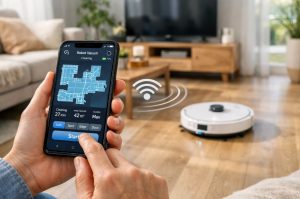
According to company statements, operations are continuing “in the ordinary course of business.” That includes digital services and post-sale support.
To clarify what that means:
| Service Area | Current Status (2026) | Reported Outlook |
| Roomba app | Operational | No announced disruption |
| Firmware updates | Ongoing | Expected to continue |
| Customer support | Active | No announced suspension |
| Warranty coverage | Honored | Company states continuity |
CEO Gary Cohen emphasized that firmware updates would continue and described the restructuring as providing “a path forward” for the company.
That said, restructuring processes are dynamic. While no service disruptions have been announced, consumers should stay informed through official company communications.
At present, however, all indicators point toward operational continuity
What Should You Do If You Own a Roomba in 2026?
Although iRobot is not going out of business, it’s always wise to take precautionary steps when a company enters restructuring.
If you own a Roomba:
- Keep your proof of purchase and warranty documentation
- Register your device if you haven’t already
- Record your model and serial number
- Ensure your firmware is up to date
- Maintain access to your app login credentials
These are proactive measures that can help protect your interests. They are not indications that service disruption is imminent, but rather standard best practices during corporate transitions.
Should You Buy a Roomba in 2026 or Look at Alternatives?
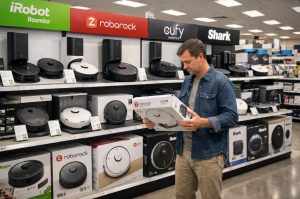
If you’re asking whether iRobot is going out of business because you’re considering a purchase, the decision largely depends on your priorities.
Buying a Roomba may still make sense if you find a strong discount, value an established brand, and want proven mapping and cleaning technology that has been refined over several product generations.
However, some buyers may prefer to pause. This is especially true if you rely on long-term ecosystem support, want the transparency that typically comes with financially stable public companies, or are risk-averse during periods of restructuring and uncertainty.
At present, iRobot products remain widely available across major retailers, and there have been no significant reports of supply disruption or withdrawal from the market.
What Is the Most Likely Future for iRobot in 2026 and Beyond?
Looking ahead, several plausible outcomes exist depending on how effectively the restructuring proceeds.
| Scenario | Description | Likelihood Based on Current Reports |
| Best Case | Successful restructuring, renewed innovation, stable operations | Plausible |
| Moderate Case | Continued operations but slower growth | Likely |
| Worst Case | Reduced support or scaled-back operations | Possible but not indicated |
Based on official statements and the continuity of services, the moderate scenario appears most realistic: iRobot continues operating under private ownership while gradually rebuilding financial stability.
For now, the evidence does not support the claim that iRobot is going out of business in 2026. Instead, it suggests a company undergoing significant transformation while striving to remain competitive in a demanding market.
Final Verdict – Is iRobot Really Going Out of Business?
No, iRobot is not going out of business in 2026. The company has filed for Chapter 11 bankruptcy and is undergoing restructuring while being acquired by Picea Robotics. Operations continue, products are still being sold, and customer support remains active.
The transition marks a major change in ownership and strategy, but it does not signal immediate closure.
If you’re searching “is iRobot going out of business,” the more accurate question is: Is iRobot restructuring to survive? The answer appears to be yes.
Frequently Asked Questions
Can a Roomba still clean without the app?
Yes. Core vacuuming functions operate independently, though advanced scheduling and mapping features rely on the app.
What happens to warranties during Chapter 11?
Companies typically continue honoring warranties during restructuring unless otherwise stated. iRobot has indicated warranties remain valid.
Is iRobot still selling products in 2026?
Yes. Retail availability continues across major platforms and stores.
Could customer support change in the future?
While no changes are announced, restructuring outcomes can evolve. Monitoring official updates is advisable.
Does new ownership affect product quality?
There is no current indication of reduced quality. Picea was already involved in manufacturing.
Are replacement parts still available?
As of early 2026, parts and accessories remain available through retailers and official channels.
Is iRobot stock still publicly traded?
Following the acquisition by Picea Robotics, iRobot is transitioning to private ownership.