
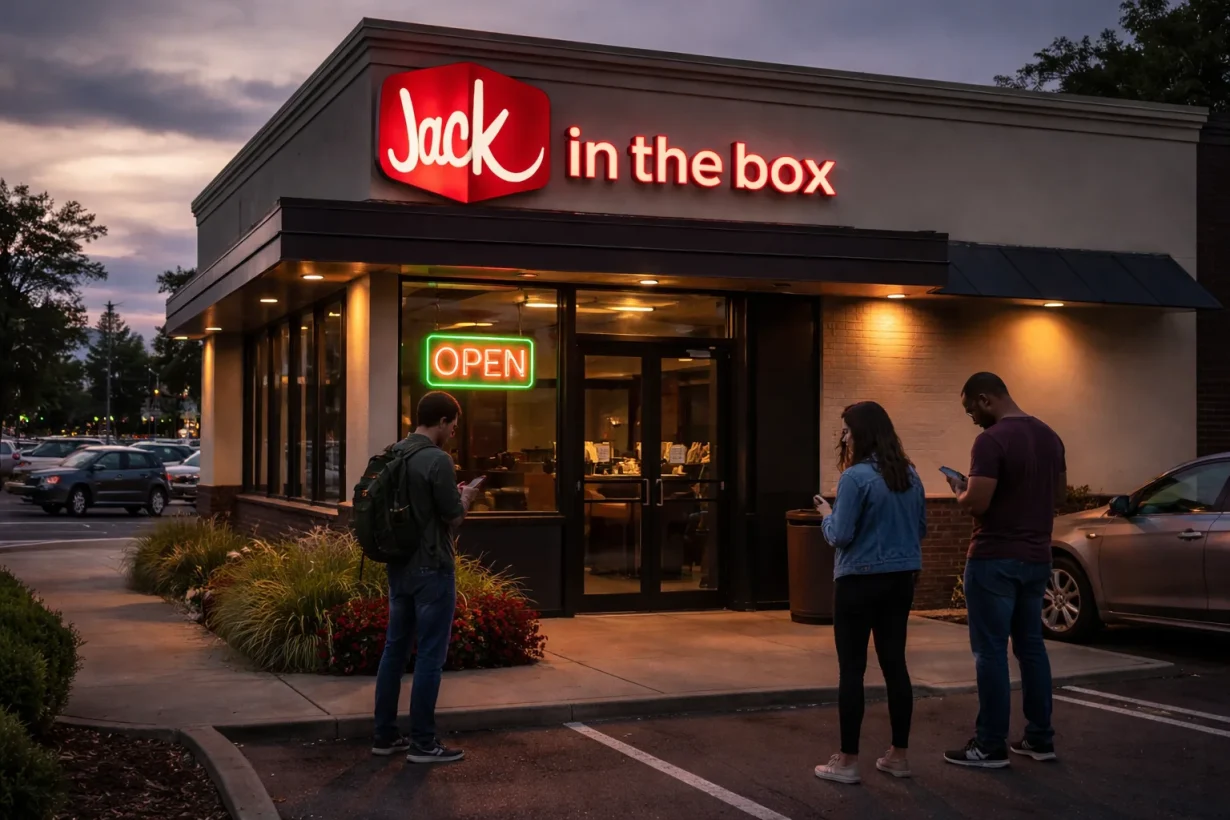

Jack in the Box is not going out of business in 2026, but it is undergoing a major restructuring to stabilise its operations and improve profitability.
The company is strategically closing underperforming locations while continuing to invest in technology, franchising, and selective expansion.
Here’s the quick reality:
- The brand plans to close 150–200 underperforming stores
- Over 70 locations have already been shut down
- It is selling Del Taco to refocus on its core business
- New locations and upgrades are still being planned
Rather than disappearing, Jack in the Box is attempting a calculated strategic reset.
Understanding the difference between business closure and restructuring is essential to interpreting recent headlines accurately and avoiding misinformation.
Who Is Jack in the Box and What Makes It a Major Fast-Food Chain?
Jack in the Box is a long-standing American fast-food chain founded in 1951, known for its diverse menu, late-night offerings, and strong presence in western and southern states like California, Texas, and Arizona.
With over 2,000 locations across the United States, the brand has built a loyal customer base through its unique positioning in the quick-service restaurant industry.
Unlike many competitors, Jack in the Box operates with a franchise-heavy model, meaning most locations are run by independent operators. This structure allows the company to scale while maintaining operational flexibility.
Its longevity, recognisable branding, and adaptable menu have helped it remain relevant for decades, even as the fast-food industry becomes increasingly competitive.
Is Jack in the Box Going Out of Business in 2026?
No, Jack in the Box is not going out of business in 2026. However, the company is undergoing a significant transformation to address financial pressures and operational inefficiencies.
Recent headlines about store closures and losses have created confusion, leading many to assume the brand is shutting down entirely. In reality, these actions are part of a broader effort to streamline operations and strengthen long-term sustainability.
As CEO Lance Tucker stated:
“Our actions today focus on simplifying the business model while improving cash flow and long-term growth potential.”
This clearly reflects a shift toward sustainability rather than an indication of collapse. The company is actively working to reposition itself for future growth.
Why Are There Rumours About Jack in the Box Shutting Down?
Rumours about Jack in the Box shutting down have mainly been fuelled by alarming headlines and incomplete information.
When a company announces large-scale store closures, it can easily create the impression that the entire business is struggling or on the verge of collapse.
Several factors have contributed to this speculation:
- Declining sales performance in recent periods
- Rising operational and labour costs
- Reported net losses exceeding $80 million
- Plans to close up to 200 locations
Despite these concerns, the situation is often misunderstood. These actions are part of a structured turnaround strategy aimed at improving efficiency and long-term profitability.
The confusion arises when targeted closures are mistaken for a complete shutdown, rather than a calculated move to strengthen the brand’s overall performance.
How Many Jack in the Box Locations Are Closing by 2026?
Jack in the Box has announced plans to close between 150 and 200 underperforming locations by 2026. This represents roughly 7% to 10% of its total restaurant footprint.
As of late 2025, around 72 locations had already been closed, with additional closures expected through 2026. These closures are being carried out in phases, targeting stores that fail to meet profitability benchmarks.
Jack in the Box Store Closure
| Category | Details |
| Total Locations | ~2,200 |
| Planned Closures | 150–200 |
| Closed So Far | 70+ |
| Remaining Closures | 80–120 |
| Percentage Impact | ~7%–10% |
While these numbers may seem significant, they are relatively modest when viewed against the company’s total size.
Why Is Jack in the Box Closing Underperforming Restaurants?
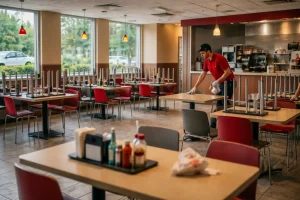
The decision to close certain restaurants is rooted in improving overall business performance and long-term sustainability.
Not every location contributes equally to revenue, and some outlets struggle due to low customer traffic, rising costs, or unfavourable market conditions.
By focusing on efficiency, the company aims to strengthen its overall network rather than maintain unprofitable stores.
Financial and Operational Challenges Behind Closures
A major driver behind these closures is the financial strain caused by underperforming locations.
Some restaurants generate significantly lower revenue while still carrying high operating costs, making them unsustainable over time.
When combined with broader economic pressures, these challenges become even more pronounced.
Key contributing factors include:
- Weak sales performance at certain locations
- Rising labour and food costs are impacting margins
- Reduced customer traffic in specific markets
As these pressures build, closing inefficient stores becomes a practical step to protect overall profitability and ensure resources are used more effectively.
Strategic Shift Toward Efficiency and Growth
Beyond immediate financial concerns, the closures are part of a broader strategic shift toward a leaner, more efficient business model.
Jack in the Box is focusing on strengthening high-performing locations while transitioning toward an asset-light, franchise-driven structure.
This approach allows the company to:
- Reduce debt and improve cash flow
- Focus on profitable markets and locations
- Reinvest in technology, upgrades, and customer experience
By removing weaker outlets and consolidating performance, the company can enhance system-wide efficiency and create a more stable foundation for future growth.
CFO Dawn Hooper noted:
“We have seen a measurable sales benefit transferred to nearby restaurants after closures, strengthening overall performance.”
This highlights that the closures are not a sign of decline, but a calculated move to optimise operations and improve long-term sustainability.
What Is the “JACK on Track” Turnaround Strategy?
Jack in the Box’s transformation is centred around its “JACK on Track” initiative, a comprehensive turnaround strategy designed to simplify operations, reduce financial pressure, and position the company for long-term growth.
Rather than focusing on rapid expansion, the plan prioritises efficiency, profitability, and a more disciplined business model.
Key Goals of the Plan
The core objective of the “JACK on Track” strategy is to build a leaner and more sustainable organisation.
The company is shifting its focus toward financial stability and operational efficiency while adapting to modern consumer expectations.
Key goals include:
- Reducing corporate debt and strengthening the balance sheet
- Improving cash flow to support long-term investments
- Transitioning to an asset-light, franchise-driven structure
- Enhancing digital capabilities and customer engagement
These goals reflect a move away from complex operations toward a simpler and more focused business approach.
Major Actions Being Implemented
To bring this strategy to life, Jack in the Box is implementing several practical and targeted actions across its business.
These steps are designed to streamline operations while improving overall performance.
Key actions include:
- Closing underperforming restaurants to eliminate inefficiencies
- Selling non-core assets such as Del Taco to refocus on the main brand
- Investing in advanced technology and digital ordering systems
- Streamlining operations to improve consistency and efficiency
CEO Lance Tucker summarised the strategy clearly:
“This is about returning to a simpler, more focused model that drives consistent and profitable growth.”
Overall, the “JACK on Track” plan represents a strategic reset aimed at strengthening the company’s foundation rather than signalling decline.
Did Jack in the Box Sell Del Taco and Why Is It Important?

Yes, Jack in the Box has sold Del Taco as part of its restructuring strategy. The decision reflects a shift toward focusing exclusively on its core burger business.
The sale allows the company to reduce debt and free up capital, which can then be reinvested into improving operations and customer experience.
Managing multiple brands often adds complexity, and the company is aiming to eliminate distractions.
This move also signals a broader commitment to simplification, aligning with its asset-light approach and long-term growth strategy.
Is Jack in the Box Facing Financial Problems in 2026?
Jack in the Box is experiencing noticeable financial pressure in 2026, driven by a mix of declining sales, rising operational costs, and broader economic challenges.
The company has reported a significant annual net loss, reflecting reduced customer traffic and shrinking profit margins.
These issues have raised concerns among investors and customers, especially as the fast-food industry becomes more competitive and cost-sensitive.
Key Financial Challenges:
| Factor | Impact |
| Net Loss | ~$80.7 million |
| Sales Decline | ~7.4% drop |
| Debt Levels | High leverage |
| Food Costs | Increased due to inflation |
| Labour Costs | Rising wages |
Jack in the Box is undeniably facing financial challenges. The company reported declining sales and significant losses, driven by a combination of reduced customer traffic, inflation, and rising labour costs.
However, financial difficulty does not necessarily equate to business failure. Many companies go through similar phases and emerge stronger after restructuring.
The key question is whether the current strategy will successfully stabilise operations over the next few years.
Is Jack in the Box Still Expanding Despite Store Closures?
Interestingly, Jack in the Box is not only closing locations, it is also expanding. The company plans to open new restaurants in emerging markets such as Florida and Georgia, signalling confidence in its long-term prospects.
This dual strategy of closing weak stores while opening new ones is common in the restaurant industry. It allows brands to optimise their footprint and focus on high-growth areas.
Table: Closure vs Expansion Strategy
| Strategy | Purpose |
| Store Closures | Remove underperforming units |
| New Openings | Enter high-growth markets |
| Franchise Growth | Reduce operational burden |
| Remodels | Improve customer experience |
This balanced approach demonstrates that the company is repositioning rather than retreating.
What Changes Are Being Made to Improve the Customer Experience?
Jack in the Box is investing heavily in improving the customer experience, both digitally and physically. These changes are designed to modernise operations and attract new customers.
Key Improvements
- Introduction of advanced digital ordering systems
- Increased use of self-service kiosks
- Faster and more accurate order processing
- Store “mini refresh” upgrades for better appearance
- Enhanced staff training and support
The company has already seen measurable benefits, including increased order values and improved efficiency.
These upgrades reflect a broader industry trend toward automation and digital integration, helping the brand remain competitive.
What Is the Future of Jack in the Box Beyond 2026?
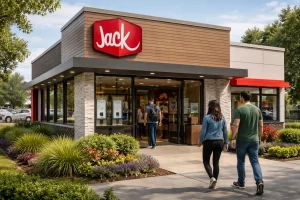
The future of Jack in the Box will depend on how effectively it executes its turnaround strategy. While the company faces real challenges, it is also taking decisive action to address them.
If the restructuring plan succeeds, the brand could emerge leaner, more efficient, and better positioned for long-term growth. However, failure to stabilise sales and reduce debt could prolong financial pressure.
Industry trends suggest that consolidation and optimisation are becoming standard practices, meaning Jack in the Box is not alone in this transition.
Should Customers Be Concerned About Jack in the Box Closing Permanently?
For most customers, there is no immediate reason for concern. The majority of Jack in the Box locations will remain open, and the company continues to invest in improving its services and expanding into new markets.
While some local closures may occur, these are targeted decisions aimed at strengthening the overall brand. Customers may even benefit from improved service, updated stores, and better technology.
In simple terms, Jack in the Box is not disappearing; it is evolving.
FAQs
Is Jack in the Box a franchise or company-owned business?
Jack in the Box operates primarily as a franchise-based business, with most locations owned and managed by independent franchisees.
Where are most Jack in the Box locations located in the US?
The majority of locations are concentrated in states like California, Texas, and Arizona.
What type of food is Jack in the Box known for?
The chain is known for burgers, tacos, breakfast items, and late-night menu options.
How does inflation affect fast-food chains like Jack in the Box?
Inflation increases costs for ingredients and labour, reducing profit margins and forcing pricing adjustments.
Are fast-food closures common in the restaurant industry?
Yes, many fast-food chains regularly close underperforming locations as part of normal business optimisation.
What role do franchisees play in store closures?
Franchisees often decide whether to close locations based on profitability and local market conditions.
Can a company close stores and still grow overall?
Yes, strategic closures can improve efficiency and allow expansion in more profitable areas.