



The United States Postal Service is dealing with declining mail volumes, rising operational costs, and increasing pressure to modernise.
While there are concerns about a potential cash shortage between late 2026 and early 2027, this does not mean closure. Instead, USPS is entering a critical phase that may lead to reforms and service adjustments.
Key Points:
- Possible cash shortfall by late 2026 or early 2027
- Declining mail volume is impacting revenue
- High operational costs are affecting stability
- Congressional support is essential
- Service changes are likely, not closure
Overall, USPS is not disappearing but undergoing a major transformation that will shape its future.
What Is Happening to the US Postal Service in 2026?
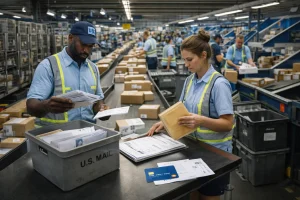
In 2026, the USPS is facing one of the most challenging periods in its 250-year history. Financial instability, operational inefficiencies, and evolving communication habits have placed enormous pressure on the agency.
The shift toward digital communication and rising operational costs has intensified long-standing structural issues.
Recent reports reveal that USPS leadership has warned Congress about a looming liquidity crisis.
The organization, which traditionally relies on its own revenue rather than taxpayer funding, is now struggling to cover operational costs and maintain service standards across the country.
“At our current rate, we’ll be out of cash in less than 12 months,” said Postmaster General David Steiner during a congressional hearing.
Despite this alarming statement, USPS continues to operate nationwide, delivering mail and packages to millions of Americans daily. However, the urgency for reform has never been greater.
Why Are People Asking if the Post Office Is Going Out of Business?
Public concern has grown due to increasing media coverage and official warnings from government officials and USPS leadership. Headlines about bankruptcy, shutdowns, and financial collapse naturally create uncertainty among the public.
Several factors are fueling this question:
- Continuous financial losses are reported annually
- Statements from USPS leadership about cash shortages
- Discussions around service cuts and restructuring
- Political debates about funding and privatization
In addition, social media discussions and public speculation have amplified fears.
The combination of these issues creates the impression that USPS may be on the verge of collapse, even though the reality is more complex and involves potential restructuring rather than closure.
How Serious Is the USPS Financial Crisis Right Now?
The USPS financial crisis is not new, but in 2026, it has reached a critical stage that demands immediate attention.
The agency has reported billions in annual losses and continues to face declining revenue streams due to reduced demand for traditional mail services.
USPS Financial Overview
| Metric | Data |
| Total losses since 2007 | $118+ billion |
| Net loss (2025) | $9 billion |
| Net loss (2024) | $9.5 billion |
| Q1 Loss (2026) | $1.3 billion |
| Cash runway | Less than 12 months |
This data highlights the severity of the situation. While USPS has managed to survive through borrowing, deferred obligations, and cost-cutting strategies, those options are becoming increasingly limited.
Without meaningful intervention, the financial strain could soon impact service reliability.
When Could USPS Run Out of Money According to Reports?
Reports suggest the United States Postal Service could face financial strain within a narrow window between late 2026 and early 2027.
This timeline depends heavily on spending patterns, operational costs, and whether policy reforms or funding support are introduced in time.
Key projections include:
- Continued current spending: around October 2026
- Delayed obligations: early 2027
- With reforms: extended sustainability
The outlook remains uncertain, as financial stability largely relies on action from U.S. Congress.
Decisions around funding, borrowing authority, or structural reforms could shift these timelines.
Even small delays in policymaking may significantly impact USPS’s long-term financial position and operational continuity.
What Are the Main Reasons Behind USPS Financial Problems?

The financial challenges facing the United States Postal Service are the result of multiple long-term structural issues rather than a single cause.
Over the years, changing consumer behavior, regulatory constraints, and rising operational demands have collectively placed significant strain on the agency’s finances.
Decline in Mail Volume in the USA
The rise of digital communication has significantly reduced traditional mail usage across the United States. Emails, online billing platforms, and digital payment systems have largely replaced physical letters and paper checks.
This shift has directly impacted first-class mail, which has historically been the USPS’s most profitable service.
Over time, this decline has created a structural revenue gap. While package deliveries have increased due to e-commerce growth, they often come with lower margins and higher handling costs, making it difficult to fully offset the loss from traditional mail.
High Operational Costs
USPS is legally required to deliver mail to every address in the United States, including remote, rural, and hard-to-reach locations.
This universal service obligation ensures equal access for all citizens but significantly increases operational expenses.
Maintaining such a vast delivery network involves high transportation, fuel, and labor costs. Unlike private logistics companies that can optimize routes based on profitability, USPS must serve all areas consistently, regardless of cost efficiency.
Debt and Borrowing Limits
The agency operates under a borrowing cap of $15 billion, which restricts its ability to manage cash flow during financially challenging periods.
This limitation reduces flexibility when dealing with rising operational costs or unexpected financial shortfalls.
Additionally, USPS faces ongoing financial pressure from employee wages, pensions, and healthcare obligations. These fixed expenses continue to grow, further tightening the agency’s financial position.
Key Factors at a Glance:
- Nearly 50% drop in mail volume over two decades
- Expensive nationwide delivery obligations
- Fixed pricing constraints and regulatory limits
- Rising labor, transportation, and benefit costs
In summary, the USPS financial crisis is driven by a combination of declining revenue streams and increasing operational burdens.
These interconnected challenges make recovery complex and reinforce the need for strategic reforms and policy support to ensure long-term sustainability.
Is the USPS Actually Going Out of Business or Just Struggling?
USPS is not going out of business in the traditional corporate sense. It is not a private company that can declare bankruptcy, liquidate assets, and shut down operations overnight.
Unlike private enterprises, USPS is a government-established entity with a public service mandate. Its responsibilities go beyond profit-making, as it plays a vital role in delivering mail, election ballots, prescription medications, and essential goods to millions of Americans.
“We cannot let the United States Postal Service die,” said Rep. Kweisi Mfume during a congressional discussion.
Instead of closure, the agency is more likely to undergo restructuring, modernization, and policy adjustments.
These changes may include service reductions, pricing updates, or operational improvements aimed at ensuring long-term sustainability while maintaining its core mission.
What Would Happen If the USPS Runs Out of Cash?
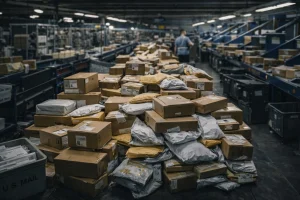
If USPS exhausts its funds, the consequences would be serious and far-reaching, but not necessarily an immediate or complete shutdown.
Given its national importance, the federal government would likely step in to prevent a full collapse of services.
In the short term, financial strain could lead to operational disruptions and reduced efficiency. Essential services would likely be prioritized, while less critical functions may be scaled back.
Possible outcomes include:
- Delays in mail delivery across various regions
- Reduced services or fewer delivery days per week
- Temporary suspension of certain non-essential operations
- Increased reliance on government funding or emergency financial support
Potential Impact Scenarios
| Scenario | Impact Level |
| Minor funding gap | Delayed services |
| Moderate crisis | Reduced delivery frequency |
| Severe crisis | Operational disruptions |
| Government intervention | Stabilization |
While a complete shutdown remains unlikely, even partial disruptions could affect businesses, healthcare logistics, government communications, and everyday consumers who rely on timely mail services.
What Changes Are Being Proposed to Save the Postal Service?
In general, the United States Postal Service is exploring a range of changes to address its financial challenges and improve long-term sustainability.
These proposals focus on balancing cost reduction with maintaining reliable services across the country.
To achieve this, USPS is considering both operational adjustments and revenue strategies. The goal is to improve efficiency, strengthen financial stability, and adapt to changing market demands while continuing to serve businesses and communities effectively.
Proposed Service Adjustments
To address ongoing financial challenges, USPS is actively considering a range of operational changes designed to reduce costs and improve efficiency without eliminating core services.
- Reducing delivery from six days to five days per week
- Closing underperforming or low-traffic post office locations
- Streamlining logistics, transportation networks, and sorting operations
These adjustments aim to balance cost savings with service reliability, although they may lead to longer delivery times in certain areas.
Pricing and Revenue Strategies
Increasing revenue is another critical focus area as USPS looks to close its financial gap and maintain long-term viability.
- Raising stamp prices, potentially approaching $1 for first-class mail
- Expanding partnerships with e-commerce and logistics companies
- Enhancing last-mile delivery capabilities to compete with private carriers
“When you are in a crisis, everything has to be on the table,” Steiner emphasized.
While these strategies could improve financial stability, they may also impact affordability for consumers and small businesses that rely heavily on postal services.
Does Congress Have the Power to Save USPS?
The U.S. Congress plays a central role in shaping the future of the United States Postal Service. Its legislative decisions can directly affect USPS’s financial stability and long-term sustainability.
Congress can support USPS through several measures, including increasing borrowing limits, adjusting pricing regulations, and reforming retiree healthcare obligations. These actions could provide immediate financial relief and improve operational flexibility.
However, challenges remain. While there is bipartisan support for preserving USPS, lawmakers disagree on the best approach.
Some oppose raising stamp prices, while others push for structural reforms. This political divide makes it harder to implement timely and effective solutions.
Is USPS Privatization a Real Possibility in 2026?

Privatization has been suggested as a potential solution to USPS’s financial struggles, but it remains a highly debated and controversial option.
Supporters argue that privatization could introduce efficiency, innovation, and cost savings by applying private-sector practices.
However, critics warn that privatization could undermine the core mission of universal service, particularly in rural and underserved areas where delivery is less profitable.
A public opinion snapshot highlights these concerns:
“If USPS becomes privatized, rural communities like ours might lose reliable service. We depend on it for essentials,” said a small business owner in Montana.
Privatization could lead to higher costs for consumers, reduced service coverage, and changes in delivery standards.
For now, it remains a possibility rather than a confirmed direction, with strong arguments on both sides.
What Does the Future Hold for the US Postal Service?
The future of the United States Postal Service will depend on legislative action, financial restructuring, and its ability to adapt to modern communication and commerce trends.
Innovation and flexibility will be essential for long-term sustainability.
In a best-case scenario:
- Financial reforms are successfully implemented
- Revenue expands beyond traditional mail
- Operations remain efficient and reliable nationwide
In a worst-case scenario:
- Financial losses continue without intervention
- Services and delivery frequency are reduced
- Costs increase for consumers
Despite uncertainty, USPS remains a vital part of American infrastructure, supporting businesses, connecting communities, and ensuring access to essential services, especially in rural areas. While changes are inevitable, complete disappearance is highly unlikely.
Final Answer
In general, the post office is not going out of business in 2026, but it is facing significant financial pressure.
The United States Postal Service is expected to continue operating, though it is undergoing an important phase of transformation.
Without timely intervention, there may be reduced services, higher costs, and operational adjustments.
Overall, the future of USPS will depend on how effectively reforms and financial strategies are implemented in the coming years.
FAQs
Can the USPS legally shut down completely?
No, USPS cannot easily shut down because it is a government-established service. Any closure would require major legislative action.
Why doesn’t the USPS get regular taxpayer funding?
USPS primarily funds itself through postage and service fees, unlike many other government agencies.
How much money has USPS lost over the years?
Since 2007, USPS has reported losses exceeding $118 billion due to declining mail volume and rising costs.
Will USPS stop delivering to rural areas?
It is unlikely, as universal service is a legal obligation, but service frequency could be reduced.
Are USPS employees at risk of losing jobs?
Potential restructuring may lead to workforce adjustments, but widespread layoffs are not confirmed.
How does USPS compare to private delivery companies?
USPS offers broader nationwide coverage, especially in rural areas, but operates under stricter regulations.
What services would be affected first during a financial crisis?
Non-essential services and delivery frequency may be reduced before core mail delivery is impacted.