




If you’ve been tracking subscription costs, Netflix has increased its prices again in 2026.
The company raised the cost of all three major U.S. plans in March 2026, marking the second price hike in just over a year.
Both new and existing subscribers will be affected, with new users paying the updated rates immediately and current members seeing the change on their upcoming billing cycle.
Here are the key updates:
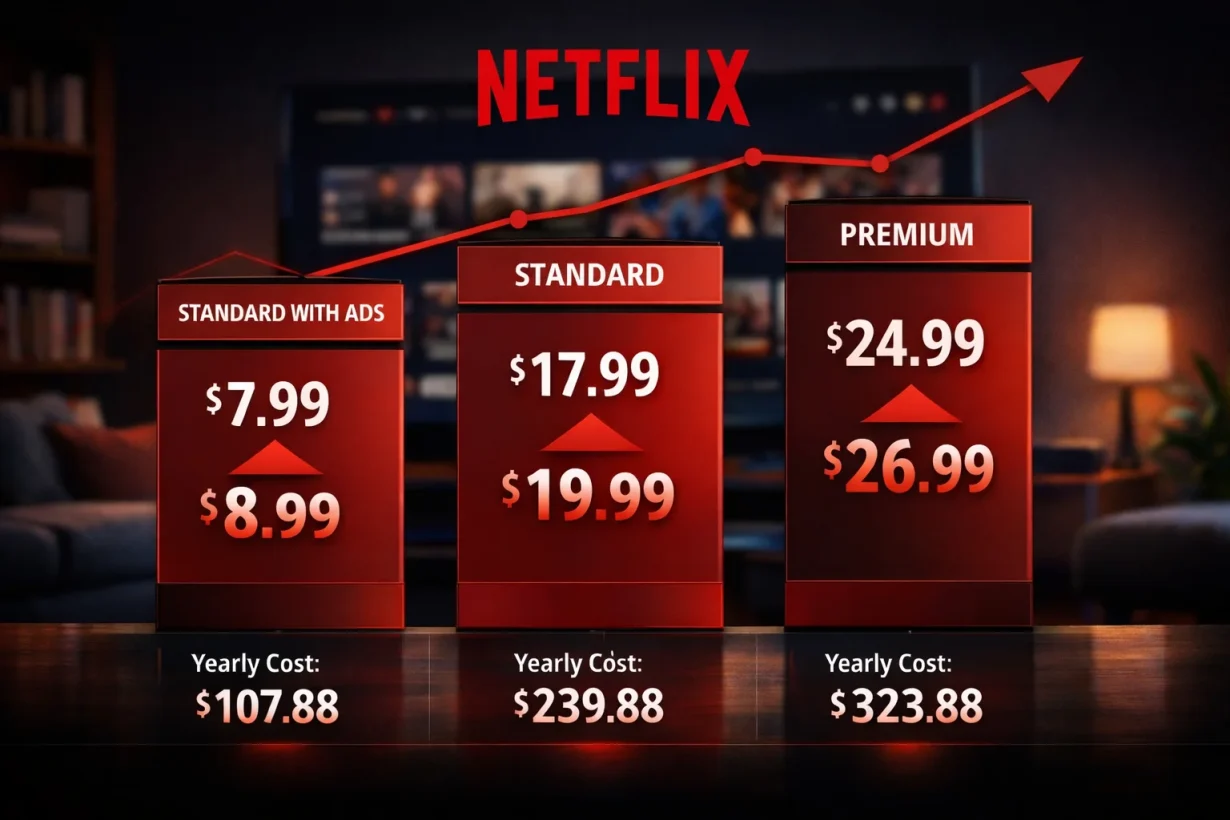
- Standard with Ads: $7.99 → $8.99 per month
- Standard: $17.99 → $19.99 per month
- Premium: $24.99 → $26.99 per month
Below, you’ll find a full breakdown of the new pricing, the reasons behind the increase, and whether Netflix remains worth it in 2026.
Is Netflix Going Up in Price in 2026?
Yes, Netflix is going up in price in 2026 across every major subscription plan in the United States. The streaming company quietly updated its “Plans and Pricing” page in late March 2026, increasing prices by $1 to $2 per month, depending on the tier you use.
This is the second Netflix price increase in less than two years and the fifth major increase in the past six years.
While streaming services across the industry have gradually become more expensive, Netflix appears confident that most subscribers will continue paying for its content despite the higher costs.
For many users, the increase may not seem dramatic at first glance. However, when multiplied across an entire year, even a $1 or $2 monthly rise adds up quickly, especially if you are already paying for multiple streaming subscriptions.
What Are the New Netflix Subscription Prices for Each Plan in 2026?
Netflix now offers three main plans in the U.S., and each one is more expensive than it was in 2025.
The ad-supported plan remains the cheapest option, while Premium continues to be the most expensive choice for households that want 4K streaming and multiple screens.
| Netflix Plan | Old Monthly Price | New Monthly Price | Monthly Increase | Main Features |
| Standard With Ads | $7.99 | $8.99 | +$1.00 | Ads, 1080p streaming, 2 devices |
| Standard | $17.99 | $19.99 | +$2.00 | No ads, 1080p streaming, 2 devices |
| Premium | $24.99 | $26.99 | +$2.00 | No ads, 4K + HDR, 4 devices |
The biggest percentage increase affects the Standard With Ads plan, which rose by 12.5%. Meanwhile, the Standard and Premium plans increased by around 11%.
Although the price differences may look small, Netflix is expected to generate billions of dollars in additional revenue because it ended 2025 with more than 325 million subscribers worldwide.
When Will the New Netflix Prices Take Effect for New and Existing Subscribers?
The new pricing from Netflix takes effect immediately for new subscribers who sign up after March 26, 2026, meaning they will pay the updated rates from day one.
For existing users, the increase is being introduced gradually based on individual billing cycles. This means some subscribers may continue paying the old price for a short period before the change appears.
Netflix will notify customers by email around one month before the new pricing is applied.
The exact timing depends on your renewal date, so users renewing earlier may see the increase sooner, while others may not experience it until a later billing cycle in the following months.
Why Did Netflix Increase Its Subscription Prices in 2026?
Netflix says the latest price increase is tied to its continued investment in content and new platform features.
Over the past year, the company has expanded far beyond traditional movies and TV shows. It now offers live sports-style events, podcasts, gaming, and more interactive content.
A Netflix spokesperson explained the company’s reasoning in a statement:
“We continue offering a range of prices and plans to meet a variety of needs, and as we deliver more value to our members we are updating our prices to enable us to reinvest in quality entertainment and improve their experience.”
How Much is Netflix Planning to Spend on Content in 2026?
Netflix has projected that it will spend approximately $20 billion on content in 2026. That is a significant increase from the $18 billion it spent in 2025.
The company continues to invest heavily in:
- Original series and films
- Global content and international programming
- Live sporting and entertainment events
- New documentaries and reality shows
With more exclusive content arriving every month, Netflix believes it can justify charging subscribers more.
What New Features and Live Content Are Driving the Higher Cost?
One of the biggest reasons Netflix feels confident about increasing prices is its push into live entertainment. Over the past year, the platform has expanded into areas that once belonged to cable television and sports broadcasters.
Netflix now streams WWE Raw live every Monday night. It also recently aired the MLB opening day game between the New York Yankees and San Francisco Giants.
In May, the company is expected to broadcast a major MMA event featuring Ronda Rousey and Gina Carano.
The service has also introduced video podcasts, new mobile app features, and more gaming options.
Netflix CFO Spence Neumann recently said:
“We feel great about our organic growth outlook. The key drivers this year will continue to be membership growth, pricing and a significant increase in ad revenue.”
That statement makes it clear that higher subscription costs are now part of Netflix’s long-term business strategy.
How Much More Will Netflix Cost You Over a Full Year?

Although an extra dollar or two per month may not sound like much, the yearly cost increase can make a bigger difference than many subscribers realize.
| Netflix Plan | New Monthly Price | New Yearly Cost | Extra Cost Per Year |
| Standard With Ads | $8.99 | $107.88 | +$12.00 |
| Standard | $19.99 | $239.88 | +$24.00 |
| Premium | $26.99 | $323.88 | +$24.00 |
For a household already paying for multiple streaming services, that extra cost may push Netflix closer to the point where it feels expensive.
A family using the Premium plan now spends more than $320 per year before adding any extra members outside the household. If you share your account with someone who lives elsewhere, the total cost could rise even further.
Netflix has also increased the cost of adding extra users. Extra members now cost up to $9.99 per month on ad-free plans, depending on the subscription type.
Which Netflix Plan is the Best Choice After the 2026 Price Increase?
Choosing the best plan from Netflix after the 2026 price increase depends on how you actually use the service, rather than just the cost.
For solo viewers, the Standard With Ads plan at $8.99 remains the most budget-friendly option, especially if occasional ads are not a concern. If you share your account with one other person and prefer uninterrupted viewing, the Standard plan offers a balanced experience at $19.99.
- Best for individuals: Standard With Ads
- Best for small households: Standard
The Premium plan at $26.99 is only worthwhile for larger households or those who regularly use 4K and multiple screens.
A recent example highlights this shift in mindset. I came across a story of a Netflix subscriber from Texas who decided to switch from the Premium plan to the Standard plan after the latest price increase.
She shared:
“I realized I was paying for 4K and four screens that my family barely used. Downgrading saved me money, and honestly, we did not notice much difference.”
Her experience reflects what many households may go through in 2026.
With higher subscription costs, more people are likely to reassess whether they truly need the most expensive plan or if a simpler, more affordable option works just as well.
How Have Netflix Prices Changed Over the Last Few Years?
Netflix subscription prices have steadily risen over the past few years, moving from a low-cost alternative to cable toward a more premium-priced service.
What once felt affordable has gradually become a bigger monthly expense for many users.
Back in 2020, the Standard plan cost around $12.99 per month. By 2025, it had increased to $17.99, and in 2026 it now stands at $19.99.
The Premium plan has seen an even sharper rise, jumping from about $15.99 in 2020 to $26.99 in 2026, an increase of nearly 70% in just six years.
Netflix Price Growth Over Time
| Year | Standard Plan | Premium Plan |
| 2020 | $12.99 | $15.99 |
| 2025 | $17.99 | $24.99 |
| 2026 | $19.99 | $26.99 |
The latest increase is particularly notable because Netflix also raised prices in early 2025. Combined with stricter rules on password sharing, these changes have made the service feel significantly more expensive for many households.
How Does Netflix’s 2026 Pricing Compare With Other Streaming Services?

Netflix is no longer the cheapest streaming option. In fact, after the latest increase, its ad-free plans are more expensive than many rival services.
Which Streaming Services Are Cheaper Than Netflix in 2026?
Several popular streaming platforms cost less than Netflix’s Standard and Premium plans. Services like Disney+, Hulu, Peacock, and Amazon Prime Video all offer lower-priced entry options.
- Disney+ with ads starts around $9.99 per month
- Hulu with ads starts around $7.99 per month
- Peacock Premium begins at roughly $6.99 per month
- Prime Video remains included with Amazon Prime for many subscribers
For viewers who are mainly interested in one or two shows, these alternatives may feel more affordable than paying nearly $20 or $27 for Netflix.
Which Streaming Services Cost More Than Netflix?
While Netflix is expensive, it is still cheaper than some premium streaming services and live-TV packages.
Platforms such as ESPN+, YouTube TV, and Hulu + Live TV can cost anywhere from $30 to $80 per month. Compared with those services, Netflix still appears relatively reasonable.
However, Netflix’s biggest challenge is that most households already subscribe to several streaming platforms. As costs continue rising across the industry, consumers are becoming more selective about which subscriptions they keep.
Will Netflix Keep Raising Prices in the Future?
There is a strong chance that Netflix will continue raising prices in the coming years. Despite multiple hikes, the platform still grew to over 325 million subscribers by the end of 2025, showing strong demand.
Analysts call this “pricing power,” meaning Netflix believes users will continue paying due to its content value. The company also expects ad revenue to grow significantly in 2026, potentially pushing total revenue beyond $50 billion.
Industry-wide, other streaming services are following similar trends with rising costs.
Michael Smith, a professor at Carnegie Mellon University, recently explained why these increases keep happening:
“Streaming platforms can observe in real time how consumers respond to price changes. Pricing decisions today are driven by data rather than guesswork.”
As long as Netflix keeps adding subscribers and generating more revenue, future increases remain very possible.
What Can You Do if You Do Not Want to Pay the Higher Netflix Price?
If the new Netflix subscription costs feel too expensive, you still have several ways to reduce what you pay each month.
The simplest option is switching to the Standard With Ads plan. At $8.99, it costs less than half the price of the Premium tier.
You could also remove any extra members added to your account. Those add-ons now cost more than before, so eliminating them may save another $7 to $10 per month.
Other practical ways to lower your streaming bill include:
- Downgrading from Premium to Standard
- Rotating between streaming services every few months
- Sharing one account only within your household
- Cancelling temporarily and returning when new shows arrive
Many subscribers are likely to become more strategic about streaming in 2026. Instead of paying for every service all year long, people increasingly subscribe only when there is content they actually want to watch.
Is Netflix Still Worth Paying for in 2026?

Whether Netflix is still worth paying for in 2026 depends on how often you actually use it.
If you stream regularly, enjoy original shows, and want access to a large content library, the higher price may still feel justified. Netflix remains a leader in original entertainment and continues adding new content and features.
However, if you only watch occasionally, the rising cost around $20 for Standard or $27 for Premium may feel harder to justify compared to cheaper alternatives.
For most users, the smart move is to reassess usage. If you do not need 4K or multiple screens, switching to a lower plan can help you save while still enjoying the platform.
Conclusion
Netflix is going up in price in 2026, with every major U.S. subscription plan becoming more expensive.
While the increase is only $1 to $2 per month, it adds up over a year and may encourage many subscribers to reconsider which plan they need.
The Standard With Ads plan remains the cheapest option, while Premium is now best suited only for households that regularly use 4K and multiple screens.
Ultimately, whether Netflix is still worth the higher cost depends on how often you watch and which features you actually use
FAQs
How much does it cost to add an extra member to Netflix in 2026?
Adding an extra member now costs around $6.99 per month on ad-supported plans and $9.99 per month on ad-free plans.
Can you switch from Premium to Standard after the price increase?
Yes. Netflix allows you to change your plan at any time through your account settings.
Does Netflix charge the new price immediately after announcing it?
Only new subscribers pay the new price immediately. Existing members will see the change later based on their billing cycle.
Are all Netflix plans increasing by the same amount?
No. The ad-supported plan increased by $1, while the Standard and Premium plans increased by $2.
Does the ad-supported Netflix plan still include 4K streaming?
No. The Standard With Ads plan only supports 1080p streaming, not 4K.
Has Netflix ever lowered its subscription prices?
Netflix has occasionally adjusted certain plans, but overall its pricing trend has consistently moved upward over the past several years.
Are Netflix price increases happening outside the United States too?
The latest announced increase mainly affects U.S. subscribers. However, Netflix sometimes rolls out similar changes internationally later.