




When a pizza chain closes US locations after 50 years in business, the main reason is usually a combination of rising costs, falling demand, and mounting debt.
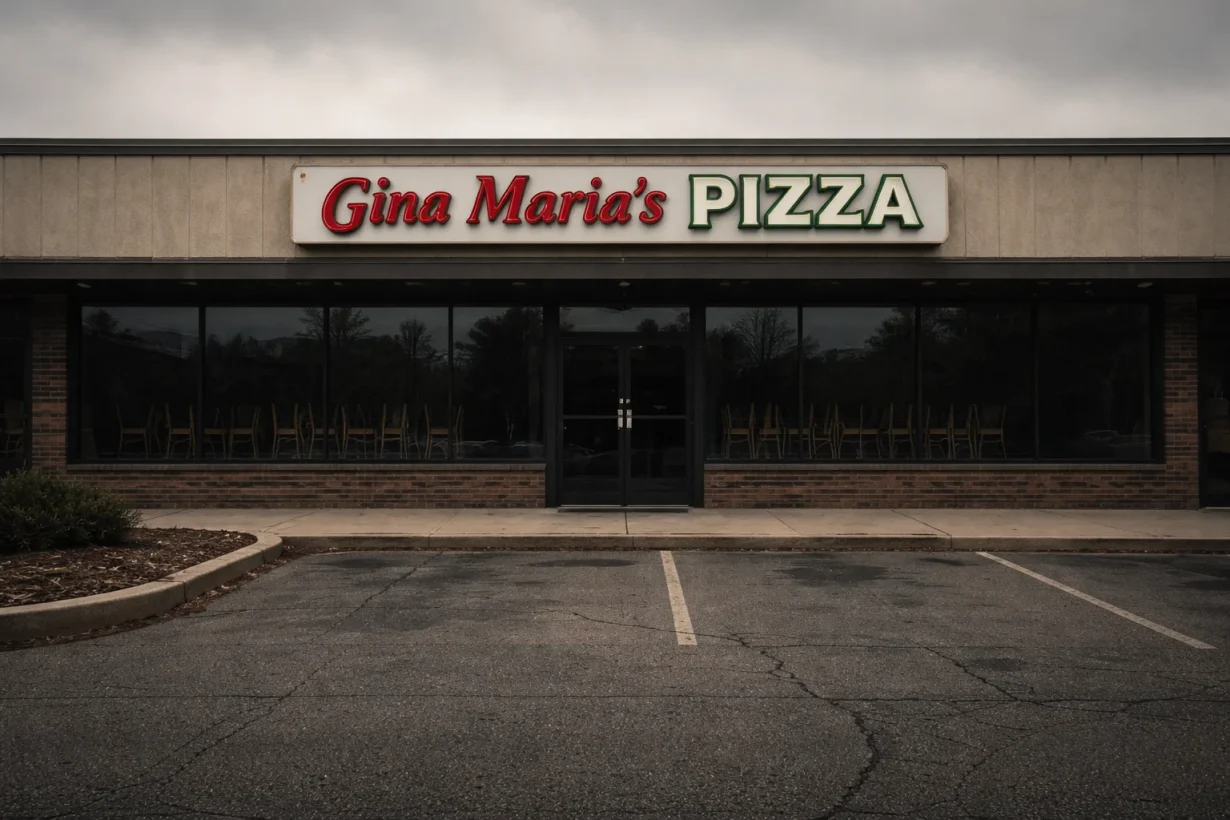
That is exactly what happened to Gina Maria’s Pizza, a long-running Minnesota chain that shut all four of its locations before filing for Chapter 7 bankruptcy.
Court records showed the company had nearly $2.9 million in liabilities but only $64,000 in assets, leaving little chance of recovery.
Key reasons behind the closure include:
- Rising food and ingredient costs
- Higher wages and labour shortages
- Increased rent, utilities, and operating expenses
- Customers ordering less takeaway and delivery
- Growing competition from frozen pizza and national chains
The closure highlights a wider problem affecting many restaurant businesses across the United States in 2026.
Who is Gina Maria’s Pizza, and Why Was It So Popular?
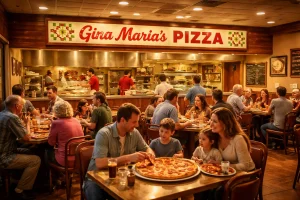
Gina Maria’s Pizza was a Minnesota-based regional pizza chain that first opened in Minnetonka in 1975.
Over the next five decades, it became a well-known name across the western Twin Cities suburbs, especially in Chanhassen, Eden Prairie, Edina, and Plymouth.
Unlike national pizza brands, Gina Maria’s earned its reputation through loyal local customers, familiar menu favourites, and a reliable family dining experience.
Many residents remembered the chain for its pepperoni pizza, affordable lunch slice deals, and Friday night family meals.
Its popularity came from offering something more personal and community-focused than larger chains.
| Gina Maria’s Pizza Timeline | Details |
| Founded | 1975 |
| Original Location | Minnetonka, Minnesota |
| Final Operating Locations | Chanhassen, Eden Prairie, Edina, Plymouth |
| Parent Company | Northern Brands Inc. |
| Bankruptcy Filing Date | March 26, 2026 |
For decades, that local connection helped Gina Maria’s Pizza remain a Minnesota favourite, but by 2026, even a strong community following was no longer enough to overcome rising costs and changing customer habits.
How Did Gina Maria’s Pizza Grow From a Local Favourite Into a Well-known Minnesota Chain?
The business started with a single restaurant in Minnetonka and gradually expanded into several suburban communities.
Rather than rapidly opening dozens of locations, Gina Maria’s grew slowly and focused on serving neighbourhoods where it had a strong customer base.
Its success came from three main strengths:
- Consistent menu items that customers recognised
- A family-friendly atmosphere
- Strong repeat business from local residents
As the chain expanded into Eden Prairie, Plymouth, Edina, and Chanhassen, it developed a loyal following. Customers often visited the same location for years, and some families had been ordering from Gina Maria’s for generations.
That community connection became clear after the closures. Social media pages and local discussion boards quickly filled with emotional reactions from customers who had grown up with the restaurant.
One former customer wrote on Facebook, “I live a block away from the Eden Prairie store and went there for 25 years. I just loved their pepperoni and green olive pizza.”
Another customer posted on Reddit, “This was my childhood pizza. It feels like the end of an era.”
What Happened in the Weeks Leading Up to the Pizza Chain’s Closure?
The chain closed all four of its locations in October with little warning. Customers were surprised because the company had continued posting promotions and menu specials on social media only days earlier.
The closures affected all remaining restaurants at once:
| Closed Gina Maria’s Locations | City |
| Gina Maria’s Pizza | Chanhassen |
| Gina Maria’s Pizza | Eden Prairie |
| Gina Maria’s Pizza | Edina |
| Gina Maria’s Pizza | Plymouth |
Many customers arrived expecting to order food, only to find locked doors and closure notices. The lack of warning made the news even more shocking.
In a brief message on the company website, Gina Maria’s acknowledged the decision and thanked customers for their support.
“This decision did not come easily,” the company said in its official statement. “We are incredibly grateful for the loyalty, support, and memories we’ve shared with all of you.”
The message gave no details about the company’s financial problems. Those details only became public months later when Northern Brands Inc. filed for bankruptcy.
Why Did the Company File for Chapter 7 Bankruptcy Instead of Restructuring?
Several months after the locations closed, Northern Brands Inc., the company behind Gina Maria’s Pizza, filed for Chapter 7 bankruptcy.
This type of bankruptcy usually means a business plans to liquidate its remaining assets rather than reorganise and continue operating.
Financial Details Behind the Bankruptcy Filing
Court documents showed that the company had approximately $2.9 million in liabilities but only around $64,000 in assets. That gap made it almost impossible for the business to survive.
| Financial Position of Northern Brands Inc. | Amount |
| Total Liabilities | $2.9 million |
| Total Assets | $64,000 |
| Bankruptcy Type | Chapter 7 |
| Likely Outcome | Liquidation |
A company with such a large debt burden often struggles to pay suppliers, employees, rent, and utility bills. Even if Gina Maria’s had attempted to reopen, it would have needed a major financial rescue.
Why Chapter 7 Means the Business is Unlikely to Return?
Unlike Chapter 11 bankruptcy, which allows companies to restructure and continue operating, Chapter 7 involves shutting down the business and selling assets to pay creditors.
A restructuring might have worked if the company had fewer debts or more valuable assets. Instead, the financial imbalance was too severe.
An attorney involved in restaurant bankruptcies explained the situation in a local report:
“When liabilities are nearly fifty times greater than available assets, a business has very little chance of recovery without outside investment.”
For Gina Maria’s Pizza, that investment never came.
How Did Rising Food, Labour, and Operating Costs Hurt the Pizza Chain?
The biggest reason this pizza chain closes US locations story matters is because it reflects a problem affecting restaurants everywhere.
Gina Maria’s likely struggled under a combination of rising food prices, higher wages, rent increases, and other operating expenses.
Food and Ingredient Inflation
Pizza restaurants rely heavily on ingredients such as cheese, flour, meat, and vegetables. Over the last two years, those costs have increased sharply.
- Cheese prices rose due to dairy shortages and higher transportation costs
- Flour became more expensive because of supply chain disruption
- Meat toppings such as pepperoni and sausage increased in price
- Utilities and fuel added even more expense to food preparation and delivery
If a pizza that once cost $8 to make now costs $11 or $12, profit margins disappear quickly unless the restaurant raises prices.
Labour Shortages and Higher Wages
At the same time, restaurants across the United States have been facing labour shortages. Businesses have had to increase wages to attract and retain workers.
For a regional pizza chain with only four locations, those higher payroll costs are much harder to absorb than for a national brand.
A former restaurant manager familiar with the Minnesota market said,
“Small chains are being squeezed from both sides. They are paying more for ingredients and more for labour, while customers are less willing to spend.”
The Burden of Rent and Overhead
Rent, insurance, utilities, and equipment maintenance also increased.
Even if a restaurant was still attracting customers, those extra costs could quickly make the location unprofitable.
Why Are More Customers Spending Less at Pizza Restaurants in 2026?
The closure of Gina Maria’s Pizza happened at a time when consumer habits were changing. Customers are still buying pizza, but many are spending less money or choosing cheaper options.
According to the 2025 Technomic Pizza Consumer Trend Report:
- Delivery usage fell from 61% in 2022 to 55% in 2025
- One in four consumers said they were buying more frozen pizza
- Price increases made restaurant meals less attractive
I recently came across a real example that perfectly shows this shift. A regular customer from Eden Prairie shared her experience after the closure.
She said:
“We used to order pizza every Friday, but now it’s just too expensive.”
She explained that what used to cost her family around $25 now often exceeds $40 once delivery fees and taxes are added.
That kind of change has a huge impact. When families move from ordering weekly to only once a month, restaurants can quickly lose steady revenue, even if they still appear busy on the surface.
Is the Gina Maria’s Pizza Closure Part of a Wider Trend Affecting US Restaurant Chains?
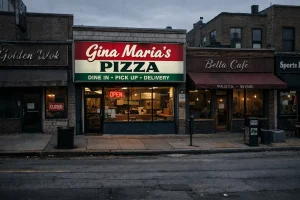
Yes. Gina Maria’s Pizza is not the only restaurant brand struggling in 2026. Across the United States, both national and regional chains are closing underperforming locations.
Nation’s Restaurant News reported that 61% of pizza chains experienced declining sales in 2024. The pizza industry has faced more pressure than many other restaurant categories.
Several other chains have also announced closures:
- Applebee’s is closing multiple locations as part of a restructuring plan
- Noodles & Company expects to shut up to 35 restaurants
- Jack in the Box has closed dozens of underperforming stores
- Pizza Hut and Papa John’s have both reduced their store counts
The common problem is that restaurants are being hit by both higher costs and weaker demand at the same time.
An industry analyst summarised the trend clearly:
“The restaurant industry is entering a period where only the strongest and most adaptable chains will survive.”
Could Gina Maria’s Pizza Have Avoided Closing Its Locations?
It is impossible to know for certain, but there are signs that the chain may have had opportunities to respond earlier.
Missed Opportunities to Reduce Costs and Adapt
Some struggling restaurant chains have managed to survive by reducing menus, negotiating cheaper leases, or closing only their weakest locations instead of shutting everything at once.
Gina Maria’s could potentially have explored:
- Fewer locations with lower overhead
- A stronger takeout-only or delivery model
- Reduced menu choices to lower food waste
- More aggressive marketing to attract younger customers
However, those changes may have arrived too late.
Strategies Other Pizza Chains Are Using to Survive
Other pizza chains are adapting in different ways. Some are investing in loyalty programmes and online ordering, while others are simplifying operations to lower costs.
For example, several regional pizza brands have shifted toward smaller storefronts and fewer staff members. Others are promoting family meal deals and carryout discounts to keep customers coming back.
By the time Gina Maria’s filed for Chapter 7 bankruptcy, the company no longer had the financial flexibility to make those changes.
What Happened to the Former Gina Maria’s Pizza Locations After the Shutdown?
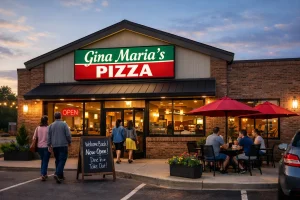
Although most of the locations remain closed, one former Gina Maria’s restaurant has reopened in Eden Prairie under a new name: Pizzas Gina.
The new business is being run by Ulises Godinez, who previously managed two Gina Maria’s locations. He is reportedly using the same recipes and many of the same kitchen supplies left behind by the previous owners.
In a statement to local media, Godinez said:
“We want people to feel like they are coming back to the pizza they remember, even though the name has changed.”
That reopening has offered some hope to longtime customers who miss the original chain.
Why Are Local Customers Reacting So Strongly to the Closure?
The closure feels different from the loss of a large national chain because Gina Maria’s Pizza was part of the local community.
Many customers had memories connected to the restaurant, whether it was a childhood dinner, a Friday night tradition, or a favourite lunch spot.
The emotional reaction online shows how much the chain meant to local residents. Customers described the closure as “a sad day” and “the end of a childhood favourite.”
For many people, Gina Maria’s represented consistency. Even if it was not considered the best pizza in Minnesota, it was reliable, familiar, and close to home.
What Can Restaurant Owners Learn From This Major Pizza Chain Closing US Locations?
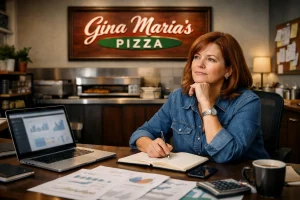
The collapse of Gina Maria’s Pizza offers a warning to other small and regional restaurant operators. Even a business with loyal customers and decades of history can struggle if it does not adapt quickly enough.
Restaurant owners can learn several lessons from this case:
- Monitor debts and cash flow before financial problems become too large
- Adapt pricing and menus as food costs change
- Build stronger takeout and delivery options
- Keep operating costs under control
- Understand that customer behaviour can change quickly
The story of Gina Maria’s Pizza is ultimately about more than one chain. It reflects how difficult the restaurant business has become in an era of inflation, higher wages, and changing consumer habits.
Conclusion
The closure of Gina Maria’s Pizza shows how even long-standing, community-loved businesses can struggle in today’s economic climate. Rising costs, shifting customer habits, and growing competition have created a challenging environment for restaurants across the US.
Despite its loyal customer base, financial pressures became too great to overcome. Ultimately, this case highlights the importance of adaptability, cost control, and innovation, offering valuable lessons for other restaurant owners navigating an increasingly competitive and uncertain market in 2026.
FAQs About Pizza Chain Closes US Locations
How many Gina Maria’s Pizza locations were operating before the closure?
Before closing, Gina Maria’s Pizza operated four locations in Minnesota: Chanhassen, Eden Prairie, Edina, and Plymouth.
Where were the Gina Maria’s Pizza restaurants located?
The chain served customers in the western Twin Cities suburbs, mainly around Minneapolis.
Who owned Gina Maria’s Pizza before it shut down?
Gina Maria’s Pizza was operated by Northern Brands Inc., which later filed for Chapter 7 bankruptcy.
What is the difference between Chapter 7 and Chapter 11 bankruptcy?
Chapter 7 means a company closes and liquidates its assets. Chapter 11 allows a business to reorganise and continue operating.
Did Gina Maria’s Pizza warn customers before closing its doors?
No. The company closed abruptly, and many customers said they received little or no warning.
What is Pizzas Gina and how is it connected to the original chain?
Pizzas Gina is a new restaurant that opened in the former Eden Prairie Gina Maria’s location. It uses many of the same recipes and is run by a former manager.
Are other pizza chains in the USA also struggling financially?
Yes. Many pizza chains and restaurant brands are facing declining sales, higher costs, and store closures across the country.