




Macy’s is not going out of business in 2026, but the company is undergoing one of its biggest restructuring efforts in recent years.
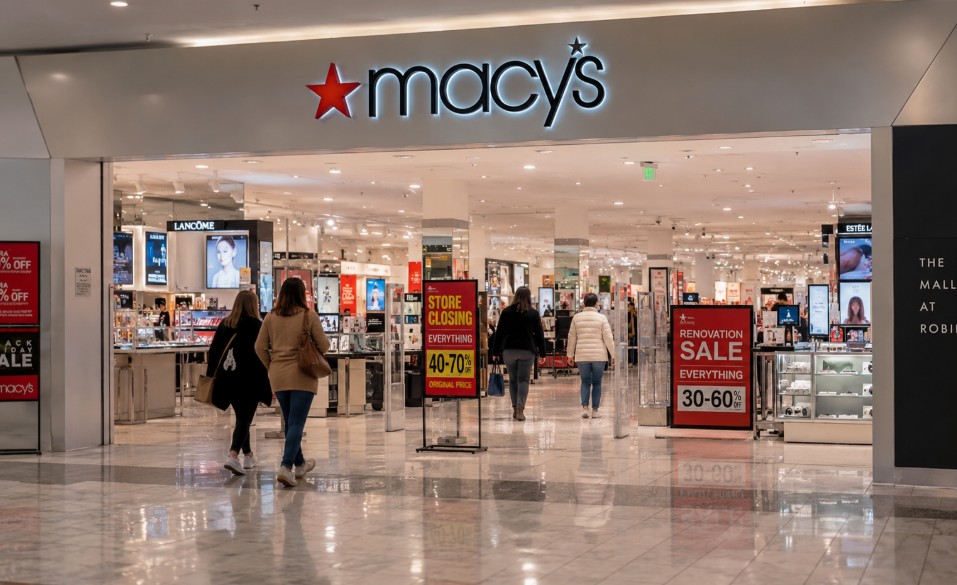
Through its “A Bold New Chapter” strategy, Macy’s plans to close around 150 underperforming stores while investing more heavily in profitable locations, digital shopping, luxury brands, and modern retail experiences.
The announcement has raised concerns among shoppers, employees, and investors, especially as multiple store closures continue across the United States.
Key takeaways:
- Macy’s is restructuring rather than shutting down entirely
- Around 150 stores are expected to close by the end of 2026
- Fourteen stores across 12 states are currently marked for closure
- The company is investing in Bloomingdale’s and Bluemercury
- Macy’s aims to strengthen e-commerce and premium retail growth
The retailer remains one of America’s most recognisable department store chains, and its latest strategy is designed to improve long-term profitability instead of ending operations.
Is Macy’s Going Out of Business in 2026?
No, Macy’s is still operating hundreds of department stores across the United States and continues to generate billions in annual retail sales.
However, the company is significantly reducing its physical footprint as consumer shopping habits continue shifting toward online retail and experiential shopping.
Founded in 1858 by Rowland Hussey Macy, the company has become a historic American retail brand known for fashion, beauty, home products, and iconic events such as the Macy’s Thanksgiving Day Parade.
Despite its legacy, Macy’s has faced mounting pressure from declining mall traffic, rising operational costs, and growing competition from e-commerce giants.
Instead of shutting down completely, Macy’s leadership is attempting to modernise the business model through strategic restructuring.
Company overview:
| Category | Details |
| Founded | 1858 |
| Founder | Rowland Hussey Macy |
| Headquarters | New York City |
| Parent Company | Macy’s, Inc. |
| Other Brands Owned | Bloomingdale’s, Bluemercury |
| Industry | Retail / Department Stores |
| Main Strategy in 2026 | Restructuring and store optimisation |
The company’s strategy indicates a transformation effort rather than a liquidation process. Macy’s continues to invest in digital retail, luxury growth, and upgraded customer experiences.
Why Are People Asking If Macy’s Is Going Out of Business?
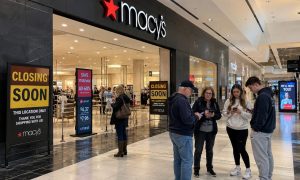
Public concern largely comes from the increasing number of store closure announcements. Over the past few years, many well-known retail chains have downsized or filed for bankruptcy, making consumers more sensitive to large-scale closures.
When Macy’s announced plans to shut approximately 150 “underproductive” stores, many shoppers assumed the retailer was heading toward a complete shutdown.
The closure of 66 stores in 2025 followed by another 14 stores in 2026 further intensified speculation online.
Another reason for concern is the broader decline of traditional shopping malls in America. Department stores once served as major anchors for malls, but changing consumer behaviour has reduced foot traffic in many retail centres nationwide.
“Department store chains are adapting to a very different retail environment today. Macy’s closures reflect optimisation, not disappearance,” said retail strategist Neil Saunders.
The discussion surrounding Macy’s is also fuelled by social media rumours and headlines that focus heavily on closures without explaining the company’s wider investment strategy.
What Is Macy’s “A Bold New Chapter” Restructuring Plan?
Macy’s launched its “A Bold New Chapter” initiative to improve profitability and modernise operations. The strategy focuses on reducing weaker locations while strengthening higher-performing stores and digital capabilities.
Key Goals of the Strategy
- Strengthen the Macy’s brand
- Accelerate luxury growth
- Modernise operations
- Improve customer experiences
- Expand digital retail channels
- Invest in profitable store locations
The company believes many of its underperforming stores no longer align with current consumer shopping patterns. Instead of spreading resources across weaker locations, Macy’s wants to focus investment on stores with stronger sales potential.
Luxury Expansion Plans
One major aspect of the strategy involves luxury retail growth. Macy’s plans include:
- Opening additional Bloomingdale’s stores
- Expanding Bluemercury beauty locations
- Renovating premium retail spaces
- Enhancing online luxury shopping
This shift reflects broader trends in the retail market, where premium and beauty categories continue to outperform many traditional department store segments.
CEO Tony Spring stated:
“We are making the necessary moves to reinvigorate relationships with our customers through improved shopping experiences, relevant assortments and compelling value.”
The restructuring strategy demonstrates that Macy’s is repositioning itself rather than abandoning the market entirely.
How Many Macy’s Stores Are Closing in 2026?
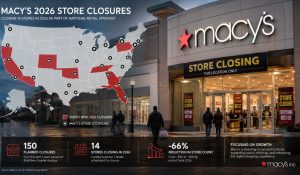
Macy’s plans to close approximately 150 stores by the end of 2026. The company considers many of these locations “underproductive,” meaning they contribute relatively little revenue compared to operating costs.
Store closure timeline:
| Year | Estimated Closures | Purpose |
| 2025 | 66 stores | Initial restructuring phase |
| 2026 | 14 confirmed additional closures | Continued optimisation |
| By End of 2026 | Around 150 total stores | Long-term portfolio restructuring |
Although the numbers appear large, Macy’s still expects to operate more than 350 stores after the restructuring process.
Many of the closures involve aging mall locations struggling with declining consumer traffic. Retail experts suggest this approach allows Macy’s to redirect investment into stronger urban stores, off-mall formats, and digital growth.
The company has repeatedly stated that the closures are part of a long-term turnaround strategy rather than a bankruptcy process.
Which Macy’s Stores Are Closing Soon?
Macy’s confirmed that 14 stores across 12 states are either closing or marked as “closing soon” in 2026.
2026 Macy’s store closures:
| State | Store Location | Status |
| California | Grossmont Center, La Mesa | Closed |
| California | West Valley Mall, Tracy | Closing Soon |
| Georgia | Northlake Mall, Atlanta | Closing Soon |
| Maryland | Marley Station, Glen Burnie | Closing Soon |
| Michigan | Rivertown Crossings, Grandville | Closed |
| Minnesota | Crossroads Center, St. Cloud | Closing Soon |
| New Hampshire | Fox Run, Newington | Closed |
| New Jersey | Livingston Mall, Livingston | Closing Soon |
| New Jersey | Interstate Shopping Center, Ramsey | Closed |
| New York | Boulevard Mall, Amherst | Closing Soon |
| North Carolina | Triangle Town Center, Raleigh | Closing Soon |
| Pennsylvania | Galleria at Pittsburgh Mills, Tarentum | Closing Soon |
| Texas | La Palmera Mall, Corpus Christi | Closing Soon |
| Washington | Parkway Super Center, Tukwila | Closing Soon |
These closures primarily affect locations with weaker long-term profitability or declining mall traffic. Macy’s continues reviewing its nationwide portfolio for additional optimisation opportunities.
The company encourages customers to use nearby Macy’s locations or shop through its online platform after closures occur.
Why Is Macy’s Closing Stores Instead of Expanding?
The retail industry has changed dramatically over the past decade. Consumers increasingly prefer online shopping, smaller-format stores, and convenience-driven retail experiences.
Macy’s restructuring reflects these changing habits. Rather than maintaining hundreds of expensive mall-based stores, the company is concentrating on locations with stronger performance and growth potential.
Several factors are influencing Macy’s decisions:
| Factor | Impact on Macy’s |
| Declining mall traffic | Lower in-store sales |
| Growth of e-commerce | Shift toward online shopping |
| Rising operational costs | Pressure on profitability |
| Consumer behaviour changes | Reduced department store demand |
| Luxury retail growth | Higher profit opportunities |
Retail consultant Deborah Weinswig explained:
“Retailers today must focus on efficiency and customer experience. Large store networks are no longer automatically profitable.”
Macy’s also recognises that digital sales continue growing faster than many traditional retail segments. The company has therefore prioritised omnichannel retail strategies that integrate online and in-store experiences.
Is Macy’s Filing for Bankruptcy?
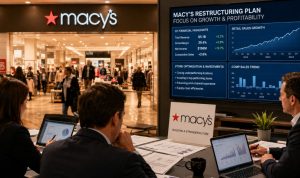
There is currently no indication that Macy’s is filing for bankruptcy in 2026. While the retailer faces industry challenges, the company continues operating nationwide and actively investing in future growth initiatives.
Many businesses undergoing restructuring are often mistaken as financially collapsing, but restructuring can simply mean adapting operations to improve sustainability.
Comparison between restructuring and bankruptcy:
| Feature | Bankruptcy | Macy’s Restructuring |
| All stores closing | Usually yes | No |
| Operations ending | Often | No |
| Asset liquidation | Common | No |
| Investment in future growth | Limited | Active |
| Store modernisation | Rare | Ongoing |
Macy’s leadership continues emphasising growth, customer engagement, and operational improvement rather than liquidation.
The retailer’s continued investments in Bloomingdale’s, Bluemercury, and e-commerce infrastructure strongly suggest a long-term commitment to remaining competitive.
What Will Happen to Macy’s Remaining Stores?
Macy’s plans to strengthen its remaining stores by upgrading layouts, improving inventory selection, and modernising customer experiences.
The company aims to make surviving locations more profitable and appealing through renovations and operational improvements. Many of these stores are expected to receive better product assortments, enhanced digital integration, and upgraded visual merchandising.
In addition, Macy’s is experimenting with smaller-format locations positioned outside traditional malls. These stores are designed to meet changing consumer preferences while reducing operating costs.
The company’s future strategy focuses on quality over quantity. Rather than maintaining a massive nationwide footprint, Macy’s intends to build a more efficient and modern retail network.
How Will Macy’s Store Closures Affect Shoppers?
The planned Macy’s store closures may affect customers differently depending on their location.
Shoppers in areas losing nearby stores could face reduced access to in-person shopping, while customers in larger markets may benefit from upgraded remaining locations and improved digital services.
Despite the closures, Macy’s continues focusing heavily on online shopping, customer loyalty programmes, and modern retail experiences as part of its long-term restructuring strategy.
Impact on Customers
Customers in affected regions may experience inconvenience if their nearest Macy’s location closes. However, the company continues offering online shopping, mobile app services, and alternative nearby stores.
For many shoppers, Macy’s digital platform has become increasingly important. Online ordering, curbside pickup, and home delivery services now play a larger role in the company’s customer experience strategy.
Services That Continue Despite Closures
- Online shopping through Macys.com
- Gift card acceptance
- Return processing at active stores
- Customer loyalty programmes
- Mobile shopping app access
Many consumers may notice better inventory selection and upgraded shopping environments at remaining stores due to reinvestment efforts.
The transition could ultimately improve customer experiences in stronger locations, particularly in larger metropolitan markets.
What Does Macy’s Restructuring Mean for Employees?
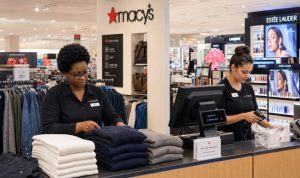
The restructuring process inevitably affects employees working at closing stores. Macy’s has acknowledged the impact and stated that support measures are available for affected workers.
According to company statements, Macy’s is offering transfer opportunities where possible, alongside severance and career support programmes.
Tony Spring explained in a company memo:
“These decisions are not made lightly. We communicated directly with affected colleagues first and are providing support, including transfer opportunities where available.”
While layoffs are a difficult aspect of retail restructuring, Macy’s continues hiring in growth-focused areas such as digital retail, logistics, luxury retail, and customer service operations.
The company’s long-term goal is to create a leaner but more sustainable workforce structure aligned with modern retail demands.
Is Macy’s Investing in Bloomingdale’s and Bluemercury?
Yes, Macy’s is significantly investing in both Bloomingdale’s and Bluemercury as part of its growth strategy.
Bloomingdale’s has generally performed better than traditional Macy’s department stores in recent years, particularly in luxury and premium shopping categories. Bluemercury has also experienced strong demand within beauty and skincare markets.
Expansion priorities:
| Brand | Growth Focus |
| Bloomingdale’s | New store openings |
| Bluemercury | Additional locations and remodels |
| Macy’s Digital | E-commerce improvements |
| Small Format Stores | Off-mall expansion |
Macy’s plans reportedly include opening additional Bloomingdale’s locations and dozens of Bluemercury stores by 2027.
This diversification strategy helps Macy’s reduce dependence on traditional mall-based department stores while targeting higher-margin retail categories.
What Is the Future of Macy’s After 2026?
Macy’s will likely look very different from its traditional department store model in the coming years. The retailer appears focused on becoming a more agile, digitally connected, and experience-driven company.
The success of its restructuring strategy will depend on factors such as consumer spending, e-commerce growth, inflation, and retail competition. However, Macy’s still benefits from strong brand recognition and a large nationwide customer base.
Consumers can likely expect:
- Fewer but stronger Macy’s stores
- Increased digital shopping features
- Greater focus on luxury retail
- Smaller-format store expansion
- Modernised shopping experiences
Although the retail landscape continues evolving rapidly, Macy’s appears determined to adapt rather than exit the industry.
Conclusion
Macy’s is not going out of business in 2026 but is undergoing a major restructuring strategy.
Through its “A Bold New Chapter” plan, the company aims to close around 150 underperforming stores while investing more in stronger locations, luxury retail, and digital commerce.
Although the closures have raised concerns among shoppers and employees, current signs suggest Macy’s is repositioning itself for changing retail trends rather than preparing for liquidation or bankruptcy.
Frequently Asked Questions
Is Macy’s closing all stores in 2026?
No, Macy’s is not closing all stores. The company plans to continue operating hundreds of locations nationwide while shutting underperforming stores.
Why is Macy’s closing 150 stores?
The closures are part of a restructuring strategy focused on improving profitability, reducing costs, and investing in stronger locations and digital retail.
Is Macy’s bankrupt in 2026?
No, Macy’s has not announced bankruptcy. The company is restructuring operations rather than liquidating the business.
Which Macy’s stores are closing soon?
Fourteen stores across 12 states are currently marked as closing soon or already closed in 2026.
Will Macy’s online shopping continue?
Yes, Macy’s continues investing heavily in e-commerce and digital shopping services.
What brands does Macy’s, Inc. own?
Macy’s, Inc. owns Macy’s, Bloomingdale’s, and Bluemercury.
Is Macy’s still profitable?
Macy’s continues generating significant revenue, though the company is restructuring to improve long-term profitability and operational efficiency.