




Equal billing, also referred to as budget billing or flat rate billing, is a utility payment system designed to stabilize your monthly costs by spreading your estimated annual usage evenly over 12 months.
This system is particularly useful for individuals and families looking to eliminate seasonal spikes in energy bills, reduce financial stress, and gain more control over monthly budgeting.
By adopting equal billing, households can better allocate funds, stay on track with savings goals, and avoid surprises in high-usage months.
Key Benefits:
- Predictable monthly utility costs
- Improved financial planning and cash flow
- Reduced risk of late payments or budget disruptions
- Stress-free handling of high-consumption months
- Optional end-of-year reconciliation
Now, let’s explore how equal billing works and why it might be a strategic move for your budget.
What Is Equal Billing and How Does It Work with Utility Companies?
Equal billing is a payment arrangement offered by many utility providers that evens out your payments across the year.
Instead of experiencing billing spikes during peak usage months, like high air conditioning costs in summer or elevated heating bills in winter, equal billing allows you to pay the same amount each month, regardless of your actual consumption.
To determine this monthly amount, utility companies review your past energy usage, typically over the previous 12 months.
They then calculate an average and set that as your fixed monthly payment. Depending on the provider, adjustments may occur quarterly or annually if your usage significantly changes.
At the end of your billing cycle, reconciliation takes place:
- If you paid more than your actual usage, the utility company may issue a refund or apply the overpayment as a credit.
- If you used more energy than estimated, you’ll receive a bill for the difference.
This consistent billing model is ideal for people who want to manage their household finances with predictability and less month-to-month fluctuation.
Why Is Equal Billing Also Called Budget Billing or Flat Rate Billing?
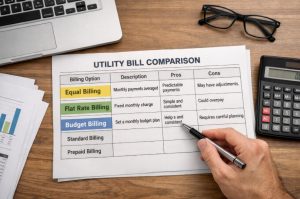
The terms “equal billing,” “budget billing,” “flat rate billing,” and “balanced billing” are often used interchangeably, depending on your utility provider.
While the terminology may vary, the concept remains the same: to average your utility costs over time and charge you a consistent monthly amount.
Common Terms Used for Equal Billing
Many utility providers use different terms to describe the same billing method, which can create confusion for customers.
Here’s a breakdown of the most commonly used terms and what they mean:
| Term Used | Also Known As | Explanation |
| Equal Billing | Budget Billing | Standard term for paying a consistent monthly amount |
| Flat Rate Billing | Balanced Billing | Monthly charges averaged from previous usage data |
| Averaged Billing | Levelized Billing | Similar approach, with periodic recalculations for accuracy |
Each of these terms refers to a system where utility payments are averaged out over the year, providing a stable amount to pay each month. Whether it’s “flat rate” or “levelized,” the goal is to eliminate monthly volatility and simplify household budgeting.
Why So Many Names for the Same Billing Method?
The variety of names used for equal billing stems from both marketing preferences and regional differences across providers.
The variation in naming typically arises from:
- Regional differences (e.g., U.S. utility providers may use different terms from those in Canada or Europe)
- Company-specific branding strategies
- Historical naming conventions that providers have retained
For example, one energy provider might refer to it as “Budget Billing” while another markets it as “Balanced Billing” to highlight the stability it offers. This diversity in naming can be confusing, particularly when switching providers or moving to a new state.
Clarifying the Terms with Your Utility Provider
If you’re unsure which billing option is available to you, it’s always best to clarify directly with your utility provider. Start by visiting the company’s website or contacting customer service to ask if they offer an equal billing program.
While the program might not be listed under the name “equal billing,” it could appear as “budget billing,” “flat rate billing,” or something similar.
Make sure to inquire about how the program works, how the monthly amount is calculated, whether adjustments occur periodically, and what happens at year-end reconciliation. Understanding the specific terms your provider uses, and the mechanics of their billing process, ensures you’re making an informed decision.
“Equal billing gives customers the confidence of knowing what they owe each month. It’s a way to simplify life, especially when every dollar counts.” – Utility Customer Service Representative
By confirming the details up front, you can avoid surprises later and choose the payment structure that best aligns with your financial strategy.
How Can Equal Billing Make Monthly Budgeting Easier?
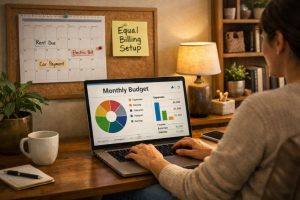
In today’s economy, where prices and usage can fluctuate, managing a household budget often feels stressful. Equal billing helps bring stability by turning variable utility costs into predictable monthly payments that are easier to plan around.
With fixed payments, there’s no need to estimate or over-budget for seasonal changes in energy use. This allows households to confidently allocate money toward other essentials, such as groceries, insurance, or childcare, without constant adjustments.
Equal billing also supports healthier cash flow by removing financial surprises. When monthly expenses remain consistent, it becomes easier to save regularly or focus on paying down debt.
- Predictable payments reduce budgeting guesswork
- Consistent costs support long-term financial planning
By eliminating seasonal bill spikes, equal billing also reduces stress, providing peace of mind throughout the year.
Case Study: The Lopez Family, Colorado
During Colorado’s harsh winters, the Lopez family’s heating bills often soared past $250. This made budgeting nearly impossible. After enrolling in equal billing, their monthly expense became a fixed $175. “It was like turning chaos into calm,” said Maria Lopez. “Now we know exactly what to expect each month.”
Who Should Consider Using Equal Billing for Their Utility Payments?
Equal billing can benefit many households, but it’s particularly suitable for individuals or families who:
- Have fixed or moderate income, where budgeting precision is necessary
- Are budget-conscious and prefer structure in financial planning
- Work as freelancers or gig workers with variable monthly earnings
- Use seasonal energy (e.g., rely heavily on heating or air conditioning)
It’s also a strategic fit for those who use structured financial plans like the 50/30/20 budgeting rule.
With a consistent monthly utility expense, it’s easier to keep essential expenses (50%) predictable, while balancing wants (30%) and savings/debt (20%).
Even if your income is stable but your energy usage isn’t, equal billing can provide a cushion of consistency.
What Are the Advantages of Using Equal Billing in Your Budget?
Equal billing offers several practical benefits that make budgeting more manageable, especially when dealing with variable income or seasonal energy demands.
- Stable Monthly Payments: Prevents unexpected spikes during summer or winter months.
- Simplified Budgeting: Enables better financial planning and categorization of monthly expenses.
- Avoid Late Fees: Fixed amounts are easier to set up with automatic payments.
- Improved Financial Confidence: Knowing your monthly obligations builds budgeting discipline.
- Better Utility Management: Encourages users to review bills even with a fixed cost.
“Anyone who sticks to a strict, detailed monthly budget may prefer the predictability of budget billing.” – Sara Rathner, Credit Cards Expert
With equal billing, you’re not just simplifying utility payments, you’re actively creating room in your financial life for long-term planning.
What Are the Potential Drawbacks or Limitations of Equal Billing?
While equal billing provides predictability, it’s not without limitations. Being aware of the drawbacks helps ensure you’re choosing the right payment plan for your needs.
Overpayment Risk
If your provider estimates a higher usage than what you actually consume, you’ll end up overpaying each month. Although you might get a refund or credit later, it ties up cash that could have been used elsewhere.
Underpayment Surprise
Conversely, if you underpay throughout the year due to underestimation, you might be hit with a large catch-up bill during reconciliation, potentially during a financially tight month.
Loss of Usage Awareness
Fixed payments can lead to complacency in monitoring actual energy usage. Without variable bills, users may stop tracking energy-saving behaviors, which could lead to increased consumption over time.
How Does End-of-Year Reconciliation Work in Equal Billing?
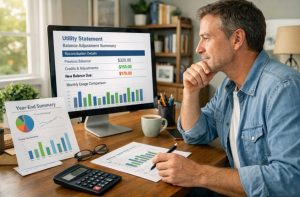
At the end of the billing cycle, utility providers compare your actual energy usage with what they estimated. This process, known as reconciliation, ensures the amount you paid aligns with what you used.
| Scenario | Outcome |
| You overpaid | Credit applied to next cycle or refunded |
| You underpaid | You must pay the difference |
| Usage matches estimate | No action required |
Some companies do this annually, while others reconcile quarterly. Always confirm the timeline with your provider so you’re not caught off guard.
The goal is balance, not to profit or penalize, but to ensure fair billing. It’s wise to monitor your consumption throughout the year to anticipate any significant adjustments.
How Do You Set Up Equal Billing with Your Utility Provider?
Enrolling in equal billing is generally straightforward, but asking the right questions beforehand is essential to avoid hidden fees or surprises.
| Question to Ask | Why It Matters |
| Are there setup or maintenance fees? | Extra fees could offset the benefits of equal billing |
| How is the monthly amount calculated? | Helps you assess accuracy of the estimate |
| How often is the estimate reviewed and adjusted? | Prevents large end-of-year discrepancies |
| What happens if I move or end service mid-cycle? | Clarifies whether you’ll be refunded or billed more |
Once you’re satisfied with the answers, enrollment can usually be done via your provider’s website or by phone. Some providers offer calculators to give an estimate of your monthly bill before committing.
Can You Create a DIY Equal Billing System Without Enrolling?
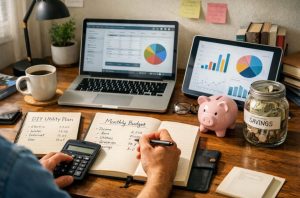
If your utility company doesn’t offer equal billing, or you prefer full control, a DIY method can offer similar benefits.
Steps to Create a DIY Equal Billing System:
- Gather 12 months of utility bills to understand your annual usage.
- Calculate the total annual amount and divide by 12 to find the monthly average.
- Open a utility-specific savings account with your bank or credit union.
- Transfer your average monthly amount to this account every month.
- Pay your utility bills from this fund, adjusting as needed.
Pro Tip: Use a rewards credit card to pay your utility bills. Then, repay the card from your utility savings account to earn points or cashback.
This method requires more discipline, but it gives you greater flexibility, and any unused funds remain in your control.
Is Equal Billing the Right Financial Strategy for You?
Whether equal billing suits your financial lifestyle depends on your goals, habits, and how much you value consistency.
| Ideal For You If You: | Might Not Suit You If You: |
| Prefer predictable budgeting | Want to track and adjust based on usage |
| Have consistent energy usage year-round | Have fluctuating utility needs |
| Dislike surprises or high seasonal bills | Can manage seasonal highs/lows without stress |
| Are on fixed income or have regular earnings | Want to benefit from actual lower usage each month |
If predictability and peace of mind are key for your financial management style, equal billing is a strong contender. But if you prefer to stay highly responsive to your energy consumption and costs, the traditional method may work better for you.
Conclusion
Equal billing offers a practical solution for managing fluctuating utility costs by providing predictable monthly payments.
Whether called budget billing, flat rate billing, or levelized billing, the concept remains the same, stabilizing your cash flow and simplifying your financial planning.
While it may not suit everyone, those seeking consistency in their monthly budget will benefit from its structured approach.
By understanding how it works, asking the right questions, or even creating a DIY version, you can take greater control of your household expenses and reduce financial stress throughout the year.
Frequently Asked Questions About Equal Billing
What happens to my equal billing plan if I move to a new home?
If you move mid-cycle, most providers will perform a reconciliation. You may owe more or receive a credit depending on usage.
Can I cancel my equal billing plan mid-year without penalties?
Yes, though policies vary. Some providers may require full payment of any underpaid balance upon cancellation.
How does equal billing impact my ability to monitor energy consumption?
Because the bill stays the same each month, you may pay less attention to your usage unless you check your actual consumption regularly.
Do all utility companies in the U.S. offer equal billing plans?
Not all, but most major electricity and gas providers do. It’s best to contact your local provider to confirm.
Is it better to use equal billing or adjust my budget manually each season?
It depends on your budgeting style. Equal billing offers simplicity, while manual budgeting offers control and potential cost savings.
Will equal billing help if my income changes frequently?
Yes, it can help by reducing financial unpredictability, especially for gig workers or freelancers with irregular income.
Are equal billing payments eligible for autopay and rewards programs?
Yes. Most utility companies allow autopay and credit card payments, which can earn you points or cashback rewards.