



What Happened in the New York Plane Crash at LaGuardia Airport?
A serious New York plane crash unfolded at LaGuardia Airport in New York City when an Air Canada Express regional jet collided with a Port Authority fire rescue vehicle on the runway.
The aircraft, identified as Flight 8646, arriving from Montreal, had already landed and was moving along the runway when the collision occurred late Sunday night.
This was not a mid-air disaster but a ground collision, which is less common yet equally dangerous due to the speed and weight involved during landing operations.
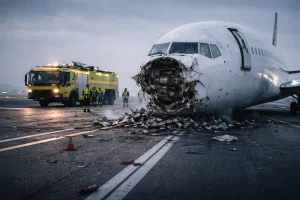
The front section of the aircraft sustained extensive damage, indicating the force of the impact.
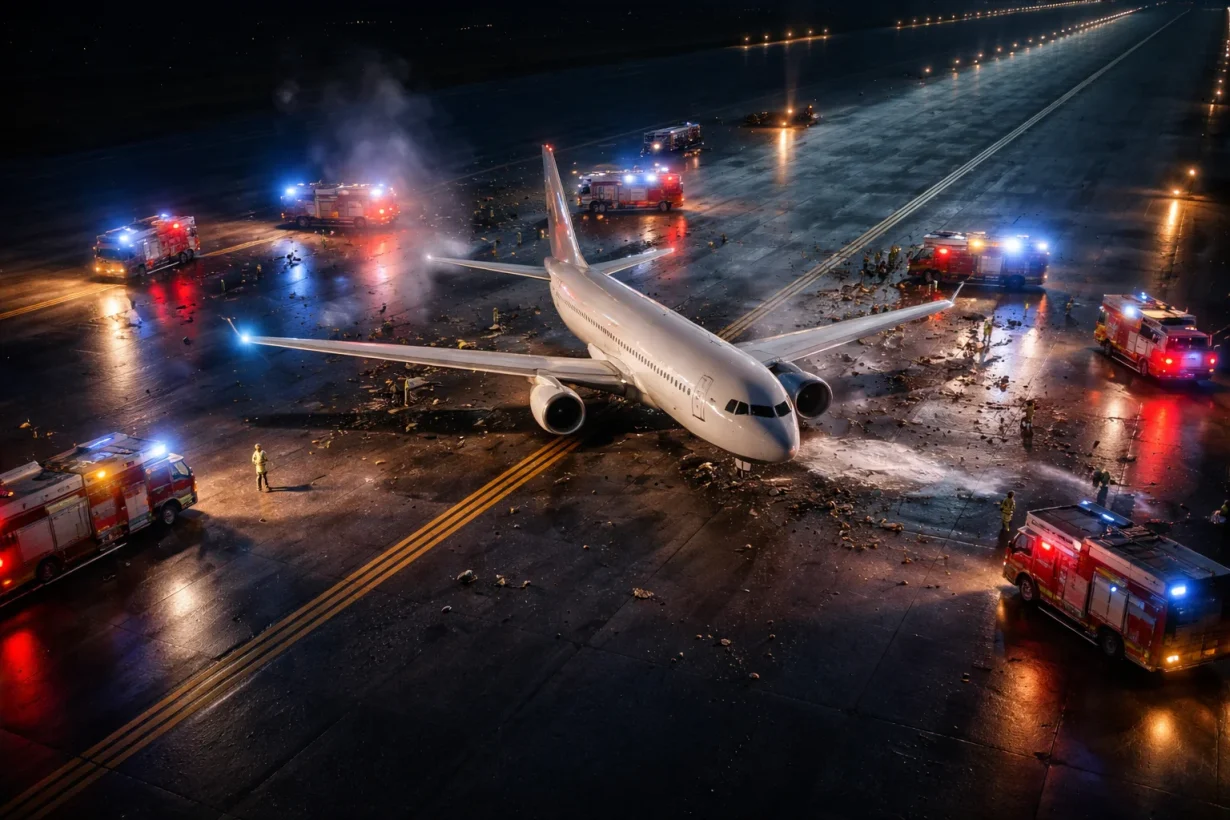
In the immediate aftermath, emergency protocols were activated, and the airport was temporarily shut down to allow rescue operations and investigation efforts to proceed without interference.
Early reports confirmed that this incident quickly escalated into a major aviation emergency involving multiple agencies.
How Did the Collision Between the Plane and the Fire Truck Occur?
The sequence of events leading to this New York plane crash is still under detailed investigation, but initial findings provide a clearer understanding of how such a rare incident could occur.
The fire truck involved was part of the Aircraft Rescue and Fire Fighting (ARFF) unit and had been dispatched to respond to another aircraft reporting an unusual odor onboard.
As part of standard protocol, the vehicle was granted permission by air traffic control to cross the runway.
However, within moments of that clearance, the approaching Air Canada aircraft was also on the same runway after landing.
Audio from air traffic control suggests that a controller urgently instructed the fire truck to stop just seconds before the collision, indicating that the situation developed rapidly and left little room for corrective action.
At this stage, investigators are focusing on several key areas:
- The exact timing of communications between air traffic control and ground vehicles
- Whether there was any delay or misunderstanding in instructions
- The coordination between landing procedures and emergency vehicle movements
It is important to note that none of these factors have been officially confirmed as causes. They remain part of an ongoing investigation aimed at establishing a complete and accurate sequence of events.
Who Were the Victims of the LaGuardia Plane Crash?
The human impact of this New York plane crash has been significant. Two lives were lost in the incident, both belonging to the flight crew.
The victims were the pilot and the first officer of the aircraft. Reports describe them as young professionals at the beginning of their aviation careers, making the loss particularly tragic for the aviation community.
In addition to the fatalities, a total of 41 individuals, including passengers, crew members, and Port Authority personnel, were transported to nearby hospitals.
Most of those injured were treated and released within hours, but several individuals remain hospitalized with serious injuries.
The two officers inside the fire rescue vehicle survived the crash and are reported to be in stable condition. Their survival, along with that of many passengers, reflects the effectiveness of emergency response systems and safety protocols, even in severe accidents.
How Did a Flight Attendant Survive Being Ejected from the Aircraft?
One of the most extraordinary aspects of this New York plane crash is the survival of a flight attendant who was ejected from the aircraft during the impact.
The flight attendant, identified as Solange Tremblay, was seated in a crew jump seat at the time of the crash.
Despite being ejected from the aircraft, she survived the incident with multiple fractures in one leg and is expected to undergo surgery.
Her survival has been widely described as remarkable, but aviation experts provide a technical explanation that helps clarify how it was possible. Crew seats, unlike standard passenger seats, are designed with enhanced safety features.
These seats are typically bolted directly to the aircraft structure and are equipped with four-point harness restraints, offering significantly greater protection during high-impact events.
An aviation safety expert explained that these seats are specifically engineered to withstand stronger crash forces because flight attendants play a critical role in post-crash evacuations.
Their positioning within the aircraft, often near reinforced structural areas, may also contribute to improved survivability in certain crash scenarios.
This case illustrates how aviation safety design, combined with situational factors, can lead to unexpected outcomes even in severe accidents.
What Is the Current Status of the Investigation?
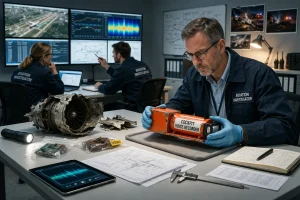
The investigation into this New York plane crash is being led by the National Transportation Safety Board (NTSB), with support from other federal and local agencies. Investigators have already begun collecting and analyzing critical evidence.
One of the most important developments is the recovery of the aircraft’s cockpit voice recorder and flight data recorder, commonly referred to as black boxes.
These devices have been sent to Washington, D.C., where specialists will examine them to reconstruct the events leading up to the crash.
The investigation process involves several stages, as shown below:
| Investigation Stage | Purpose |
| Evidence Collection | Document debris and physical damage |
| Recorder Analysis | Review cockpit audio and flight data |
| Communication Review | Analyze ATC instructions and timing |
| Witness Interviews | Gather accounts from crew and responders |
| Final Report | Determine official cause and recommendations |
Investigators have also reported a wide debris field extending across the runway and taxiway. This means the site examination process may take several days before normal airport operations can fully resume.
Was Air Traffic Control Staffing a Factor in the Crash?
Following the incident, questions were raised regarding staffing levels at LaGuardia Airport’s control tower. Some early claims suggested that there may have been only one controller on duty at the time of the crash.
However, officials have clarified that this information is inaccurate. According to the U.S. Transportation Secretary, the airport had 33 certified controllers and additional trainees on duty.
While this is slightly below the ideal full staffing level of 37, it is still considered a safe and operationally sufficient number.
At present, there is no confirmed evidence linking staffing levels to the cause of the New York plane crash. Investigators will continue to review all aspects of air traffic control operations, but conclusions will only be drawn based on verified data.
How Did Emergency Teams Respond to the NYC Aircraft Accident?
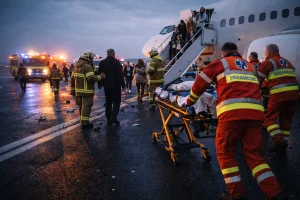
Emergency response teams reacted immediately after the collision, demonstrating the level of preparedness required for incidents at major airports.
Aircraft Rescue and Fire Fighting units, along with medical and law enforcement personnel, were deployed within minutes.
Passengers were evacuated from the aircraft, and injured individuals were transported to hospitals for treatment.
A particularly notable aspect of the response was the professionalism displayed by first responders.
According to official statements, rescue teams began evacuating passengers even while uncertainty remained about the condition of their colleagues in the fire truck. This reflects the training and discipline required in high-risk emergency situations.
The swift response likely contributed to limiting further casualties and ensuring that most injured individuals received timely medical care.
What Damage Did the Crash Cause to the Aircraft and Airport Operations?
The physical damage caused by this New York plane crash was extensive, particularly to the front section of the aircraft. The nose of the plane was described as heavily destroyed, indicating a high-impact collision.
Debris from both the aircraft and the fire truck was scattered across the runway and surrounding areas. This created additional challenges for investigators, who must carefully document and analyze each piece of evidence.
Airport operations were significantly affected. Runway 4 was closed following the incident, and LaGuardia Airport suspended operations for several hours.
The airport reopened later in the day, but cleanup and investigation efforts continue to impact normal operations.
What Happens Next in the Investigation Process?
The investigation into this New York plane crash will continue over an extended period. While initial findings may be released in the coming weeks, a full report often takes months or longer.
The process is designed to ensure accuracy and prevent future incidents. Investigators will analyze technical data, review procedures, and identify any contributing factors. Based on their findings, safety recommendations may be issued to aviation authorities and operators.
These recommendations can lead to changes in:
- Runway procedures
- Communication protocols
- Training requirements
Such changes are a critical part of maintaining and improving aviation safety standards.
How Safe Is Air Travel in the United States Despite Incidents Like This?

Although incidents like this New York plane crash receive significant attention, they remain extremely rare. Air travel in the United States is supported by strict regulations, advanced technology, and continuous oversight.
Statistically, aviation is one of the safest modes of transportation. Each investigation contributes to further improvements, ensuring that lessons learned are applied across the industry.
Understanding this broader context is important for maintaining public confidence and avoiding unnecessary fear.
What Misinformation Should Be Avoided About the New York Plane Crash?
In the immediate aftermath of major incidents, misinformation can spread quickly, particularly on social media. It is essential to distinguish between verified facts and unconfirmed claims.
Confirmed information in this case includes:
- The involvement of a runway collision between an aircraft and a fire truck
- The recovery of black boxes for investigation
- Official statements regarding staffing levels
Unverified claims, especially those related to causes or blame, should be treated with caution until supported by official findings.
Relying on credible sources and official updates is the most effective way to stay informed.
Conclusion: What Does the New York Plane Crash Mean Going Forward?
The New York plane crash at LaGuardia Airport highlights the complexity of modern aviation systems and the importance of coordination between multiple operational elements.
While the loss of two pilots is a tragic outcome, the survival of many others demonstrates the effectiveness of safety measures and emergency response protocols.
As the investigation progresses, authorities will work to identify the exact causes and implement any necessary improvements.
These efforts are part of a broader commitment to ensuring that air travel remains safe and reliable.
For the public, the key takeaway is clear: while aviation incidents can occur, they are rare, and each one leads to meaningful advancements in safety and prevention.
FAQs
What type of incident was the New York plane crash?
It was a ground collision between a landed aircraft and a fire rescue vehicle on the runway at LaGuardia Airport.
How many people were injured in the crash?
A total of 41 individuals were taken to hospitals, with most later discharged.
Who were the fatalities in the incident?
The pilot and first officer of the aircraft lost their lives in the crash.
What is the role of black boxes in aviation accidents?
Black boxes record flight data and cockpit conversations, helping investigators determine what happened before a crash.
Was air traffic control understaffed during the incident?
No, officials confirmed that staffing levels were within a safe operational range.
Why was the fire truck on the runway?
It had been cleared to respond to another aircraft issue involving an onboard odor.
How long will the investigation take?
A full investigation can take several months or longer, depending on the complexity of the case.