


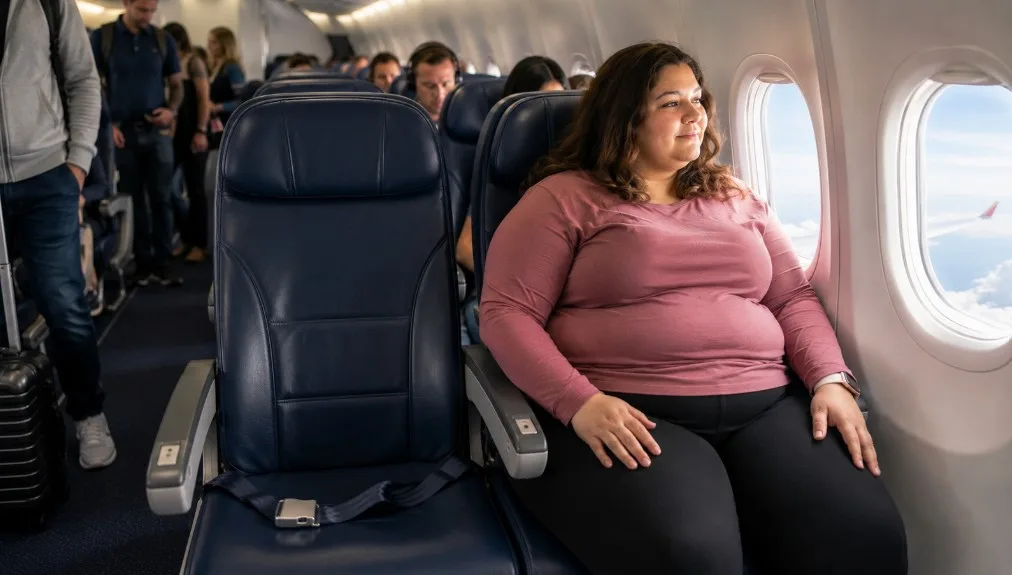

The Southwest Airlines extra seat policy update now requires passengers who cannot comfortably fit within a single seat with both armrests lowered to purchase an additional seat before travel.
Introduced on January 27, 2026, alongside Southwest Airlines’ move to assigned seating, the updated policy changes how Customers of Size book extra space, receive seat assignments, and qualify for refunds after their trip.
While the airline continues to offer accommodations for plus-size travelers, advance planning has become more important than ever to avoid airport complications, higher same-day fares, or potential rebooking.
Key takeaways:
- The updated policy took effect on January 27, 2026.
- Customers who need additional seating must purchase the required seats in advance.
- The armrest serves as the official boundary used to assess seating needs.
- Refunds for extra seats are now subject to specific eligibility conditions.
- Passengers who do not reserve the necessary space may be required to pay higher airport fares or be rebooked.
What Is the Southwest Extra Seat Policy Update and Why Is It Making Headlines?
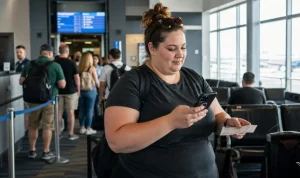
The Southwest extra seat policy update represents one of the airline’s most notable customer policy changes in recent years.
Historically, Southwest’s Customer of Size program was viewed as one of the more accommodating policies in the airline industry. However, the airline’s move to assigned seating required adjustments to how extra seating is managed.
Under the updated policy, passengers who cannot comfortably fit within a single seat with both armrests lowered must purchase the additional seating required for their journey.
The change has generated considerable attention because it alters how travelers secure extra space and how refunds are processed after travel.
“The transition to assigned seating required Southwest to establish a more structured process for accommodating travelers who need additional seating space while maintaining seat inventory accuracy.” — Southwest Airlines Operations Representative
The airline emphasizes that the policy focuses on seating space and safety rather than body weight or appearance.
How Has Southwest Airlines Changed Its Customer of Size Policy in 2026?
The most significant changes took effect on January 27, 2026. While Southwest continues to provide accommodations for Customers of Size, the process has become more structured than under the previous open-seating model.
Key Policy Changes Introduced on January 27, 2026
Travelers who require additional seating are now encouraged to purchase those seats during the initial booking process. This helps ensure adjacent seats remain available and reduces the likelihood of travel disruptions.
The policy also introduces stricter refund eligibility requirements and outlines specific procedures for airport staff when additional seating needs are identified.
How the New Rules Differ from the Previous Customer of Size Program?
Southwest’s updated policy introduces several procedural changes compared with the previous Customer of Size program, mainly due to the airline’s transition from open seating to assigned seating.
Comparison Overview:
| Policy Area | Previous Approach | 2026 Updated Policy |
| Seating Model | Open seating | Assigned seating |
| Extra Seat Reservation | Often handled more flexibly | Recommended at booking |
| Refund Availability | More accessible | Conditional refund requirements |
| Airport Assessment | Less structured | Formal assessment process |
| Rebooking Process | Limited impact | Rebooking may be required |
These changes are designed to align passenger accommodations with Southwest’s new seating system while maintaining operational efficiency.
Who Is Required to Purchase an Extra Seat Under the Updated Policy?
Southwest’s policy applies to passengers whose body extends into neighboring seating space when the armrests are lowered. The airline considers the armrest to be the definitive boundary between seats.
Importantly, the policy is not based on a person’s weight. Instead, it focuses solely on whether the traveler can occupy a single seat without encroaching on adjacent seating areas.
Many travelers search for a Southwest weight limit, but the airline does not publish a weight threshold that automatically triggers an extra-seat requirement. Instead, each situation is evaluated based on seating fit and safety considerations.
Why Does Southwest Airlines Use the Armrest as the Seating Boundary?
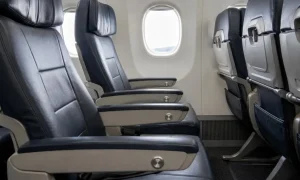
The armrest standard is widely used throughout the airline industry because it provides an objective and consistent way to determine seat occupancy requirements.
Rather than relying on subjective assessments, Southwest uses a measurable physical boundary that applies equally to all passengers. This approach helps minimize confusion while ensuring comfort and safety for everyone onboard.
Seat Space Considerations:
| Factor | Southwest Position |
| Passenger Weight | Not used as a determining factor |
| Armrest Boundary | Primary seating measurement |
| Safety Concerns | May require additional seating |
| Adjacent Passenger Comfort | Considered during assessment |
By using a uniform standard, the airline can apply its policy consistently across flights and destinations.
How Can You Book an Extra Seat Before Your Flight?
Southwest strongly recommends reserving any required extra seating during the initial booking process. Doing so helps secure adjacent seats and reduces the risk of last-minute complications at the airport.
Booking Guidance:
- Purchase all required seats during the original reservation.
- Ensure seats are booked in the same fare class when possible.
- Contact Southwest if seat selection assistance is needed.
- Review partner airline policies if your itinerary includes another carrier.
- Retain all booking confirmations for future refund requests.
Making arrangements in advance provides the best opportunity to secure the necessary seating accommodations. Travelers who prepare ahead typically experience a smoother airport and boarding process.
What Happens If You Arrive at the Airport Without Reserving the Space You Need?
Travelers who arrive without purchasing the required additional seating may face several outcomes depending on seat availability and the airline’s assessment at the airport.
Because Southwest Airlines now operates with assigned seating, securing the necessary space before travel is increasingly important to avoid disruptions on the day of departure.
Airport Assessment and Additional Seat Requirements
Airport employees may determine that an additional seat is necessary if a traveler cannot fit within a single seat according to the armrest standard.
In such cases, the passenger may need to purchase another seat at the current airport fare, which could be higher than the original ticket price. Purchasing the extra seat at the airport is also subject to availability, making advance booking the safer option.
Rebooking Options When Adjacent Seats Are Unavailable
If a flight is sold out or adjacent seats are unavailable, Southwest may rebook travelers onto a later flight with suitable seating arrangements.
This helps ensure passengers who need extra space can travel safely and comfortably while meeting seating requirements.
Possible outcomes include:
- Rebooking onto the next available flight with adjacent seats.
- Assignment to a later same-day flight, subject to availability.
- Travel on a different date if suitable seating is unavailable.
- Additional waiting time while alternative arrangements are made.
Although rebooking supports accommodation needs, it may disrupt travel plans, connecting flights, or reservations.
Southwest encourages travelers who may require extra seating to arrange it during booking rather than waiting until departure day.
What Happens If the Issue Is Identified After Boarding?
In some situations, seating concerns may only become apparent after boarding. If that occurs and no appropriate accommodations are available, passengers may be required to deplane and be rebooked onto another flight.
“Purchasing the required seating space before arriving at the airport remains the most effective way to avoid delays, rebooking, or higher same-day fares.” — Airline Customer Service Manager
These procedures are intended to balance passenger comfort, operational requirements, and flight safety.
How Does Assigned Seating Affect Plus-Size Travelers on Southwest Airlines?
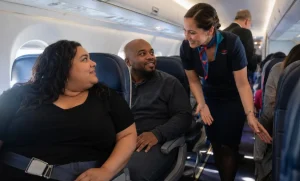
The shift to assigned seating is a major reason behind the policy update. Under the previous open-seating system, customers often had greater flexibility in selecting seats after boarding.
With assigned seating, seat inventory must be managed before departure. This means Southwest needs advance notice when multiple seats are required for a single traveler.
Assigned seating also impacts family members or companions traveling together. Depending on fare type and seat availability, travelers may need to contact Southwest directly to coordinate adjacent seating arrangements.
The new structure provides greater certainty but also places more responsibility on passengers to plan ahead.
When Are You Eligible for an Extra Seat Refund After Travel?
One of the most discussed aspects of the Southwest extra seat policy update is the revised refund process.
Refund Eligibility Requirements:
| Requirement | Must Be Met? |
| Flight departed with at least one open seat | Yes |
| Both seats booked in the same fare class | Yes |
| Refund requested within 90 days | Yes |
| Travel completed | Yes |
Unlike previous versions of the policy, refunds are no longer automatically guaranteed. Travelers must actively submit a refund request and satisfy all eligibility criteria.
“The updated refund framework allows Southwest to manage assigned seating effectively while still offering reimbursement opportunities when excess capacity exists.” — Aviation Policy Analyst
Passengers should retain travel records and submit refund requests promptly after completing their trip. Meeting all requirements significantly improves the likelihood of reimbursement.
What Practical Steps Can Plus-Size Travelers Take to Avoid Last-Minute Travel Issues?
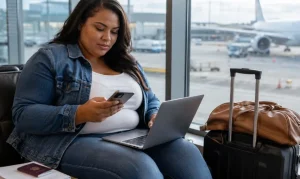
Planning ahead is one of the most effective ways for plus-size travelers to reduce stress and avoid unexpected disruptions when flying under Southwest’s updated seating policy.
Helpful Travel Tips:
- Review the Customer of Size policy before booking.
- Reserve required seating as early as possible.
- Confirm seating arrangements before departure.
- Arrive at the airport with sufficient time for check-in.
- Keep documentation related to extra-seat purchases.
- Submit refund requests promptly after travel.
These proactive measures can reduce uncertainty and help travelers navigate the updated policy with confidence. Taking action before the day of travel is often the best way to avoid unexpected complications.
Is the Southwest Airlines Extra Seat Policy Fair for Plus-Size Travelers?
Opinions on the Southwest Airlines extra seat policy remain mixed. Supporters argue that assigned seating requires clearer rules and improved seat management, while critics believe the policy places extra financial pressure on travelers who need additional space.
From the airline’s perspective, the policy aims to improve transparency by setting clear expectations around seating requirements and refund eligibility before departure.
However, passenger advocacy groups continue raising concerns about affordability and accessibility.
Ultimately, whether the policy feels fair depends on individual travel needs and expectations. Understanding the rules before booking remains the best way to avoid unexpected costs and make informed travel decisions.
Conclusion
The Southwest extra seat policy update creates a more structured process for accommodating plus-size travelers following the move to assigned seating.
While additional space options remain available, advance planning is now more important than before. Understanding booking requirements, airport procedures, and refund eligibility can help avoid unnecessary costs or delays.
By reviewing the updated Customer of Size policy before booking, travelers can make informed decisions and enjoy a smoother, more confident travel experience.
Frequently Asked Questions
Does Southwest Airlines have a weight limit for passengers?
No. Southwest does not use a specific weight limit to determine whether an extra seat is required. The assessment is based on seating space and armrest boundaries.
Can an extra seat be purchased solely to keep the adjacent seat empty?
No. Southwest states that extra seats cannot be purchased simply to keep neighboring seats vacant for additional privacy.
Are both seats required to be booked under the same fare class?
Yes. To qualify for a potential refund after travel, both seats should be purchased in the same fare class.
Can a passenger use their own seatbelt extender onboard?
No. Southwest requires passengers to use only seatbelt extenders provided by the airline.
How long do travelers have to submit an extra seat refund request?
Passengers must submit their refund request within 90 days after completing travel.
What should travelers do if their itinerary includes a Southwest partner airline?
They should contact the partner airline directly regarding additional seat purchases, as partner-carrier policies may differ and extra seats may be non-refundable.
Can a Customer of Size choose seats for other members of their travel party?
Not necessarily. If a fare does not include seat assignments for other travelers, Southwest may not automatically assign seats together.