




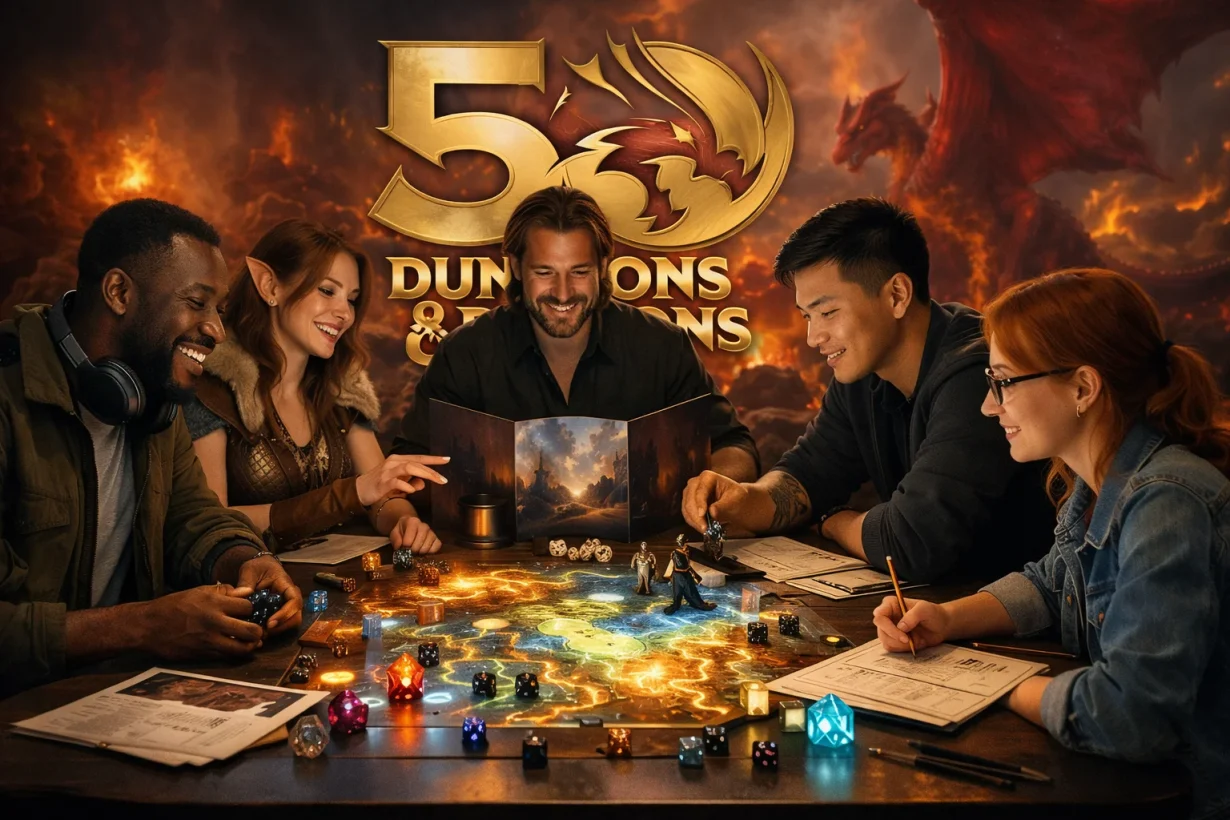

What makes a decades-old tabletop game continue to grow in a digital-first world? The answer lies in understanding the Dungeons & Dragons franchise model, which is often misunderstood as a traditional franchise but is actually something far more flexible and powerful.
At its core, Dungeons & Dragons (D&D) is not built on physical locations or franchise fees. Instead, it thrives on intellectual property, licensing, storytelling, and community participation. This makes it fundamentally different from typical business models people are familiar with.
As one industry observer might put it:
“Dungeons & Dragons doesn’t sell stores or spaces—it sells worlds, and invites everyone else to build inside them.”
This distinction is important. Whether someone is a business enthusiast, a creator, or simply curious, understanding how this model works reveals why D&D has remained relevant and profitable across generations.
What Is the Dungeons & Dragons Franchise Model and How Does It Work?
The Dungeons & Dragons franchise model is best understood as a centralised intellectual property system supported by distributed participation.
The company that owns D&D controls the core rules, branding, and universe, while allowing others to engage with and expand that universe within defined boundaries.
Instead of opening D&D-branded stores, the model works through:
- Publishing official content
- Allowing third-party creators to produce compatible materials
- Building tools that enhance gameplay
- Encouraging community storytelling
This approach creates a network effect. Every new player, dungeon master, or content creator contributes to the ecosystem, making the brand stronger without requiring direct operational control over each interaction.
Is Dungeons & Dragons a Franchise or a Licensing-Based Business Model?
The confusion around the Dungeons & Dragons franchise model often comes from the word “franchise.” In reality, D&D operates through licensing rather than franchising.
A traditional franchise typically involves a company allowing individuals to operate a business under its brand, following strict operational guidelines.
D&D does none of this. There are no storefront requirements, no franchise fees, and no territorial rights.
Instead, D&D licenses its intellectual property, allowing others to create within its framework.
Key Structural Differences
| Aspect | Traditional Franchise Model | Dungeons & Dragons Model | |||
| Expansion Method | Physical locations | Content and digital ecosystems | |||
| Entry Requirement | Franchise investment | Creative or consumer participation | |||
| Revenue Source | Franchise fees + royalties | Product sales, licensing, subscriptions | |||
| Control | Operational systems | Intellectual property and branding |
This structure allows D&D to expand globally without the limitations of geography or infrastructure.
How Does Dungeons & Dragons Make Money? Key Revenue Streams Explained
The strength of the Dungeons & Dragons franchise model lies in its ability to combine multiple revenue streams into a cohesive system.
The foundation begins with physical products. Books such as rulebooks and campaign guides are essential to gameplay and continue to generate steady income. These products are not just purchases; they are entry points into a larger ecosystem.
Beyond physical products, digital platforms have become increasingly important. Tools that help players create characters, manage campaigns, and access content offer recurring revenue opportunities through subscriptions.
This shift toward digital has allowed D&D to remain relevant in an increasingly online world.
Licensing adds another dimension. By allowing third-party creators and companies to develop content, merchandise, and experiences, D&D expands its reach without directly managing every product.
This reduces operational costs while increasing brand visibility.
Finally, entertainment media plays a growing role. Films, streaming series, and video games introduce the brand to new audiences, many of whom eventually become players. This creates a cycle where media drives interest, and gameplay sustains engagement.
What Role Does Wizards of the Coast Play in the D&D Business Model?
The success of the Dungeons & Dragons franchise model depends heavily on centralised management, which is handled by Wizards of the Coast.
This company acts as both the creator and curator of the D&D universe. It develops official content, updates game mechanics, and ensures consistency across all platforms. At the same time, it manages licensing agreements and maintains relationships with creators and partners.
Rather than controlling every aspect of the ecosystem, Wizards of the Coast focuses on guiding its direction. This balance between control and openness is what allows the model to scale effectively.
How Licensing Powers the Dungeons & Dragons Franchise Model?
Licensing is the engine that drives the Dungeons & Dragons franchise model. It allows the brand to grow organically while maintaining control over its core identity.
The Open Gaming License (OGL) is a key component of this system. It enables third-party creators to produce compatible content, which significantly expands the range of available material for players.
This has led to a vast ecosystem of independent publishers, storytellers, and developers who contribute to the D&D universe.
To better understand how licensing functions within this model, consider the following:
| Element | How It Works in D&D |
| Core Rules | Controlled by the official publisher |
| Third-Party Content | Allowed under specific licensing terms |
| Brand Identity | Fully protected and centrally managed |
| Revenue Impact | Indirect growth through ecosystem expansion |
It is important to separate facts from misconceptions here. While D&D allows external contributions, it is not an open-source system. The company retains control over its intellectual property and can adjust licensing terms when needed.
How Has Digital Transformation Changed the D&D Business Model?
Digital transformation has significantly reshaped the Dungeons & Dragons franchise model, making it more accessible and scalable than ever before.
In the past, playing D&D required physical books, in-person groups, and manual tracking. Today, digital tools have simplified nearly every aspect of the experience. Players can create characters online, join virtual campaigns, and access rulebooks instantly.
This shift has introduced new revenue opportunities. Subscription-based services provide ongoing income, while digital marketplaces allow users to purchase additional content easily.
More importantly, digital platforms remove geographical barriers. Someone in a small town can now join a global campaign, expanding the potential audience dramatically.
How Dungeons & Dragons Expands Beyond Tabletop Gaming?
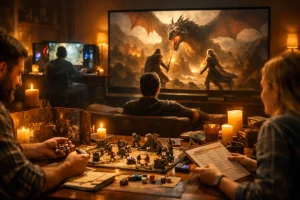
The evolution of the Dungeons & Dragons franchise model goes far beyond tabletop gaming. It has become a multi-channel entertainment ecosystem.
D&D now exists in films, streaming content, video games, and merchandise. Each of these channels serves a different purpose. Media introduces the brand to new audiences, while games and tools deepen engagement.
Consider a typical journey. A viewer watches a fantasy film connected to D&D, becomes curious, and explores the game. They start with a beginner kit, then move to digital tools, and eventually join a campaign. Over time, they may even create their own content.
This journey illustrates how the model converts awareness into long-term participation.
What Makes the Dungeons & Dragons Business Model So Successful?
The enduring success of the Dungeons & Dragons franchise model comes from its adaptability and community-driven nature.
One of its strongest advantages is that players are not just consumers; they are contributors. Every campaign, story, and character adds to the richness of the ecosystem.
The model also benefits from strong intellectual property. The D&D universe is flexible enough to evolve with cultural trends while maintaining its core identity.
Another key factor is diversified monetisation. By combining physical sales, digital subscriptions, and licensing revenue, the model reduces dependence on any single income stream.
Challenges and Controversies in the D&D Franchise Model

Despite its strengths, the Dungeons & Dragons franchise model has faced challenges, particularly around licensing and monetisation.
Changes to licensing terms have sparked debates within the community. Some creators worry about restrictions, while the company seeks to protect its intellectual property and increase revenue.
It is important to distinguish between reality and exaggeration. While controversies can create concern, they do not indicate the collapse of the model. In fact, the brand continues to grow and adapt.
These challenges highlight a central tension: balancing community openness with business sustainability.
Can You Franchise a Business Like Dungeons & Dragons?
For those wondering whether they can invest in the Dungeons & Dragons franchise model, the answer is straightforward: it is not possible in the traditional sense.
There is no system for buying a D&D franchise. However, this does not mean there are no opportunities.
Individuals can participate in the ecosystem by creating content, hosting events, or building tools that enhance gameplay. These activities align with the model’s emphasis on creativity and community rather than ownership of physical locations.
Future of the Dungeons & Dragons Franchise Model

Looking ahead, the Dungeons & Dragons franchise model is expected to continue evolving with technology and audience expectations.
Digital platforms will likely play an even larger role, with advancements in virtual tabletop environments and AI-assisted storytelling tools. These innovations could make gameplay more immersive and accessible.
At the same time, global expansion will introduce the brand to new markets, further strengthening its position.
The core principle, however, will remain the same: a central intellectual property supported by a distributed, creative community.
Conclusion: Understanding the True Nature of the Dungeons & Dragons Franchise Model
The Dungeons & Dragons franchise model is not a franchise in the traditional sense. It is a licensing-driven ecosystem built around storytelling, participation, and intellectual property.
This distinction matters because it changes how people engage with the brand. Instead of buying into a business system, individuals become part of a creative network.
For readers, the takeaway is clear. D&D’s success does not come from controlling locations, it comes from empowering people to create, share, and explore within a structured universe.
Frequently Asked Questions (FAQs)
How is Dungeons & Dragons different from other gaming businesses?
Dungeons & Dragons focuses on intellectual property and community participation rather than physical distribution or franchised locations.
Can small creators earn money using D&D content?
Yes, many creators earn income through third-party content, provided they follow licensing guidelines.
Why has D&D remained popular for so long?
Its adaptability, strong storytelling framework, and community-driven nature have allowed it to evolve over decades.
Does D&D rely more on new players or existing fans?
Both are important. Media and digital tools attract new players, while long-term fans sustain the ecosystem.
Is digital growth replacing traditional gameplay?
No, digital tools are enhancing rather than replacing traditional tabletop experiences.
What risks exist in the D&D business model?
Licensing disputes and monetisation strategies can create tension within the community.
Could other brands copy the D&D model?
While possible, it requires strong intellectual property and an engaged community, which are difficult to replicate.