

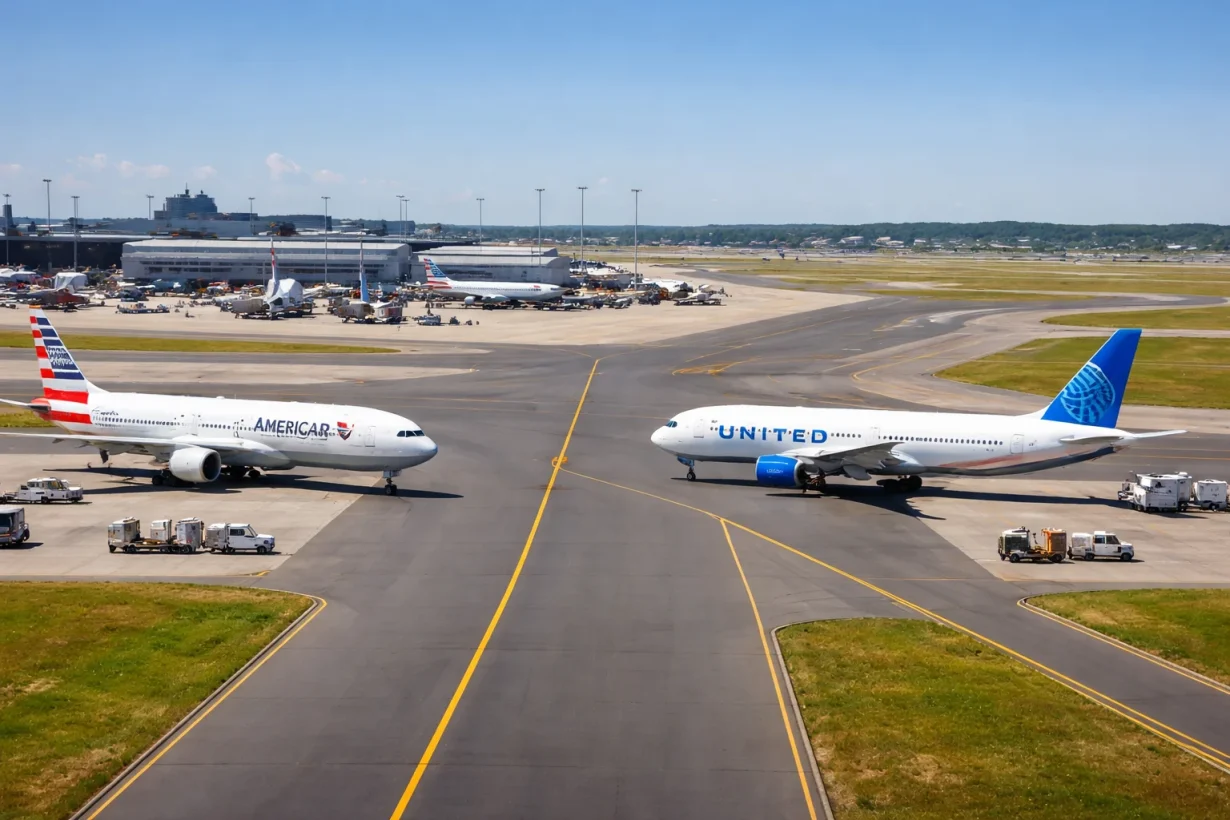

American Airlines has firmly rejected the idea of a merger with United Airlines, arguing that such a deal would be bad for competition and even worse for travellers.
Although reports suggested that United CEO Scott Kirby had explored the idea with Trump administration officials, American publicly stated that it was neither involved in nor interested in any discussions.
The proposed American Airlines United Airlines merger raised immediate concerns because the combined airline would control a huge share of the U.S. market.
Key takeaways include:
- American believes the merger would reduce competition
- Regulators would likely block the deal on antitrust grounds
- Travellers could face higher fares and fewer flight options
- Major hubs such as Chicago, Texas, and New York would be heavily affected
- Loyalty programs and frequent flyer miles could lose value
Why Did American Airlines Reject a Merger with United Airlines?
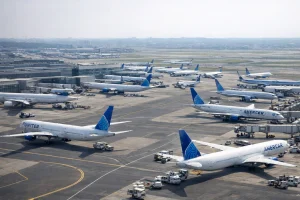
American Airlines did not simply decline the proposal quietly. Instead, the airline issued a direct and unusually strong public statement rejecting the possibility of a merger with United.
The company stated:
“American Airlines is not engaged with or interested in any discussions regarding a merger with United Airlines.”
That statement was followed by an even stronger message from the airline:
“A combination with United would be negative for competition and for consumers.”
This response suggests Americans viewed the merger as politically, legally, and financially risky.
The airline is also focused on rebuilding its position against rivals like Delta and United, and a merger could create uncertainty for employees, investors, and regulators.
By rejecting the idea early, America avoided a lengthy and controversial process likely to face major legal challenges.
Was There Ever a Real United-American Merger Proposal?
Reports suggest that United Airlines CEO Scott Kirby privately explored a merger or acquisition of American Airlines.
Sources claim he discussed the idea with members of the Trump administration before any public approach, possibly to test regulatory support. However, American Airlines said it had not taken part in any discussions.
The proposal reportedly emerged in February 2026, as the industry faced rising fuel costs, higher fares, and pressure to improve profits.
United may have believed a merger would create a stronger global airline to compete with international rivals.
Several factors may explain why United considered the deal:
- Greater control over international routes
- Stronger position in Europe, Asia, and Latin America
- More bargaining power with suppliers and airports
- A larger loyalty program and customer base
- Better ability to control seat capacity and pricing
However, these benefits for the airlines could create serious drawbacks for passengers. That is one of the main reasons why the idea quickly became controversial.
Why Would an American Airlines United Airlines Merger Raise Antitrust Concerns?
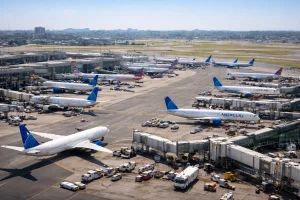
The biggest issue is market concentration. A combined American and United would become the dominant airline in the United States by a wide margin.
Analysts estimate that the merged company could control roughly 40% of U.S. airline capacity.
That level of control would alarm regulators because it could allow one airline to influence prices, reduce routes, and weaken competition.
| Issue | Why Regulators Are Concerned | Likely Effect |
| Market Share | A combined airline could control nearly 40% of the capacity | Greater pricing power |
| Hub Overlap | Both airlines operate in many of the same cities | Fewer route choices |
| Competition | Fewer large carriers would remain | Reduced consumer options |
| International Reach | The combined company would dominate major overseas routes | Smaller rivals could struggle |
William McGee of the American Economic Liberties Project warned about the scale of the proposal, saying:
“The idea that we would have one airline responsible for four out of 10 flights every day is beyond horrific.”
American and United already overlap heavily in major markets such as Chicago, New York, Los Angeles, Washington, and Texas.
If the two airlines merged, regulators might require them to sell off routes or airport slots. Even then, many experts believe the resulting company would still be too powerful.
How Could the Merger Affect You as a Passenger?
For travellers, the greatest concern is not the corporate deal itself but what happens afterwards. Airline mergers often lead to fewer choices, more expensive tickets, and changes to loyalty programs.
- Ticket prices could rise because fewer competitors would remain on popular routes
- Flight schedules may become less convenient as overlapping routes are cut
- Frequent flyer miles could lose value if loyalty programs are merged
- Travellers in smaller cities may see fewer flights or reduced service
Many industry observers believe that travellers would pay more for the same flights if the American Airlines and United Airlines merger moved forward.
Would Ticket Prices Go Up?
Higher prices are the most likely outcome. When airlines merge, they gain more control over capacity. By reducing the number of flights available, the merged company can often keep fares higher.
This concern is especially important now because ticket prices are already under pressure. Rising fuel costs linked to the conflict involving Iran have already pushed fares upward in 2026.
Antitrust lawyer Andre Barlow summarised the concern clearly:
“Such a deal would reduce choices and give the airlines more pricing power.”
What Could Happen to Frequent Flyer Miles?
Loyalty programs rarely improve after a merger. In most airline mergers, reward flights become harder to book, and the number of miles required often increases.
American’s AAdvantage program and United’s MileagePlus program are two of the largest in the industry.
If the airlines combined, one program would likely absorb the other, leading to:
- Higher redemption costs
- Fewer available award seats
- New restrictions on upgrades and elite status
For travellers who have built up miles over many years, that could be one of the most frustrating consequences of the merger.
Which Airports and Hubs Would Be Hit the Hardest?
The strongest overlap between the two airlines exists in several major airports. These locations would likely receive the most scrutiny from regulators because competition could shrink dramatically.
The most affected hubs include:
- Chicago O’Hare
- Dallas-Fort Worth
- Houston
- New York
- Washington, D.C.
- Los Angeles
Chicago O’Hare stands out because both airlines already maintain major operations there. A merger could give the combined company enormous influence over gates, schedules, and ticket prices at one of the country’s busiest airports.
Texas is another key concern. American is dominant in Dallas-Fort Worth, while United has a strong presence in Houston. Together, they could control much of the state’s air travel market.
Meanwhile, airports such as Philadelphia, Phoenix, and Charlotte may lose importance.
Airlines often reduce secondary hubs after a merger in order to save costs and simplify operations. That means fewer flights and fewer choices for travellers who live outside the biggest cities.
Why Might United Airlines Have Wanted the Deal in the First Place?
Although America rejected the idea, there were several reasons why United may have considered the merger attractive.
- United could gain access to American’s stronger domestic network
- The combined airline would become a more powerful global competitor
- A greater scale could help lower operating costs
- United could expand its position in key business and leisure markets
United may also see American as vulnerable. In recent years, American has struggled to keep pace with Delta and United in attracting premium customers who spend more on business-class seats, airport lounges, and travel rewards.
A merger would have given United immediate access to American’s customer base, airport slots, and international partnerships.
However, those benefits for United do not necessarily translate into benefits for travellers. In many cases, the advantages of consolidation are felt by shareholders rather than passengers.
Could the Trump Administration or Regulators Approve a Deal This Big?

The Trump administration has generally appeared more open to business consolidation than previous administrations. Even so, this merger may simply be too large to approve.
Why U.S. Regulators Would Likely Resist?
Federal agencies would almost certainly review the merger closely. The Department of Justice, state attorneys general, labour unions, and consumer groups would all likely challenge the deal.
The government would ask several key questions:
- Would the merger reduce competition?
- Would ticket prices increase?
- Would passengers lose important travel options?
- Would the combined airline have too much control in major cities?
Even if the administration supported the idea politically, regulators would still need to prove that the merger would not harm consumers. Given the available evidence, that would be difficult.
International Approval Could Take Years
Because both airlines operate internationally, the merger would also need approval from authorities in Europe, Asia, and other regions. International regulators may be even more sceptical than U.S. officials.
The review process could last for years and create enormous uncertainty. A future administration could also decide to challenge or reverse any approval that had been granted.
For that reason, many analysts believe the merger was never realistic. Instead, it may have been a way for United to signal that the airline industry needs broader changes.
What Does This Merger Drama Reveal About the U.S. Airline Industry?
The American Airlines–United Airlines merger debate highlights the growing pressure on the airline industry in 2026.
Airlines are facing rising fuel costs, shifting travel demand, expensive aircraft, and intense competition for premium passengers.
At the same time, the market is already highly concentrated, with four major carriers dominating domestic routes and leaving limited space for smaller rivals.
Further consolidation might improve airline profits, but it could reduce competition and lead to higher fares for travellers.
The situation also reflects American Airlines’ challenges, as it has struggled to match the performance of Delta and United in recent years.
Despite this, America’s rejection suggests confidence in its independent recovery. It also shows that major airlines are cautious of the legal and political risks associated with creating too much market dominance.
Conclusion
In the end, the proposed American Airlines-United Airlines merger appears far more symbolic than realistic.
Americans’ outright refusal reflects growing concern that another major airline consolidation would reduce competition, raise fares, and leave travellers with fewer choices.
While United may see strategic value in creating a larger global airline, regulators, consumer groups, and even parts of the government are likely to resist such a move.
For now, the merger seems unlikely to proceed, but the debate has revealed just how much pressure the airline industry is facing in 2026.
FAQs About
Why did American Airlines reject United’s merger idea?
American Airlines said the merger would be harmful to competition and consumers. The company also believed the proposal would face major antitrust problems.
Would a United-American merger create the largest airline in the U.S.?
Yes. A combined airline would likely become the largest carrier in the United States and control around 40% of domestic capacity.
How would the merger affect airfare prices?
Most experts believe fares would rise because fewer competitors would remain on major routes.
Could frequent flyer miles lose value after the merger?
Yes. Airline mergers often make reward programs less generous, requiring more miles for the same trips.
Which airports would be most affected?
Chicago O’Hare, Dallas-Fort Worth, Houston, New York, Los Angeles, and Washington would likely see the biggest impact.
Is the U.S. government likely to approve this type of airline deal?
Approval appears unlikely because the merger would face strong opposition from regulators, consumer groups, and state officials.
Could the merger idea return in the future?
It is possible, but only if market conditions change significantly and regulators become more open to large airline mergers.