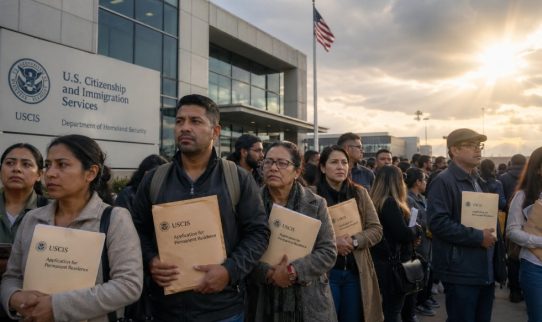





The Justice Dept targets hundreds of citizens in new push for denaturalization, marking a significant shift in U.S. immigration enforcement.
The Department of Justice (DOJ) has identified hundreds of naturalized Americans whose citizenship may be revoked, signalling a more aggressive legal approach.
This move is expected to increase denaturalization cases nationwide and raise questions about legal standards, rights, and long-term implications.
Key highlights:
- Around 384 naturalized citizens have been identified for potential denaturalization
- Cases may be handled across 39 U.S. attorney offices
- Focus remains on fraud, misrepresentation, and serious crimes
- The initiative could lead to a sharp rise in citizenship revocation cases
This article explores what the policy means, why it matters, and how it could impact naturalized citizens across the United States.
What Is the Justice Department’s New Denaturalization Push?

The current DOJ initiative represents one of the most expansive efforts in recent history to review and potentially revoke U.S. citizenship.
Authorities have reportedly identified hundreds of foreign-born Americans whose naturalization records are now under scrutiny.
Unlike traditional approaches, which relied heavily on specialized immigration attorneys, this new push distributes cases to prosecutors across multiple regions.
This structural shift could significantly accelerate the pace of denaturalization proceedings.
“The Department of Justice is laser-focused on rooting out individuals who defrauded the naturalization process,”said a DOJ spokesperson.
The initiative reflects a broader effort to enforce existing laws more aggressively, particularly in cases involving alleged fraud or criminal conduct.
Why Is the DOJ Targeting Hundreds of Naturalized Citizens?
The recent development where the justice dept targets hundreds of citizens in new push for denaturalization is primarily driven by the enforcement of existing immigration laws rather than the creation of new ones.
Federal authorities maintain that citizenship obtained through unlawful means must be reviewed and, where necessary, revoked through proper legal channels.
Key Reasons Behind the Crackdown
- Allegations of fraud during the naturalization process
- Concealment of critical background information
- Involvement in serious criminal activities
- National security concerns
Policy and Enforcement Drivers
- Increased referrals from the Department of Homeland Security (DHS)
- A push for higher enforcement under federal immigration laws
- Coordination between agencies to identify potential cases
The DOJ has emphasized that denaturalization is not arbitrary but grounded in legal standards. However, critics argue that the scale and speed of this effort could create uncertainty among immigrant communities.
What Does Denaturalization Mean and How Does It Work?

Denaturalization is the legal process through which the United States government revokes citizenship from a naturalized individual.
It is typically pursued when authorities believe citizenship was obtained unlawfully or through deception.
These cases are often handled by the United States Department of Justice and involve strict legal scrutiny.
Common Grounds for Denaturalization
- Fraud or misrepresentation during the application
- Use of false identity or documentation
- Failure to disclose criminal history
- Involvement in disqualifying crimes
Legal Process Overview
- Case filed in federal court
- Evidence presented by government attorneys
- Judicial review and final ruling
The process is complex and requires substantial proof, making successful cases relatively rare historically.
How Can U.S. Citizenship Be Revoked Legally?
Revoking citizenship is not a simple administrative action. It requires strict adherence to legal standards and judicial oversight.
| Legal Requirement | Description |
| Burden of Proof | Must be “clear, convincing, and unequivocal” |
| Court Involvement | A federal judge must approve the case |
| Type of Case | Civil or criminal proceedings |
| Evidence Standard | High level of documented proof |
This high threshold ensures that citizenship is not revoked without strong justification, reinforcing the seriousness of such actions.
Why This Denaturalization Effort Is Considered Unusual?

Historically, denaturalization cases have been rare due to their complexity and resource demands. The current initiative stands out because of its scale and approach.
The use of regular prosecutors instead of specialized immigration lawyers marks a major procedural shift. Additionally, the number of identified cases far exceeds typical annual figures.
| Factor | Traditional Approach | Current Approach |
| Case Volume | Low (approx. 11/year historically) | Hundreds identified |
| Legal Teams | Immigration specialists | General prosecutors |
| Scope | Limited | Nationwide expansion |
This change could significantly increase the number of cases pursued in a shorter timeframe.
How Many Denaturalization Cases Has the Government Filed Before?
Denaturalization has evolved significantly over time. In the early 20th century, it was sometimes used against political activists. However, legal reforms narrowed its application.
Between 1990 and 2017, the U.S. government filed just over 300 cases, averaging around 11 per year. More recent years have seen a gradual increase, but the current initiative represents a dramatic escalation.
| Period | Number of Cases | Key Trend |
| 1990–2017 | ~305 cases | Rare and selective |
| 2017–2025 | ~120+ cases | Gradual increase |
| 2026 (Current Push) | 384 identified | Major expansion |
These figures highlight how unusual the current enforcement strategy is compared to historical norms.
What Role Will U.S. Attorney Offices Play in the New DOJ Strategy?

A key feature of this initiative is the involvement of U.S. attorney offices across the country. Approximately 39 regional offices are expected to handle denaturalization cases.
This decentralization aims to speed up legal proceedings but may also place additional pressure on already stretched legal teams.
Traditionally, these offices handled cases such as fraud, civil rights violations, and public corruption.
Expanding their responsibilities to include denaturalization could reshape how immigration enforcement is carried out at the federal level.
Who Could Be at Risk Under the New Citizenship Review Push?
As the justice dept targets hundreds of citizens in a new push for denaturalization, the scope of individuals potentially affected is becoming clearer.
While the initiative is framed around enforcing existing laws, it primarily focuses on specific categories of naturalized citizens whose cases raise legal concerns.
Groups Potentially Affected
- Individuals accused of immigration fraud
- Those with undisclosed criminal histories
- People linked to serious offenses or national security risks
These categories reflect long-standing legal grounds for denaturalization rather than new rules.
However, the difference lies in the scale and intensity of enforcement, which may bring more cases under review than in previous years.
Real-Time Example
Consider a case involving a naturalized citizen accused of using a false identity during the immigration process.
If evidence shows the individual had previously been deported under another name and later gained citizenship fraudulently, the United States Department of Justice could initiate denaturalization proceedings.
In a similar situation, one individual reportedly said,
“I never thought this would come back years later. I believed my past records wouldn’t be connected, but now everything is being reviewed again.”
Such cases are often identified through digitized fingerprint records and cross-agency data analysis, highlighting how modern technology is playing an increasing role in detecting potential violations.
How This Policy Connects to Broader Immigration Enforcement?

The denaturalization push is closely tied to broader immigration enforcement strategies. It aligns with efforts to increase scrutiny across all stages of the immigration process, from entry to citizenship.
Authorities have reportedly encouraged more referrals from DHS, potentially reaching hundreds per month. This coordinated approach reflects a wider focus on enforcement rather than expansion of immigration pathways.
The policy also signals a shift toward revisiting past cases, not just addressing new applications.
What Are Legal Experts Saying About the Denaturalization Push?
Legal experts have raised growing concerns about the broader implications of this policy shift.
While many acknowledge the legitimacy of prosecuting fraud and upholding immigration laws, they also warn that the scale and execution of this initiative could lead to unintended legal and social consequences.
“The message it sends is that naturalized citizens may feel less secure in their status,” noted a law professor specializing in immigration law, highlighting concerns about long-term confidence in the system.
“This kind of expansion could risk stretching legal interpretations beyond their original intent,”said a former DOJ official, pointing to the possibility of broader or more aggressive applications of existing laws.
Some experts also caution that increasing the volume of denaturalization cases may put pressure on courts and prosecutors, potentially affecting the consistency of legal outcomes.
Critics emphasize that maintaining strict evidentiary standards and judicial oversight is essential to prevent misuse, safeguard civil liberties, and ensure that enforcement remains fair, balanced, and rooted in established law.
What Happens After Someone Is Denaturalized?

After denaturalization, an individual loses their U.S. citizenship and may revert to their previous immigration status, if any exists.
In many cases, this can lead to removal proceedings handled by authorities such as the United States Department of Justice.
The psychological and social impact can be significant. Naturalized citizens who once viewed their status as permanent may face renewed scrutiny, creating uncertainty within immigrant communities.
This can also lead to a “chilling effect,” where individuals become more cautious about engaging with institutions or legal systems.
Key impacts include:
- Loss of citizenship rights and protections
- Possible detention or deportation proceedings
- Increased fear and uncertainty within communities
At the same time, supporters argue that strict enforcement helps maintain the integrity of the immigration system.
What This Means for the Future of U.S. Citizenship?
The Justice Department targets hundreds of citizens in new push for denaturalization could reshape how citizenship is perceived and protected in the United States.
While the legal framework remains strict, the scale of enforcement may redefine expectations for naturalized Americans.
Looking ahead, key questions remain:
- Will this initiative lead to long-term policy changes?
- How will courts respond to increased case volume?
- What safeguards will ensure fairness and due process?
Ultimately, the balance between enforcement and rights will determine the long-term impact of this policy.
Conclusion
The Justice dept targets hundreds of citizens in new push for denaturalization signals a major shift in immigration enforcement and legal scrutiny.
While rooted in existing law, the scale of this initiative raises important questions about fairness, due process, and long-term impact on naturalized citizens.
As cases move forward, the balance between enforcing legal standards and protecting constitutional rights will play a crucial role in shaping the future of U.S. citizenship.
FAQs
Can the Justice Department revoke U.S. citizenship?
Yes, but only through a legal process where the government proves that citizenship was obtained unlawfully or through fraud.
Is denaturalization common in the United States?
No, it has historically been rare, with only a small number of cases filed each year until recently.
What are the main reasons for denaturalization?
Common reasons include fraud, misrepresentation, concealed criminal history, or serious criminal offenses.
Does denaturalization happen automatically?
No, it requires a court proceeding and a judge’s approval based on strong evidence.
Can a naturalized citizen fight a denaturalization case?
Yes, individuals have the right to defend themselves in court and challenge the government’s claims.
What happens after someone is denaturalized?
They typically revert to their previous immigration status and may face deportation proceedings.
Are naturalized citizens protected by the Constitution?
Yes, they enjoy nearly all the same rights as native-born citizens, with very limited exceptions.