
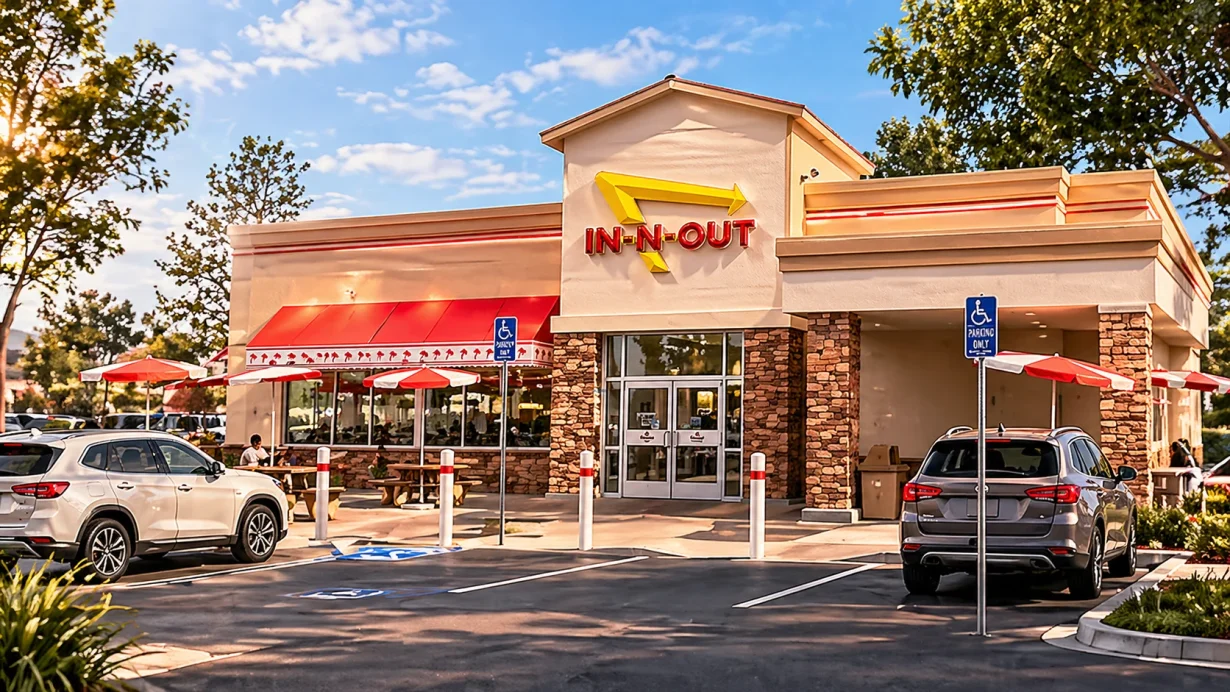

The In-N-Out franchise cost in 2026 is essentially $0, because the company does not offer any franchising opportunities at all.
While many entrepreneurs search for ways to own this iconic burger brand, the reality is that In-N-Out operates entirely under a company-owned model, leaving no room for external investors or franchisees.
Key highlights:
- There is no franchise fee or investment option available
- All locations are privately owned by the Snyder family
- The company follows a strict quality control system
- Expansion is slow and limited to specific regions
- Investors must look at alternative burger franchises instead
This article breaks down everything you need to know about the In-N-Out franchise cost and realistic options available today.
What Is the In-N-Out Franchise Cost in 2026?

The term “In-N-Out franchise cost” is one of the most searched phrases in the restaurant investment space, yet it leads to a simple truth – the cost is $0, because no franchise exists.
In-N-Out Burger has never offered franchising since its founding in 1948. There are no franchise fees, royalties, or franchise disclosure documents (FDD), which are standard in most franchise systems.
This makes it very different from other major fast-food brands in the United States. Instead of franchising, In-N-Out keeps full ownership and control of every location.
As a result, even with significant capital or restaurant experience, it is not possible to buy or operate an In-N-Out franchise in 2026 under its current business model.
Can You Actually Own an In-N-Out Franchise in the United States?
No, you cannot own an In-N-Out franchise in the United States.
This isn’t a temporary restriction or a limited availability issue. It’s a core business decision that has remained unchanged for decades. The company has consistently refused franchising offers, partnerships, and licensing deals.
As one industry expert from the franchise sector explains:
“In-N-Out’s refusal to franchise isn’t a missed opportunity—it’s a deliberate strategy to protect brand integrity.”
Even high-profile investors and celebrities have not been able to secure ownership stakes in individual locations. All stores are operated by corporate employees, not independent owners.
Why Does In-N-Out Burger Not Offer Franchises?
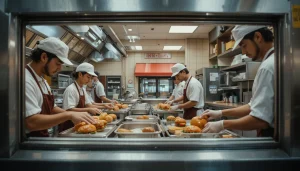
In-N-Out’s decision not to franchise is deeply rooted in its philosophy and operational priorities.
Unlike competitors focused on rapid expansion, In-N-Out prioritizes consistency and control.
Key reasons behind this approach:
- Strict quality control: Fresh, never-frozen ingredients require tight oversight
- Brand consistency: Every location delivers the same customer experience
- Family ownership: The Snyder family maintains full control
- Employee culture: Staff are trained internally and often promoted from within
- Supply chain limitations: Locations must remain near distribution centers
A senior restaurant consultant once noted:
“Franchising introduces variability, and In-N-Out has built its reputation on eliminating variability entirely.”
This disciplined approach has helped the brand maintain its cult-like following while preserving its premium image in a competitive fast-food market.
How Does In-N-Out Maintain Its Business Without Franchising?
Despite not franchising, In-N-Out continues to grow successfully through a carefully controlled system.
The company owns and operates every restaurant, ensuring that all aspects, from hiring to food preparation, meet strict internal standards. Managers are employees, not franchisees, and many rise through the ranks over years of training.
Another key factor is slow expansion. Instead of opening hundreds of locations quickly, In-N-Out expands only when it can support new stores with its supply chain infrastructure.
A company insider once shared:
“We would rather grow slowly and protect quality than expand fast and risk our reputation.”
This measured approach allows the company to scale sustainably while maintaining the consistency customers expect.
What Would the In-N-Out Franchise Cost Be If It Were Available?
Even though there is no official In-N-Out franchise cost, we can estimate what it might look like by comparing similar burger franchises.
Running a high-quality burger restaurant requires significant investment, especially when maintaining premium standards like In-N-Out.
Estimated cost factors would include:
- Real estate and location development
- Construction and interior buildout
- Kitchen equipment and technology
- Staffing and training
- Initial inventory and working capital
Based on industry benchmarks, a hypothetical In-N-Out franchise could cost anywhere between $1.5 million and $3 million+. This aligns with other premium fast-food brands in the U.S.
This comparison helps investors understand the financial scale, even though the opportunity itself does not exist.
Is There Any Way to Invest in In-N-Out Burger Today?
Many aspiring entrepreneurs hope to find alternative ways to invest in In-N-Out, but the options are extremely limited.
The company is privately owned and does not trade publicly. There are no shares available on the stock market, and no external investment programs exist.
In practical terms:
- You cannot buy stock in In-N-Out
- You cannot partner or co-own a location
- You cannot license the brand
- You cannot become a franchisee
The only way to be directly involved with In-N-Out is by working for the company as an employee and progressing through its internal career structure.
Where Are In-N-Out Locations Available in the USA?
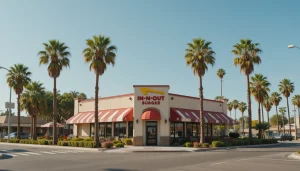
Understanding where In-N-Out operates gives you better insight into its growth strategy and why the brand remains exclusive compared to typical fast-food chains.
Current States with In-N-Out Restaurants
In-N-Out primarily operates in select regions of the United States, focusing on areas where it can maintain strict quality and supply chain efficiency. Its footprint continues to grow, but only in a controlled and strategic manner.
Current states where In-N-Out has a presence include:
- California
- Nevada
- Arizona
- Utah
- Texas
- Oregon
- Colorado
- Idaho
- Washington
These locations are concentrated mainly in the western and southwestern parts of the country, with gradual expansion into nearby regions. This regional focus helps the company maintain consistency across all outlets.
Expansion Strategy and Location Limitations
The company follows a strict geographic rule: restaurants must be located within a manageable distance from distribution centers. This ensures ingredient freshness and operational efficiency.
Because of this, expansion is slow and deliberate rather than aggressive.
This section highlights how geography plays a critical role in the brand’s growth strategy, reinforcing its non-franchise model.
Why Do So Many People Search for “In-N-Out Franchise Cost”?
The popularity of the keyword “In-N-Out franchise cost” comes down to brand recognition and consumer curiosity.
In-N-Out is widely considered one of the most successful regional fast-food chains in the U.S., so it’s natural for entrepreneurs to assume it offers franchise opportunities like its competitors.
However, this assumption leads to confusion, especially when misleading information circulates online.
From my experience discussing franchise investments, I once spoke with an aspiring investor who said:
“I was ready to invest $2 million if I could get an In-N-Out franchise—but finding out it doesn’t exist completely changed my plan.”
This example reflects a common scenario where demand for the brand creates unrealistic expectations.
What Are the Best Alternatives to an In-N-Out Franchise?
Since owning an In-N-Out franchise isn’t possible, the next logical step is to explore burger franchise opportunities that offer similar market appeal, strong brand recognition, and proven business models.
Fortunately, the U.S. fast-food industry provides a wide range of options for investors at different budget levels.
Top Burger Franchise Brands You Can Own
While In-N-Out is off the table, several established and emerging burger franchises offer realistic pathways to ownership.
These brands vary in investment size, operational style, and market positioning, giving you flexibility based on your goals.
Some of the most popular burger franchise options include:
- McDonald’s
- Burger King
- Wendy’s
- Dairy Queen
- Five Guys
- Wayback Burgers
- MOOYAH Burgers
Each of these brands comes with its own advantages, whether it’s global recognition, strong franchise support systems, or a focus on premium “better burger” concepts.
This variety allows investors to choose a model that aligns with their financial capacity and business vision.
Key Factors to Compare Before Investing
Before selecting a burger franchise, it’s important to evaluate more than just the initial cost. A well-informed decision requires analysing multiple factors that impact long-term success.
Key factors to consider include:
- Investment requirements
- Brand recognition and customer loyalty
- Training programs and ongoing support
- Market demand in your target location
- Profit potential and scalability
Carefully comparing these elements will help you identify a franchise that not only fits your budget but also offers sustainable growth opportunities.
This approach shifts your focus from an unavailable option like In-N-Out to practical and profitable alternatives in the real market.
How Much Do Popular Burger Franchises Cost in 2026?
Here’s a comparison of popular burger franchises and their estimated investment ranges:
| Brand | Investment Range | Franchise Fee | Ownership Type |
| McDonald’s | $1M – $2.2M | Yes | Franchise |
| Burger King | $316K – $2.6M | Yes | Franchise |
| Wendy’s | $2M – $3.5M | Yes | Franchise |
| Dairy Queen | $1M – $1.8M | Yes | Franchise |
| In-N-Out | Not Available | No | Company-Owned Only |
This comparison clearly shows that while other major brands rely on franchising for growth, In-N-Out remains a unique outlier with its company-owned model.
What Should You Consider Before Choosing a Burger Franchise?

Choosing the right burger franchise involves more than just reviewing the cost. It requires a strategic evaluation of multiple business factors.
Key considerations include:
- Market demand and competition in your area
- Operational complexity and staffing requirements
- Ongoing royalty, marketing, and operational fees
- Brand reputation and franchise support systems
- Potential for long-term growth and scalability
Taking the time to analyze these elements can significantly improve your chances of success in the highly competitive fast-food industry.
Is Owning an In-N-Out Franchise Ever Going to Be Possible?
The likelihood of owning an In-N-Out franchise is extremely low. The company has consistently maintained a strict no-franchise policy and operates all locations under full corporate ownership.
This allows it to maintain high standards of quality, consistency, and customer experience.
There are no public signs from leadership suggesting a shift toward franchising. Instead, In-N-Out focuses on controlled expansion and long-term stability rather than rapid growth.
For now, and likely for the foreseeable future, the answer remains clear: owning an In-N-Out franchise is not possible, and investors will need to explore other opportunities in the restaurant industry.
Conclusion
The truth about the In-N-Out franchise cost is straightforward, there is none, as the company does not franchise.
While this limits direct investment opportunities, it reflects the brand’s commitment to quality and control.
Instead of focusing on an unavailable option, you should explore established burger franchises that match your budget and goals, allowing you to enter the fast-food industry with a realistic and profitable approach.
FAQs About In-N-Out Franchise Cost
How does In-N-Out control quality across all locations?
In-N-Out maintains strict quality by owning all locations, managing supply chains internally, and training employees under standardised systems.
What makes In-N-Out different from other fast-food chains?
Its focus on fresh ingredients, limited menu, and company-owned model sets it apart from franchise-based competitors.
Are there affordable burger franchise options in the USA?
Yes, brands like Wayback Burgers and MOOYAH offer lower investment entry points compared to major chains.
Do burger franchises require prior experience?
Some brands prefer experience, but many provide training programs for first-time franchisees.
How long does it take to open a burger franchise?
It typically takes 6–18 months, depending on location, approvals, and construction timelines.
What is the average return on a burger franchise?
Returns vary widely but depend on location, brand strength, and operational efficiency.
Can you start a burger business without franchising?
Yes, you can start an independent burger restaurant, though it requires building your own brand and systems from scratch.