




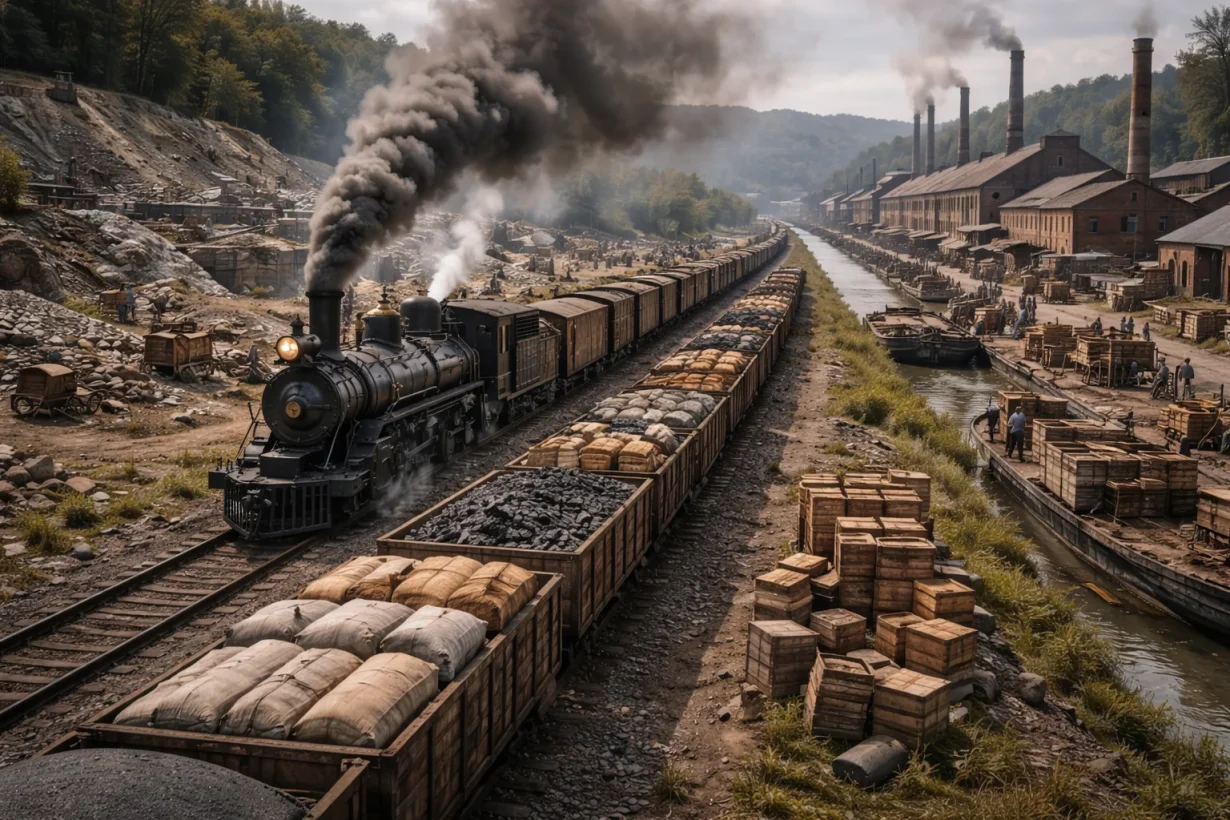

Steam locomotives dramatically lowered transportation costs during the Industrial Revolution by introducing a faster, more efficient, and scalable method for moving both raw materials and finished goods.
Unlike animal-drawn wagons or boats, steam trains could operate year-round, cover long distances quickly, and haul massive quantities in a single trip, all of which significantly reduced per-unit transportation costs.
Key Cost-Reduction Impacts of Steam Locomotives:
- Enabled economies of scale through bulk movement
- Reduced labor and operational expenses
- Increased transport speed and reliability
- Provided access to remote resources
- Minimized damage and spoilage
In essence, steam locomotives didn’t just move goods; they transformed the very economics of logistics.
What Were the Major Cost Challenges Before Steam Locomotives Existed?
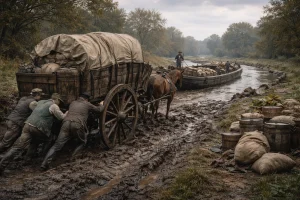
Before steam locomotives, transportation costs were driven up by slow, unreliable systems that limited how far and how efficiently goods could travel. Most freight was moved by horse-drawn wagons, which carried small loads and struggled on rough, muddy, or weather-damaged roads. Breakdowns and delays were common, increasing labour costs and delivery times.
Canals offered higher capacity, but they came with their own problems. Seasonal closures, freezing winters, and fluctuating water levels often disrupted trade, creating serious supply-chain bottlenecks. Businesses had little control over schedules, making long-distance commerce unpredictable.
These limitations made scaling operations expensive and risky. Companies had to hold excess inventory, absorb frequent delays, and accept lost or spoiled goods, especially in food and textiles.
Key Cost Challenges Included
- High labour and animal maintenance costs
- Limited freight capacity and slow speeds
- Seasonal and weather-related disruptions
Steam locomotives removed these barriers by providing faster, more reliable, and high-capacity transport, dramatically reducing logistics costs.
How Did Steam Locomotives Revolutionize Bulk Transportation?
Steam locomotives fundamentally changed bulk transportation by making it possible to move massive quantities of goods faster, farther, and at a far lower cost than any transport system that came before them.
Economies of Scale in Freight Logistics
One of the most transformative effects of steam locomotives was their ability to deliver economies of scale. Unlike carts or canal boats, which moved small amounts, trains could move hundreds of tons of materials in a single journey.
This allowed industries to transition from fragmented logistics to centralized bulk shipping.
Moving Mass Quantities in a Single Journey
Instead of breaking shipments into smaller loads for multiple wagons or boats, a single steam train could haul dozens of freight cars. Each car could carry raw materials such as coal, timber, iron, or oil, or transport manufactured goods from factories to ports and markets.
This bulk movement meant fewer trips, lower energy expenditure per ton, and a dramatic reduction in overall freight costs. Businesses could now produce more and ship more with less cost per load.
Reduced Cost Per Ton-Mile
The cost per ton-mile, the average expense of transporting one ton of freight one mile, dropped significantly with the use of railways. This became a major economic incentive for industries to shift to steam-powered freight.
| Transport Method | Max Load Capacity | Avg. Speed | Cost Per Ton-Mile |
| Horse-Drawn Wagon | ~1 ton | 3 mph | High |
| Canal Barge | ~30–50 tons | 4 mph | Medium |
| Steam Locomotive | 100+ tons | 20–30 mph | Low |
By drastically cutting the cost to move goods over long distances, steam locomotives revolutionized logistics for manufacturers and suppliers alike.
Why Did Steam Locomotives Reduce Per-Unit Transportation Costs?
Steam locomotives reduced per-unit transportation costs by making it possible to move large quantities of goods efficiently in a single trip, allowing businesses to spread expenses across higher volumes and operate more predictably.
- Large freight capacity meant fixed costs like fuel, crews, and maintenance were shared across hundreds of units instead of just a few
- Fewer trips reduced loading, unloading, and handling expenses compared to multiple wagons or small boats
- Centralised rail networks lowered labour requirements and improved operational efficiency
- Reliable schedules helped businesses plan production better and cut warehousing and inventory costs
- Faster delivery reduced spoilage, damage, and losses during transport
By transforming how goods were moved, steam locomotives allowed companies to lower costs, scale operations, and compete in larger markets, making rail transport a key driver of industrial growth.
In What Ways Did Railroads Lower Labor Costs?
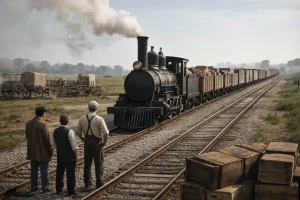
One of the lesser-discussed but highly impactful benefits of steam locomotives was their ability to reduce labor costs across the transportation sector.
By streamlining manpower requirements and minimizing dependency on traditional animal-powered logistics, railroads helped businesses cut costs and improve operational efficiency.
Efficiency Gains from Reduced Manpower
Steam locomotives enabled businesses to consolidate transport operations with far fewer personnel. Where older methods might require multiple drivers, handlers, and support staff for a single delivery, trains could haul far greater volumes with a minimal crew.
This significant reduction in required manpower meant lower payrolls and higher output per worker, a winning combination for growing industries.
Simplified Operations Compared to Animal Transport
Unlike horse-drawn freight, which demanded extensive planning and care, steam locomotives simplified the entire transport process.
Trains ran on fuel, not rest cycles, and could travel long distances without frequent interruptions. This shift reduced operational complexity and increased scheduling reliability.
Key benefits of simplified rail operations included:
- No need for feeding, watering, or resting animals
- Fewer staff are required for load management and handling
- Reduced travel time and fewer overnight stops
- Streamlined scheduling with more predictable arrival times
Long-Term Wage and Maintenance Savings
While locomotives did require skilled operators and routine maintenance, they proved more economical in the long run.
They eliminated ongoing animal care costs, reduced reliance on large driver teams, and improved the predictability of delivery schedules.
| Transport Method | Operators Required | Daily Output | Labor Intensity |
| Horse-Drawn Freight | 5–10 workers | Low | High |
| Canal Barge | 2–4 workers | Moderate | Medium |
| Steam Locomotive | 2–3 workers | High | Low |
These reductions in manpower needs meant lower costs not just in wages but also in recruitment, training, and administrative overheads, all of which had a direct impact on the bottom line.
How Did Steam Trains Improve Access to Remote Areas?
Railroads played a crucial role in opening up access to remote and resource-rich regions that were previously too costly or difficult to reach. Steam trains could traverse rugged terrain, hilly areas, and long distances that horse-drawn transport or waterways could not reliably navigate.
This improved access enabled industries to expand their sourcing options. Timber from deep forests, coal from remote mines, and crops from rural farmlands could now be transported to industrial centers efficiently and affordably.
Manufacturers no longer needed to be located next to rivers or urban hubs. Instead, they could optimize locations based on production needs and use rail networks to bridge any logistical gaps.
As one early logistics manager insightfully noted:
“The railroad didn’t just bring us coal; it brought us possibilities.”
That opportunity, to tap into distant resources, was a key factor in reducing raw material costs and scaling production.
What Role Did Weather Independence Play in Cost Reduction?
Before steam locomotives, seasonal disruptions were a major challenge for logistics. Roads could become muddy, snow-covered, or completely impassable during bad weather. Similarly, canals could freeze in winter or dry up in the summer, halting transport altogether.
Steam trains changed the game. Rail lines operated in nearly all weather conditions, providing year-round consistency. This predictability helped businesses plan production and distribution more effectively.
By reducing delays, companies avoided inventory shortages and high storage costs. Deliveries became more punctual, and customer expectations could be better met.
In industries dealing with perishables or tightly scheduled supply chains, this kind of weather independence was not just a convenience, it was a cost-saving necessity.
How Did Reduced Travel Time Impact Distribution Costs?
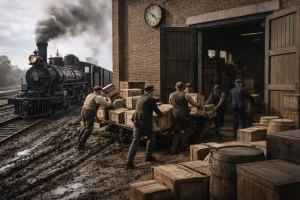
Steam locomotives offered a major time advantage over traditional transport. A shipment that once took several days could now arrive within hours. This speed had a ripple effect across distribution and inventory management.
Faster delivery meant:
- Less time in transit (lower risk of spoilage or damage)
- Reduced need for long-term storage
- Lower insurance premiums due to decreased risk
- Quicker order fulfillment and better customer service
A factory owner at the time famously remarked:
“Time is money, and the train gave us both.”
And he was right, reduced travel time not only cut operational costs but also created opportunities for businesses to scale, respond faster to market demand, and keep products flowing continuously.
How Did Steam-Powered Freight Reduce Product Damage and Loss?
Freight moved by wagons often endured rough terrain, bumpy roads, and frequent transfers, all of which increased the risk of goods being damaged or spoiled. The same was true for barges, which required careful handling and were vulnerable to water damage or delays at port.
Steam trains improved these conditions dramatically. With smoother tracks, dedicated freight cars, and fewer handling points, the overall journey was less disruptive to goods in transit.
This meant fewer returns, fewer broken items, and less spoilage. For delicate goods like glassware, food products, or fabrics, this reduction in damage could result in thousands of dollars in annual savings for large manufacturers or exporters.
As a result, steam locomotives didn’t just make transport cheaper, they also protected the value of what was being transported.
What Were the Long-Term Economic Effects of Steam-Powered Transportation?
Steam-powered transport had a far-reaching impact on both national and regional economies. By reducing the cost of moving goods, railways helped increase industrial output, consumer access, and overall economic participation.
Urban markets became more accessible to rural producers, and vice versa. Industrial centers flourished thanks to a steady inflow of raw materials and outflow of finished products.
The boost to infrastructure also created employment opportunities in construction, rail maintenance, manufacturing, and service sectors. As governments invested in expanding railway networks, national productivity grew.
| Impact Area | Pre-Rail Era | Post-Rail Era |
| Distribution Costs | High | Significantly Lower |
| Access to Goods | Limited | Widespread |
| Industrial Growth | Slow, Regionalized | Fast, Nationwide |
| Economic Inclusion | Urban-centric | Rural and Urban Combined |
Steam transportation helped forge national markets, promote regional development, and lay the groundwork for the modern logistics networks we depend on today.
How Did Railroads Help Industrial Centers Grow Faster and Cheaper?
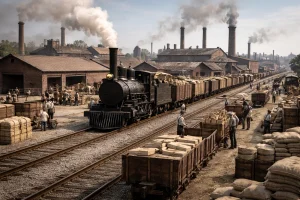
Railroads played a critical role in accelerating industrial growth by dramatically reducing transportation costs and improving logistical efficiency for manufacturing centers.
Supply Chain Stability
The expansion of railroads introduced a new level of reliability to industrial logistics. Manufacturers could depend on regular, scheduled deliveries of raw materials, minimizing the risk of delays that previously led to halted production lines or missed quotas.
This consistent flow of inputs allowed factories to operate at maximum capacity, knowing that their supply chain was no longer at the mercy of weather, road conditions, or inefficient transport systems.
Better Flow of Goods to Markets
Efficient distribution of finished products is as crucial as the supply of raw materials. Steam locomotives enabled manufacturers to quickly and reliably transport goods to both local and distant markets, ensuring faster turnover and increased sales reach.
This efficiency brought several business advantages:
- Reduced need for long-term storage or warehousing
- Improved cash flow through faster sales cycles
- Greater ability to meet customer demand promptly
By minimizing the time and cost involved in product delivery, railroads helped manufacturers streamline their entire post-production process.
Centralization of Manufacturing Hubs
As transportation costs dropped, industrial centers began to consolidate around major railway junctions. This urban clustering of factories and warehouses led to a variety of economic benefits.
Centralized manufacturing hubs enabled companies to:
- Share skilled labor pools
- Leverage shared infrastructure like power and water supply
- Reduce transport costs between suppliers, manufacturers, and distributors
Overall, steam railways not only supported the growth of individual factories but also fostered the development of entire industrial cities. Railroads became the arteries of industrial expansion, enabling it to happen faster, cheaper, and more strategically.
Summary Table: Key Cost-Reduction Benefits of Steam Locomotives
Steam locomotives introduced a transformative shift in industrial transportation, driving down operational costs and improving economic efficiency across multiple fronts.
From higher freight capacity to labor savings and greater access to remote resources, the impact of steam-powered rail was comprehensive and lasting.
The table below summarizes the primary areas where steam locomotives delivered significant cost-reduction advantages.
| Cost-Reduction Factor | Impact of Steam Locomotives |
| Speed | Drastically reduced travel time, enabling faster deliveries, shorter production cycles, and improved cash flow. |
| Bulk Movement | Allowed mass transportation of goods in a single journey, lowering per-unit shipping costs. |
| Labor Savings | Required fewer operators per load compared to wagons or barges, reducing overall wage expenses. |
| Access to Remote Areas | Opened up hard-to-reach regions rich in raw materials, enabling cheaper and more diverse sourcing. |
| Efficiency | Streamlined logistics with year-round reliability, fewer delays, and consistent scheduling. |
Steam railways didn’t just move goods, they optimized every step of the supply chain, making large-scale industrial operations financially viable and scalable.
Conclusion
Steam locomotives were not just a technological innovation; they were a catalyst for a global economic shift. By reducing costs across every level of the transportation chain, from labor to delivery time, from access to product protection, they redefined what was possible for industry, commerce, and society at large.
Their legacy lives on in the modern logistics systems that still prioritize the same principles: speed, scale, reliability, and cost-efficiency.
FAQs
Why were steam locomotives considered a turning point in industrial transportation?
Steam locomotives drastically improved speed, reliability, and volume in transportation, transforming the industrial supply chain and enabling economic growth on a national scale.
How did railroads compare with canals in terms of cost-efficiency?
While canals were once preferred for bulk transport, railroads eventually became more cost-efficient due to year-round reliability, faster speeds, and wider geographic coverage.
Did the introduction of steam trains affect consumer prices?
Yes, by lowering production and transportation costs, steam trains contributed to more affordable goods and increased access for consumers, especially in rural areas.
Were steam locomotives expensive to maintain over time?
While they required maintenance and fuel, the long-term operational savings, especially from reduced labor and bulk capacity, made them more cost-effective than traditional methods.
How did steam trains influence job creation in other industries?
Railway expansion boosted demand in steel, coal, engineering, and construction, creating thousands of jobs even as transportation roles became more specialized.
Did rural communities benefit from the rail expansion?
Absolutely. Railroads connected rural areas to urban markets, allowing farmers, miners, and craftsmen to sell goods nationally, increasing income and opportunity.
How did governments support the growth of rail infrastructure?
Governments offered land grants, subsidies, and legal frameworks to encourage private railway investment, recognizing the transformative economic potential of the network.